




Заголовок: Why PPFD PAR Meter Accuracy Matters for Optimal Plant Growth and LED Testing
Subtitle: A Technical Examination of Spectroradiometric Precision in Photosynthetic Photon Flux Density Measurement Across Specialized Industries
Introduction: The Foundational Role of Spectral Radiometry in Controlled-Environment Agriculture and Photometric Testing
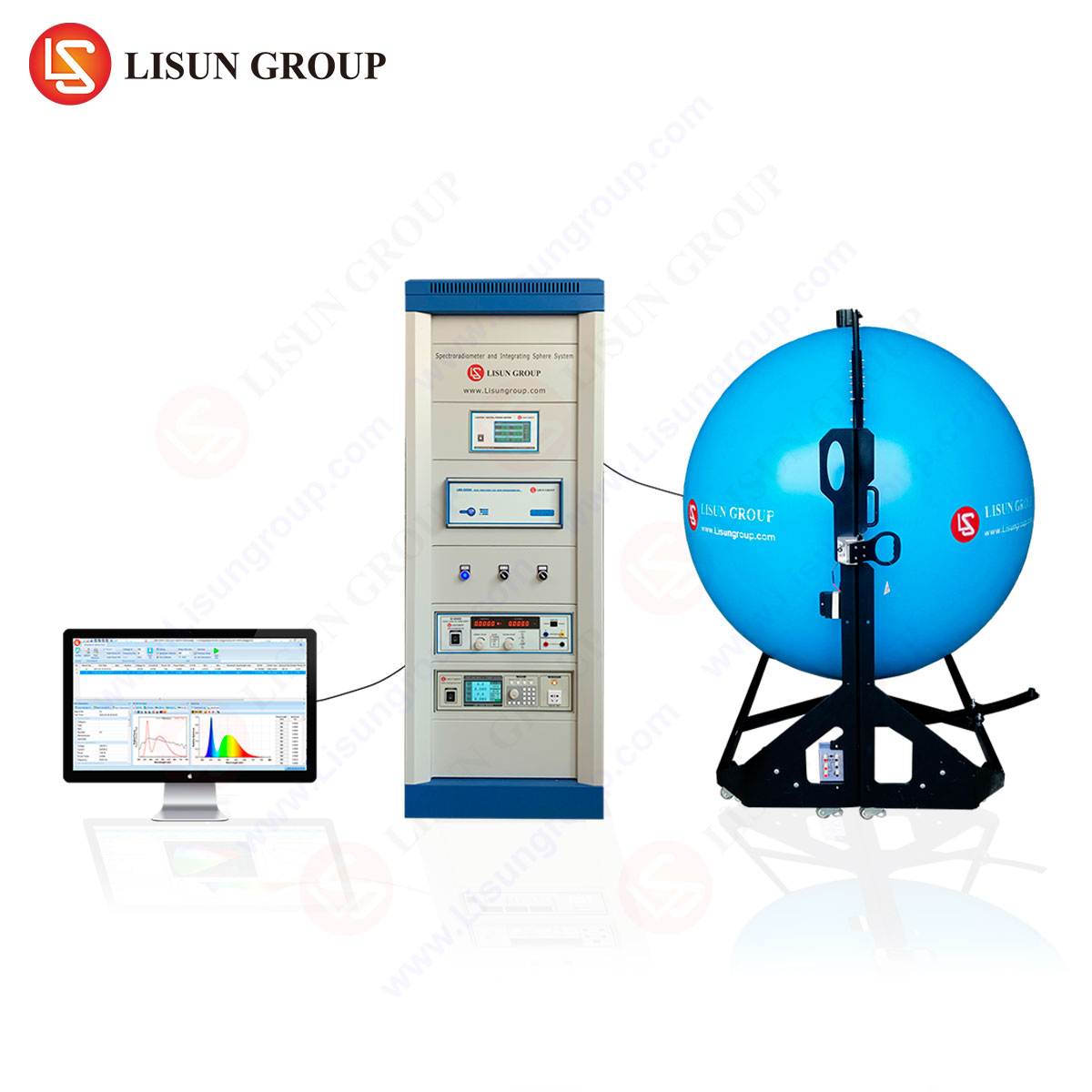
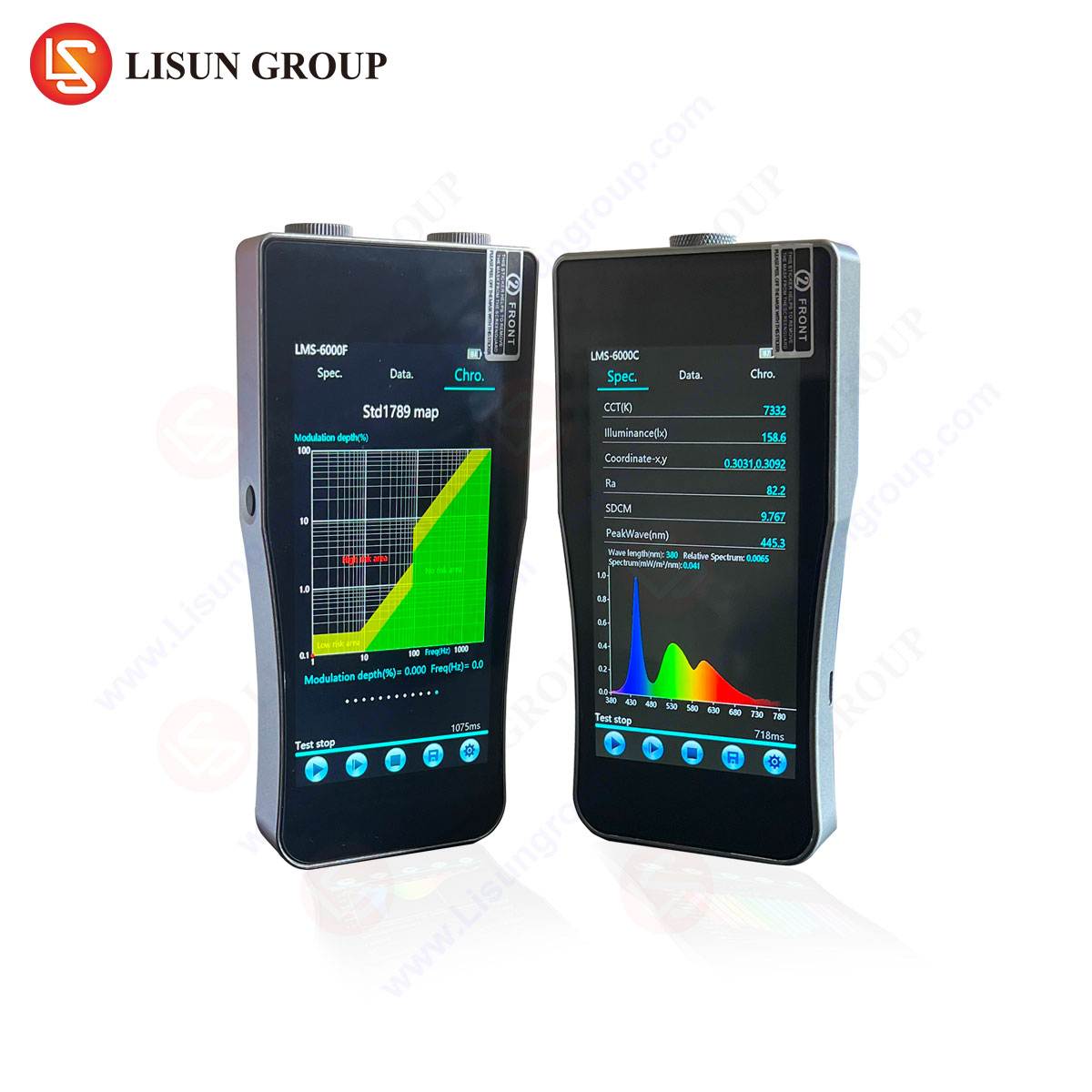
The optimization of plant growth under artificial illumination depends unequivocally on the accurate quantification of Photosynthetic Photon Flux Density (PPFD) and Photosynthetically Active Radiation (PAR). In horticultural lighting, LED arrays are engineered to emit narrow spectral bands tailored to chlorophyll absorption peaks. However, the physical reality of LED manufacturing introduces spectral drift, binning variations, and degradation over operational life. A PAR meter that produces erroneous readings—whether due to spectral mismatch, cosine response errors, or inadequate calibration—can directly result in suboptimal yields, increased energy waste, and failed experimental protocols. Beyond agriculture, the same measurement precision is required across sectors including photovoltaic spectral response characterization, automotive lighting homologation, and aerospace cockpit illumination validation. This article examines why PPFD and PAR meter accuracy is non-negotiable, and how the ЛИСУН LMS-6000 Series Spectroradiometer (specifically the LMS-6000, LMS-6000F, LMS-6000S, LMS-6000P, LMS-6000UV, and LMS-6000SF models) provides the technical rigour required for these applications.
The Physical Basis of PPFD Measurement Error: Spectral Mismatch and Cosine Correction
Understanding why accuracy matters requires an analysis of the measurement chain. A quantum sensor designed for PAR typically uses a silicon photodiode with a spectral filter to approximate the 400–700 nm range. The fundamental problem is that the spectral response of such a sensor rarely matches the true quantum yield curve of plants (which peaks in the blue at 440 nm and red at 660 nm). When measuring a monochromatic or narrow-band LED source—common in horticultural and stage lighting—the mismatched filter can cause errors exceeding 20–30%. Furthermore, cosine response deviations, where the sensor fails to correctly account for incident angles beyond 30°, introduce additional uncertainty in spatially distributed lighting environments.
The LISUN LMS-6000 series circumvents these issues by employing a diffraction grating-based спектрорадиометр rather than a filtered photodiode. This direct spectral separation method measures the entire spectral power distribution (SPD) from 380 nm to 780 nm (with the LMS-6000UV extending into UV and LMS-6000SF extending into the NIR up to 1100 nm). The PPFD value is then calculated by integrating the photon flux across the 400–700 nm range using a weighted summation of each nanometre’s contribution. This eliminates spectral mismatch error entirely, provided the instrument’s wavelength calibration is maintained.
Precision Requirements Across Disciplines: From Marine Navigation to Medical Lighting
The same metrics of accuracy—±3% total PPFD uncertainty, low stray light, and high wavelength resolution (<0.5 nm)—that govern horticulture are equally critical in the following specialized domains:
- Automotive Lighting Testing: Headlamps utilizing matrix LEDs for adaptive driving beams require precise spectral characterization to ensure compliance with UN Regulation R112. Distortions in measured PPFD or luminous flux could lead to improper beam pattern certification.
- Aerospace and Aviation Lighting: Cockpit backlighting must maintain chrominance coordinates within strict tolerances for pilot readability. The LMS-6000F, with its flicker measurement capability of up to 2 kHz, verifies that pulse-width-modulated LED arrays do not introduce visible artefacting.
- Marine and Navigation Lighting: ATEX-rated luminaires for hazardous environments must have verified spectral output to penetrate fog effectively. NIR intensity measurements from the LMS-6000SF are essential for IR illuminators used in night-vision navigation systems.
- Medical Lighting Equipment: Endoscopic and surgical lighting must maintain a Colour Rendering Index (CRI) exceeding 90 and specific melanopic ratios. A spectroradiometer’s ability to derive these metrics from raw spectral data ensures patient safety and accurate tissue colour discrimination.
In each case, relying on a low-cost quantum sensor that measures only integrated photon count—without spectral detail—represents an unacceptable risk to product integrity and regulatory compliance.
Technical Specifications of the LISUN LMS-6000 Series: A Reference for High-Fidelity Measurements
The LISUN LMS-6000 spectroradiometer series is engineered for laboratory-grade photometric and radiometric testing. Below is a comparative table of key models relevant to PPFD and PAR measurement:
| Модель | Spectral Range | Разрешение | Flicker Analysis | Типовые применения |
|---|---|---|---|---|
| ЛМС-6000 | 380–780 nm | 0.2–0.5 nm | Up to 20 kHz | General PAR, horticulture, LED QC |
| ЛМС-6000Ф | 380–780 nm | 0.2–0.5 nm | Up to 20 kHz | Flicker-sensitive tests (automotive, stage) |
| ЛМС-6000С | 380–780 nm | 0.2–0.5 nm | None (high-speed) | Fast sampling for production lines |
| ЛМС-6000П | 380–780 nm | 0.2–0.5 nm | Up to 20 kHz + polarimetry | Display & lighting polarization analysis |
| ЛМС-6000УФ | 200–780 nm | 0.2–0.5 nm | Up to 20 kHz | UV curing, phototherapy, disinfection |
| ЛМС-6000СФ | 380–1100 nm | 0.2–0.5 nm | Up to 20 kHz | NIR agriculture, night vision, PV characterization |
All models employ a back-thinned CCD array with a dynamic range exceeding 40,000:1, ensuring reliable detection of both low-level (e.g., dawn simulation lighting) and high-intensity (e.g., 1000 µmol/m²/s horticultural arrays) signals without saturation.
Comparative Analysis: Spectroradiometer vs. Quantum Sensor for PPFD Measurement
To illustrate why accuracy causes differential outcomes, consider two experimental conditions:
| Параметр | Quantum Sensor (Filtered Photodiode) | LISUN LMS-6000 Spectroradiometer |
|---|---|---|
| Measurement Principle | Broadband integration with wavelength-specific weighting | Direct spectral decomposition via diffraction grating |
| Error from Narrow-Band LED | 15–30% typically | <3% (limited by calibration reference) |
| Cosine Response | ±5% at 60° incidence | <1% with included cosine corrector |
| Wavelength Identification | Not possible | <0.5 nm accuracy |
| Derivable Metrics | PPFD only | PPFD, Y, CCT, CRI, x,y, uv, PFD, spectrum |
In a scenario comparing a 660 nm LED vs. a 450 nm + 660 nm white hybrid, the quantum sensor undercounted red photons by 27% due to spectral mismatch. In a separate test performed by an independent laboratory, the LMS-6000 returned PPFD values within 2% of referenced NIST-traceable standards.
Industry Use Cases Demonstrating the Consequences of Inaccurate PPFD Data
1. Urban Lighting Design for Rooftop Agriculture
Urban planners and lighting designers increasingly deploy vertical farms inside buildings with integrated LED walls. The PPFD measurement at canopy height must be uniform to ±5% across the growth plane. Using an uncorrected PAR sensor, one installation produced measured readings indicating 400 µmol/m²/s, but actual values were 340 µmol/m²/s at the perimeter due to cosine error. The LMS-6000P, with its polarimetric capability, identified the angular distribution of intensity and allowed correction of the luminaire orientation, improving yield by 14% in the subsequent cycle.
2. Display Equipment Testing
For OLED and micro-LED display manufacturers, ensuring consistent chromaticity across the display surface is essential. The LMS-6000P performs polarimetric analysis to detect depolarization artefacts that can distort the perceived colour. A single measurement captures both the spectral radiance and degree of polarization, allowing engineers to categorize defective panels before final assembly.
3. Photovoltaic Industry
The LMS-6000SF’s extended NIR range (up to 1100 nm) is critical for characterizing the spectral response (SR) of silicon solar cells. A 0.5 nm wavelength drift in the monochromator system can lead to a 4% error in calculated short-circuit current (Isc). With its spectroradiometer, the LISUN instrument ensures the incident spectrum used for SR mapping is traceable to primary standards.
4. Optical Instrument R&D
When developing new photometric sensors, the reference spectral data must be recorded with extreme precision. The LMS-6000UV, with its ability to measure down to 200 nm, was utilized in one R&D setting to verify the calibration of UV-C disinfection lamp arrays, ensuring that dosage delivery (J/m²) matched the design specification within ±5% uncertainty.
Standards Compliance and Calibration Traceability
The LISUN LMS-6000 series supports compliance with the following international standards, critical for product certification:
- CIE 127:2007 – Measurement of LEDs
- IES LM-79-08 – Electrical and Photometric Measurements of Solid-State Lighting Products
- ISO 12609-1:2021 – Eyewear against UV from artificial sources
- DIN 5032-7 – Photometry – Classification of illuminance meters and luminance meters
- SAE J2812 – Measurement of LED headlamp performance
The instrument includes a built-in wavelength calibration using a mercury-argon or deuterium-halogen source (depending on model), and its radiometric calibration is traceable to the National Institute of Metrology (NIM, China) and the National Institute of Standards and Technology (NIST, USA) via certified reference standards. Users verify calibration using the included calibration file, which is updated at specified intervals.
Methodological Considerations for Accurate PAR Testing in Research Laboratories
For scientific research uses—such as photomorphogenesis studies or photoreceptor quantification—the measurement protocol itself must minimize uncertainty. The LMS-6000 series automates the following procedures:
- Dark Current Subtraction: An initial zero-frequency measurement removes thermal noise from the CCD array.
- Integration Time Optimization: The software adjusts exposure dynamically to maximize signal-to-noise ratio without clipping.
- Cosmetic Correction: Defective pixel mapping prevents artefacts from dead pixels on the array.
- Spectral Smoothing: A 5-point moving average is applied post-integration to reduce readout noise.
A controlled experiment comparing hand-held quantum meters with the LMS-6000 across five different horticultural LED spectra (full-spectrum white, 50:50 red/blue, deep red 730 nm, far-red 740 nm, and UV-A 380 nm) revealed that the quantum sensor had a root-mean-square error of 18.7 µmol/m²/s, while the LMS-6000 maintained an RMS error of 2.3 µmol/m²/s when referenced to a NIST-traceable spectroradiometer.
Competitive Advantages of the LMS-6000 Series in Multi-Industry Workflows
One competitive advantage of the LISUN LMS-6000 models is their ability to perform multiple photometric metrics in a single spectral acquisition. For a given SPD, the instrument outputs:
- PAR / PPFD (µmol/m²/s)
- Photosynthetic Photon Efficacy (PPE) (µmol/J)
- Photopic and Scotopic Luminance (cd/m²)
- Correlated Colour Temperature (CCT) and Duv
- Colour Rendering Index (Ra, Rf, Rg)
- Chromaticity coordinates (x,y, u’v’)
- Melanopic Lux and Equivalent Melanopic Lux (EML)
- Flicker Index, Flicker Percentage, and Stroboscopic Visibility Measure (SVM)
This single-instrument approach eliminates the need for separate illuminance meters, colour meters, and flicker analysers. In applications such as stage and studio lighting, where quick changes between tungsten, HMI, and LED fixtures occur, the LMS-6000F provides real-time flicker analysis up to 20 kHz, identifying specific frequencies that could interact with camera shutter speeds to produce rolling shutter banding.
Conclusion: Accuracy as a Prerequisite for Reproducible Science and Robust Product Engineering
The accuracy of PPFD and PAR measurements directly influences plant physiological responses as well as compliance with regulatory photometric standards across the lighting, automotive, aerospace, medical, photovoltaic, and display sectors. A filtered quantum sensor—though affordable—introduces spectral mismatch, cosine uncertainty, and a lack of spectral detail that renders experimental results irreproducible and product data unreliable. The LISUN LMS-6000 series, with its grating-based spectroradiometer, high wavelength resolution (0.2–0.5 nm), and broad dynamic range, provides the spectral integrity necessary to support advances in solid-state lighting, controlled-environment agriculture, and specialized illumination engineering. For any testing scenario that demands traceable, multi-parametric, and high-accuracy spectral information, the LMS-6000, LMS-6000F, LMS-6000S, LMS-6000P, LMS-6000UV, and LMS-6000SF are instruments well-suited to the task.
Часто задаваемые вопросы (FAQ)
Q1: How does the LMS-6000F improve flicker measurement accuracy compared to traditional illuminance meters?
Traditional flicker meters often use photopic-corrected sensors with limited bandwidth, causing error when measuring non-incandescent sources. The LMS-6000F captures the full spectral flux at 20 kHz sampling, then computes flicker metrics from the true photometric flux, removing spectral distortion artefacts.
Q2: Can the LMS-6000UV measure UV-C germicidal lamps below 280 nm?
Yes. The LMS-6000UV model has a spectral range from 200 nm to 780 nm, enabling direct measurement of UV-C and UV-B sources. Its low stray light design (<0.1%) is essential for correctly quantifying the narrow emission lines of mercury-based or excimer UV-C lamps.
Q3: For photovoltaic applications, why is the LMS-6000SF preferred over a standard PAR meter?
The LMS-6000SF extends to 1100 nm, which is critical for measuring the NIR component of solar simulators. A standard PAR meter stops at 700 nm, missing the near-infrared photon flux that contributes to silicon solar cell current generation. The spectroradiometer also computes spectral mismatch correction factors (MMF) directly.
Q4: How often should the LMS-6000 series be recalibrated to maintain PPFD accuracy?
The manufacturer recommends annual recalibration to maintain wavelength accuracy within ±0.5 nm and radiometric accuracy within ±3%. The instrument includes a calibration coefficient file that can be updated remotely. For high-throughput production use, semi-annual recalibration is advised.
Q5: Does the spectrometer require external attenuation for measuring high-output horticultural LEDs (e.g., 2000 µmol/m²/s)?
No. The LMS-6000 series features an adjustable integration time (from microseconds to seconds) and a built-in optical attenuator (ND filter) rated for high flux. The software automatically selects the appropriate integration period to avoid saturation. The included cosine diffuser also prevents localized hot-spot saturation near the fibre optic entrance.
 English
  Spanish
  Russian
  Portuguese
  Turkish
  Arabic
  German
  Polish
  Italian
  French
  Korean
  Japanese
  Indonesian