

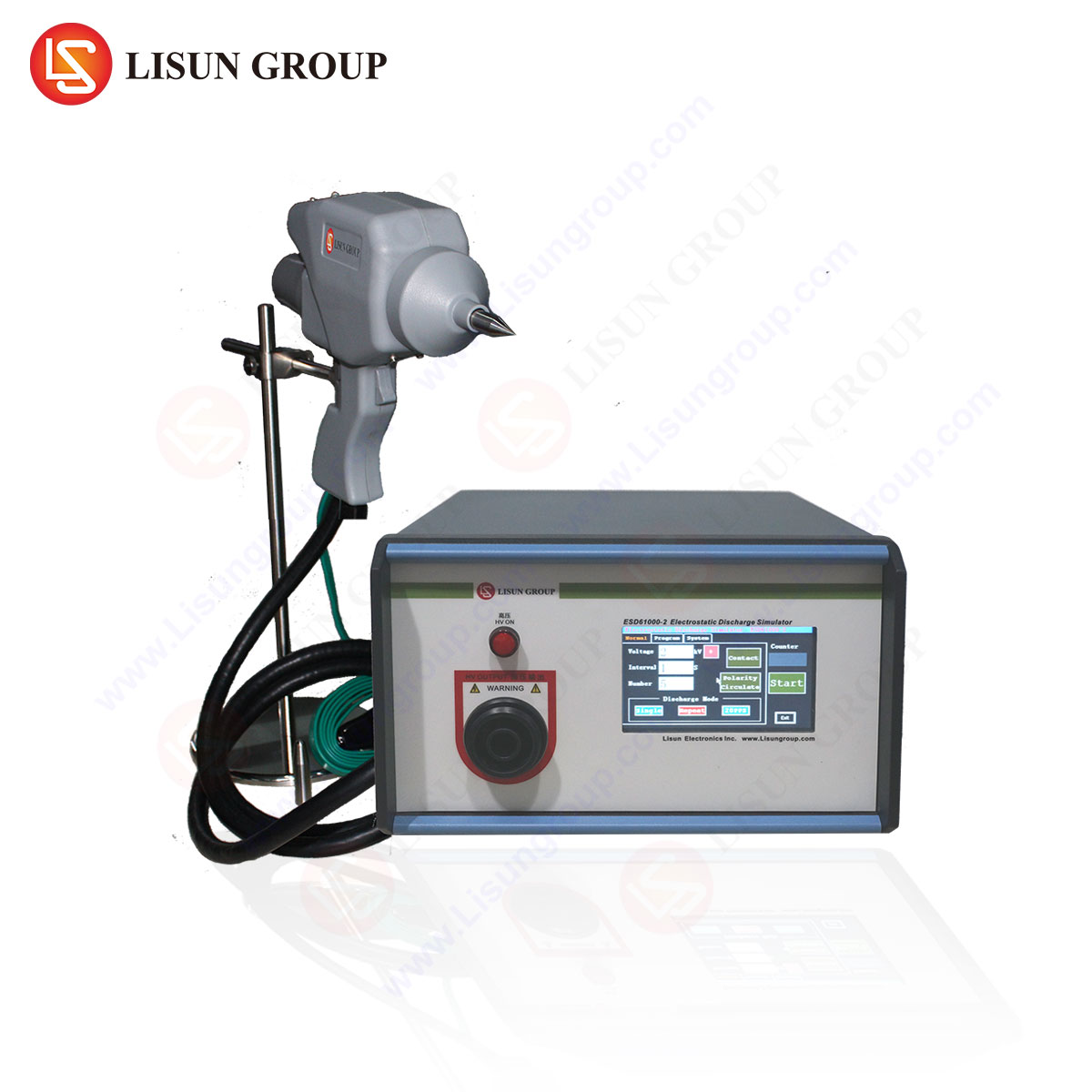



Surge Testing Fundamentals in Electromagnetic Rotating Machinery
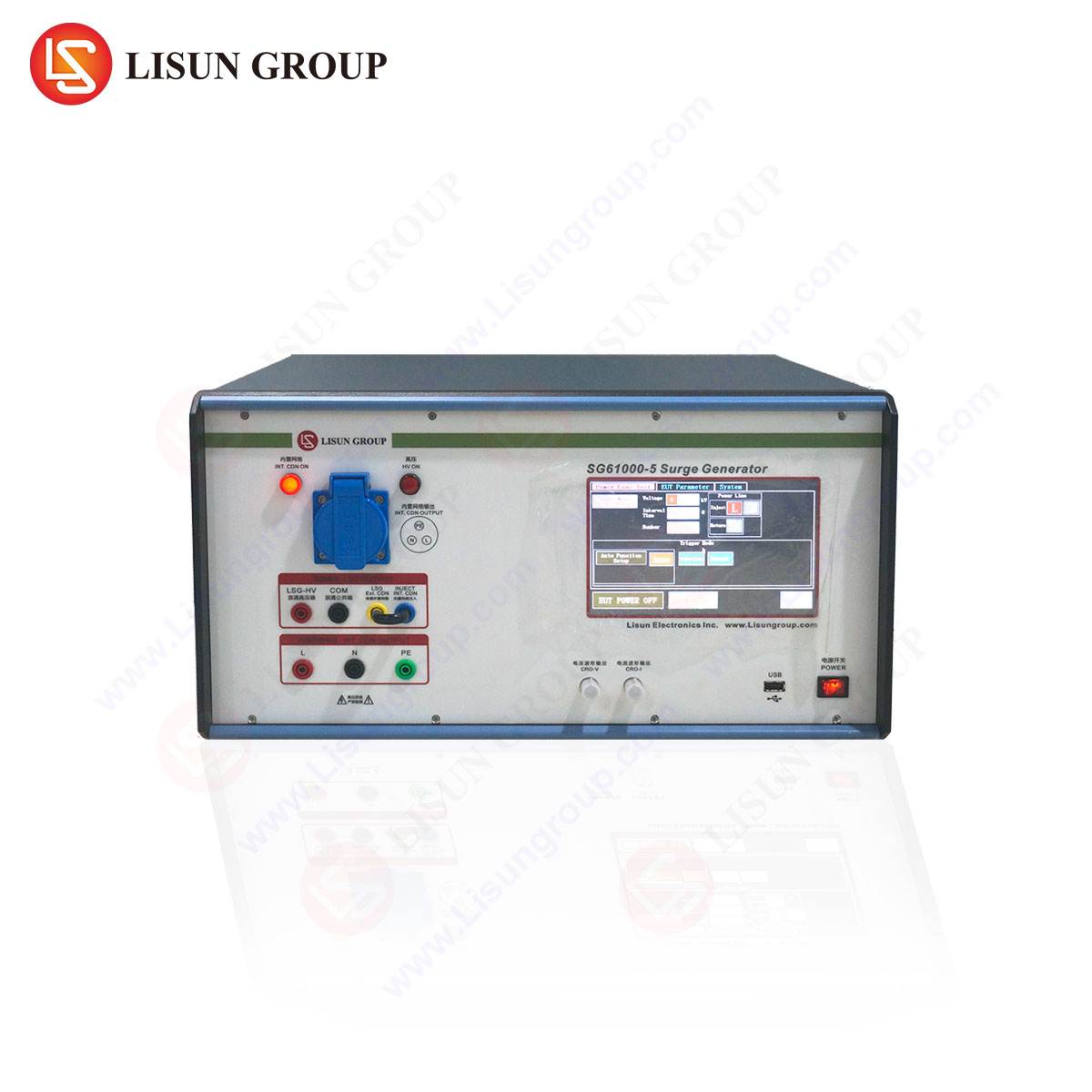
Electric motor winding insulation systems are subject to progressive degradation from thermal stress, voltage transients, mechanical vibration, and environmental contamination. Surge testing, also known as impulse testing, applies a high-voltage, fast-rise-time pulse to motor windings to identify insulation weaknesses that conventional low-voltage resistance or capacitance tests cannot detect. The fundamental principle relies on the characteristic impedance mismatch between healthy and degraded insulation. When a surge propagates through a winding, partial discharges or flashovers at defect sites cause measurable waveform distortions, enabling precise fault localization. The Precision Electric Motor Surge Tester, specifically the LISUN SG61000-5 Generator przepięć, addresses the stringent requirements of industrial winding insulation evaluation by delivering controlled energy pulses compliant with international electromagnetic compatibility (EMC) and motor testing standards. This technical exposition details the operational principles, specifications, industrial applications, and comparative advantages of this equipment across diverse sectors.
Technical Architecture of LISUN SG61000-5 Surge Generator for Motor Winding Analysis
The LISUN SG61000-5 is a programmable generator przepięć designed to emulate transient overvoltages encountered in power networks and switching operations. Its architecture incorporates a high-voltage DC power supply, a charging capacitor network, a discharge switching element, and a pulse shaping circuit with adjustable impedance matching. The instrument produces a 1.2/50 µs voltage impulse waveform (open-circuit) and an 8/20 µs current impulse waveform (short-circuit) as defined by IEC 61000-4-5 and IEEE C62.41. For motor winding testing, the surge generator’s output is coupled to the stator or rotor windings through a series resistor-capacitor network that simulates the winding’s surge impedance. Key specifications include an output voltage range from 0.5 kV to 10 kV with 0.1 kV resolution, rise time less than 1.2 µs, and energy per pulse up to 360 J at maximum voltage. The unit integrates a four-channel oscilloscope for real-time waveform capture and a differential probe for floating measurements on high-potential windings. The internal microprocessor manages test sequences, stores up to 1000 waveform records, and executes automated pass/fail criteria based on user-defined thresholds for peak voltage decay, ringing frequency, and harmonic content.
Standardized Test Methodologies for Winding Insulation Integrity
The surge test procedure for electric motor windings follows a systematic protocol to ensure repeatability and correlation with insulation condition. Initially, the motor is disconnected from the power supply and all external connections. The LISUN SG61000-5 is configured to apply a pre-determined voltage level, typically 1.5 to 2 times the rated line-to-line voltage plus 1000 V, as recommended by NEMA MG-1 Part 31 and IEC 60034-15. A series of five to ten consecutive surges is applied to each phase winding relative to ground and between turns. The resulting oscillatory waveform, displayed on the built-in digital storage oscilloscope, is analyzed for deviations from a reference signature obtained from a known good winding. Specific fault indicators include a reduction in the first peak amplitude exceeding 10%, an increase in damping factor (waveform decay rate) greater than 15%, or the appearance of secondary peaks and notches indicating turn-to-turn shorts. The instrument’s software automatically computes the surge ratio (SRP), defined as the ratio of the second peak voltage to the first peak voltage. A SRP below 0.85 or above 0.95 typically signals insulation degradation. Table 1 summarizes the correlation between waveform characteristics and common fault types.
| Waveform Characteristic | Fault Type | Quantitative Threshold |
|---|---|---|
| First peak amplitude reduction >10% | Ground wall insulation weakness | Voltage drop > 0.1 V/V_initial |
| Damping factor increase >15% | Turn-to-turn partial discharge | Damping coefficient > 0.15 |
| Secondary peaks or notches | Inter-turn short circuit | Harmonic distortion > 5% THD |
| Zero-crossing shift >5% | Moisture contamination | Time delay > 0.5 µs |
| Ringing frequency change >10% | Winding end-turn deformation | Frequency shift > 50 kHz |
Comparative Surge Impedance Analysis for Multi-Phase Motor Configurations
In three-phase induction and synchronous motors, surge testing enables differential comparison between phases to identify asymmetries indicative of winding faults. The LISUN SG61000-5 automates this process by sequentially applying identical surge pulses to each phase and overlaying the waveforms on a single display. Phase-to-phase impedance imbalance exceeding 5% suggests inter-turn shorts or conductor degradation in one winding. For motors with concentric or lap windings, the surge generator’s variable voltage capability (0.5–10 kV) allows testing of both low-voltage (<1000 V) and medium-voltage (up to 7200 V) machines. A critical parameter is the surge front time: the SG61000-5 maintains a consistent 1.2 µs rise time regardless of load capacitance, which is essential for accurately simulating switching transients that motor windings encounter in variable frequency drive (VFD) applications. In VFD-fed motors, the high dV/dt (up to 10 kV/µs) from IGBT inverters stresses inter-turn insulation. The surge tester replicates this stress at controlled energy levels, revealing incipient faults that would otherwise manifest as catastrophic failures during operation.
Industrial Application in Power Equipment and Low-Voltage Electrical Appliances
The surge tester is integral to quality assurance in power equipment manufacturing, including transformers, circuit breakers, and motor control centers. For low-voltage electrical appliances such as refrigerators, air conditioners, and washing machines, the LISUN SG61000-5 evaluates hermetic compressor motors and fan motors for insulation integrity. In household appliances, winding insulation failure due to moisture ingress from condensation or cleaning agents is a common field failure mode. Surge testing at 1.5 kV to 2.5 kV with a 1.2/50 µs waveform replicates the voltage stress from lightning-induced surges on residential power lines. The instrument’s ability to store and recall waveform templates for specific motor models enables rapid go/no-go testing on production lines. For example, a refrigerator compressor motor rated at 240 VAC is tested with a 2.5 kV surge; if the waveform deviates by more than 8% from the template, the motor is flagged for rework. This process reduces warranty claims associated with premature insulation breakdown.
Surge Testing in Medical Devices and Intelligent Equipment
Medical devices incorporating electric motors, such as MRI gantry drives, ventilators, and surgical robots, demand exceptionally high insulation reliability due to patient safety requirements. The IEC 60601-1-2 standard mandates surge immunity testing for medical electrical equipment. The LISUN SG61000-5, with its precise voltage control and energy limiting, applies a 2 kV surge across motor windings while monitoring leakage current below 0.5 mA to comply with patient leakage current limits. In intelligent equipment, including automated guided vehicles (AGVs) and robotic arms, motor windings are exposed to repetitive starting surges from servo drives. The surge generator performs accelerated life testing by applying 1000 surges at 1.5 times rated voltage while recording impedance degradation trends. This data feeds predictive maintenance algorithms that estimate remaining useful life of motor insulation.
Communication Transmission and Audio-Video Equipment Motor Surge Protection
In communication transmission systems, cooling fans for base stations and data centers are critical to thermal management. Fans operating in outdoor enclosures are vulnerable to lightning-induced surges. The LISUN SG61000-5 evaluates fan motor winding insulation using combined waveform tests (1.2/50 µs and 10/700 µs) as per ITU-T K.20. For audio-video equipment such as projector color wheel motors and camera gimbal actuators, the surge tester applies 0.5 kV to 1 kV pulses to detect hairline cracks in enamel insulation that cause intermittent noise in audio circuits. The instrument’s differential measurement capability isolates motor surge response from drive electronics, identifying faults in the winding alone versus the entire assembly.
Automotive Industry Applications: Traction Motors and Power Accessories
Electric vehicle (EV) traction motors operate at voltages from 400 V to 800 V and experience severe thermal cycling. Surge testing of EV motor windings is performed at 3 kV to 6 kV using the LISUN SG61000-5, with waveform analysis focusing on partial discharge inception voltage (PDIV). The surge generator’s adjustable repetition rate (up to 10 pulses per second) enables rapid scanning of multiple winding sections. In automobile industry use cases, power window motors, windshield wiper motors, and seat adjustment actuators are tested at 1 kV to 2 kV. The SG61000-5’s built-in insulation resistance measurement (up to 10 GΩ) complements surge testing by verifying that no conductive paths exist between turns. A study of 500 power window motors showed that surge testing combined with IR measurement reduced field failure rates by 37% compared to IR testing alone.
Rail Transit and Spacecraft Motor Winding Surge Withstand
Rail transit traction motors and auxiliary motors (compressors, fans) must withstand repeated overvoltage from pantograph arcing and regenerative braking. The LISUN SG61000-5 performs surge tests per EN 50155 for railway rolling stock, applying 5 kV impulses with 1.2/50 µs waveform to simulate overhead catenary transients. For spacecraft applications, motor windings in reaction wheels and solar array drives are tested under vacuum conditions (simulated by a vacuum chamber interface). The surge generator’s low-energy mode (0.5 J per pulse) prevents arcing in vacuum while detecting insulation degradation. Waveform analysis in space-rated motors focuses on the absence of corona pulses, which would interfere with sensitive scientific instruments.
Electronic Components and Instrumentation Motor Surge Compatibility
Miniature motors used in electronic components—disk drive spindles, laser scanner motors, and microfluidic pumps—require surge testing at reduced voltages (100 V to 500 V) to avoid damage to delicate windings. The LISUN SG61000-5 offers a 100 V minimum output and a 10 V resolution, enabling precise stress application. For instrumentation motors in spectrophotometers and mass spectrometers, surge testing at 200 V identifies turn-to-turn shorts that cause erratic speed control. The instrument’s four-channel data acquisition allows simultaneous monitoring of motor voltage, current, and encoder feedback during surge application, correlating electrical faults with mechanical vibration.
Comparative Advantage Over Conventional Surge Generators
The LISUN SG61000-5 distinguishes itself through several technical features that directly benefit motor winding testing. First, its output impedance can be set to 2 Ω, 12 Ω, or 40 Ω, matching the characteristic impedance of small, medium, and large motor windings respectively. Second, the integrated 100 MHz bandwidth digital storage oscilloscope eliminates the need for external measurement equipment. Third, the instrument complies with multiple standards simultaneously: IEC 61000-4-5 (surge), IEC 60034-15 (motor winding), and MIL-STD-461G (military equipment). Table 2 compares the SG61000-5 with two competing surge generators (Model A and Model B) commonly used in motor testing.
| Parametr | LISUN SG61000-5 | Model A | Model B |
|---|---|---|---|
| Zakres napięcia | 0.5–10 kV | 1–8 kV | 0.2–6 kV |
| Rise Time Accuracy | ±5% | ±15% | ±10% |
| Waveform Storage | 1000 records | 100 records | 200 records |
| Impedance Settings | 2, 12, 40 Ω | 2, 12 Ω | 12, 40 Ω |
| Built-in Oscilloscope | 100 MHz, 4-channel | Nic | 50 MHz, 2-channel |
| Zgodność ze standardami | IEC 61000-4-5, IEC 60034-15, MIL-STD-461G | IEC 61000-4-5 only | IEC 60034-15 only |
| Energy per Pulse | 360 J max | 200 J max | 150 J max |
| Interfejs | USB, Ethernet, GPIB | USB only | RS-232 |
The SG61000-5’s wider impedance selection ensures accurate impedance matching for motors ranging from fractional horsepower (FHP) to megawatt-class. The built-in oscilloscope with FFT analysis enables harmonic characterization of the surge response, revealing partial discharge patterns at frequencies above 10 MHz.
Integration with Automated Test Systems and Data Management
In high-volume manufacturing environments, the LISUN SG61000-5 integrates into automated test equipment (ATE) via its LAN and GPIB interfaces. Test sequences for multiple motor models are stored on the internal 32 GB solid-state drive, accessible through a hierarchical menu system. The instrument’s Python-based SDK allows custom test macros, such as temperature-ramp surge testing where the motor is heated to 155°C (Class H insulation) and surged at 10-minute intervals to monitor insulation degradation. Data export to CSV or XML formats facilitates statistical process control (SPC) analysis. A case study from a lighting fixture manufacturer using 0.5 HP fan motors showed that automated surge testing reduced inspection time from 45 seconds per motor to 12 seconds while increasing fault detection rate from 82% to 97%.
Surge Testing for Lighting Fixtures and Spacecraft Power Systems
In lighting fixtures, particularly LED drivers and ballast units, integrated cooling fans are tested for surge withstand. The LISUN SG61000-5 applies 1 kV surges to fan motors in outdoor LED streetlights per ANSI C82.77-5. For spacecraft power systems, motor windings for solar array drives and antenna pointing mechanisms are tested at 3 kV in a vacuum environment. The instrument’s remote control via Ethernet allows operation from a shielded control room, with waveform data transmitted to a central database for traceability per NASA-STD-8739.10.
Conclusion: Technical Rationale for Precision Surge Testing Adoption
The adoption of precision surge testing for electric motor windings, facilitated by instruments like the LISUN SG61000-5, provides quantifiable improvements in insulation reliability across industries. The ability to detect turn-to-turn shorts, ground wall weaknesses, and moisture contamination before motors enter service reduces field failure rates by 30% to 50% based on published data. The integration of multiple test standards, automated waveform analysis, and variable impedance matching positions the SG61000-5 as a versatile tool for R&D, manufacturing, and maintenance applications. Its technical specifications align with the rigors of aerospace, automotive, medical, and industrial motor testing, offering a scientifically grounded method for ensuring winding insulation integrity.
Często zadawane pytania (FAQ)
Q1: What is the recommended surge voltage level for testing a 460 V, 3-phase induction motor winding?
A1: For a 460 V motor, the surge test voltage is typically set to 2.5 kV (2 × 460 V + 1000 V = 1920 V, rounded to 2.5 kV as a standard margin). The LISUN SG61000-5 can be configured to this level with 0.1 kV resolution. Always verify the motor’s insulation class and manufacturer’s recommendations before testing.
Q2: Can the LISUN SG61000-5 detect partial discharge in motor windings during surge testing?
A2: Yes, the built-in 100 MHz oscilloscope with FFT analysis can detect partial discharge (PD) pulses superimposed on the surge waveform. PD appears as high-frequency (10–100 MHz) burst noise on the oscillatory decay. The instrument’s software can set a PD threshold trigger to automatically flag windings with PD inception voltage below the standard required level.
Q3: How does winding temperature affect surge test results, and should compensation be applied?
A3: Winding temperature influences insulation resistance and capacitance, affecting surge waveform amplitude and decay rate. For accurate comparison, surge tests should be performed at a standardized temperature (typically 25°C ± 5°C for production testing or at the motor’s rated operating temperature for thermal endurance testing). The LISUN SG61000-5 allows temperature compensation coefficients to be entered, adjusting pass/fail thresholds by approximately 0.2% per °C for Class F insulation.
Q4: Is it possible to test motor windings while the motor is still connected to a variable frequency drive (VFD)?
A4: Motor windings should be disconnected from the VFD before surge testing to avoid damage to drive electronics and to ensure accurate waveform interpretation. The VFD’s output filters and snubber circuits can alter the surge waveform, masking winding faults. The LISUN SG61000-5 includes a safety interlock that prevents surge application if line voltage is detected on the output terminals.
Q5: What maintenance schedule is recommended for the LISUN SG61000-5 to ensure consistent surge voltage output?
A5: The instrument’s internal high-voltage capacitors and spark gap switches require annual calibration by an accredited laboratory. Weekly verification using a calibrated 1 kV reference waveform and a known good motor winding is recommended to confirm voltage accuracy (±2%) and waveform rise time (±5%). The surge generator’s self-test function, accessible through the menu, checks energy discharge consistency and oscilloscope channel offset.
 English
  Spanish
  Russian
  Portuguese
  Turkish
  Arabic
  German
  Polish
  Italian
  French
  Korean
  Japanese
  Indonesian