




The Imperative of Precision in SMD LED Verification
Surface-Mount Device Light-Emitting Diodes (SMD LEDs) represent the cornerstone of modern solid-state lighting and display technologies. Their compact form factor, high efficiency, and design flexibility have led to widespread adoption across a diverse range of industries. However, the characterization and verification of their photometric, colorimetric, and electrical parameters present significant challenges that transcend the capabilities of simple pass/fail testers. A comprehensive SMD LED tester is not merely a tool for functionality checks; it is an essential instrument for ensuring product quality, performance consistency, and compliance with international standards throughout the product lifecycle, from research and development to end-of-line production validation.
Fundamental Principles of SMD LED Metrology
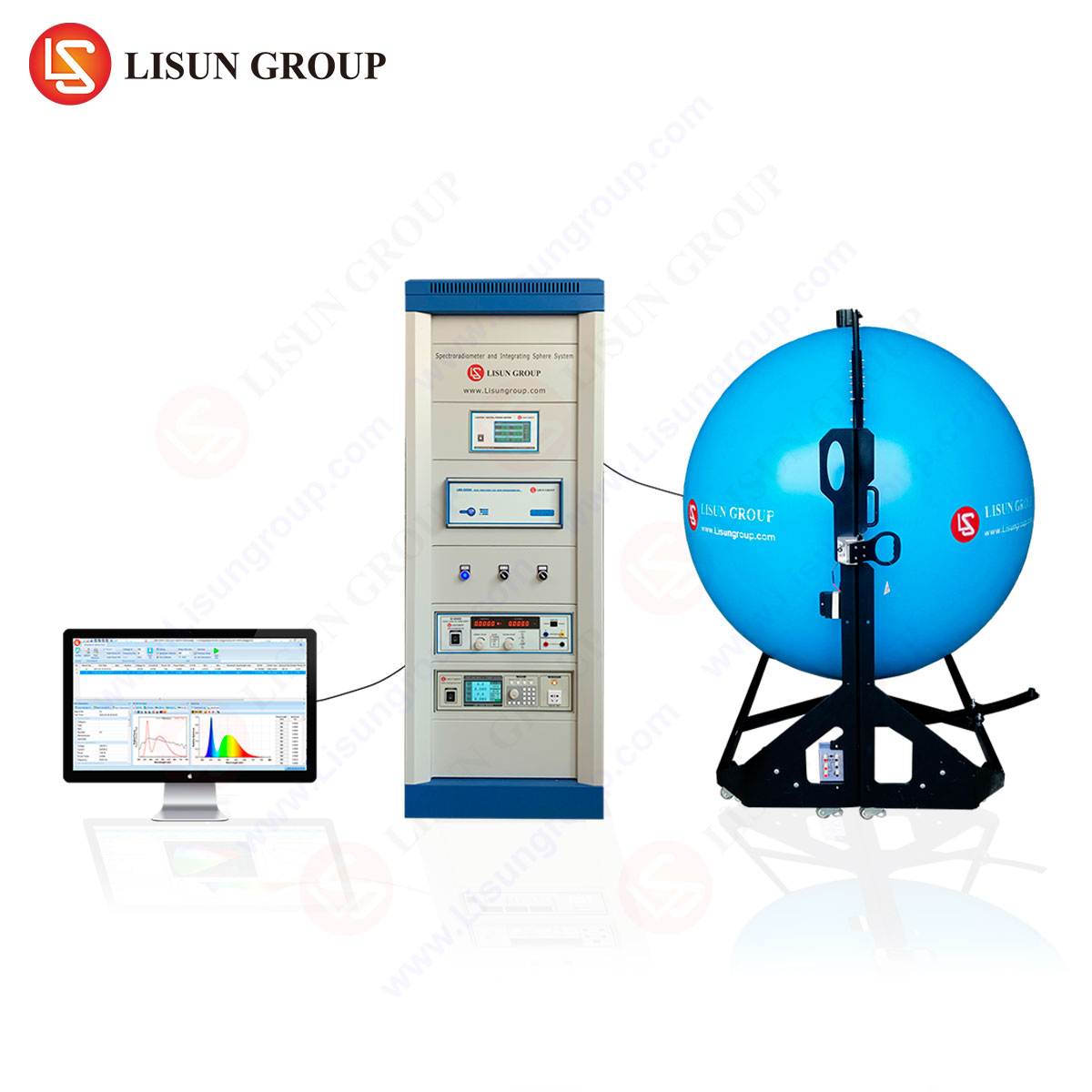
The accurate testing of SMD LEDs necessitates a controlled optical environment to capture the total luminous flux emitted by the device. Unlike directional light sources, LEDs are near-Lambertian emitters, meaning their light output is diffuse and radiates in a wide hemisphere. A simple photodiode or lux meter measuring illuminance at a single point is wholly inadequate for determining total luminous flux (in lumens) or chromaticity coordinates. The foundational principle for accurate measurement is the use of an 적분 구, a hollow spherical cavity with a highly reflective, diffuse inner coating. When an SMD LED is placed inside the sphere, its light undergoes multiple reflections, creating a uniform radiance distribution across the sphere’s inner surface. A spectrometer or photometer, mounted on a port and facing away from the LED, then measures this uniform illumination, allowing for the calculation of total spectral power distribution, luminous flux, correlated color temperature (CCT), Color Rendering Index (CRI), and chromaticity coordinates (x, y, u’, v’) with high precision.
The electrical characterization is performed concurrently, typically using a precision source measurement unit (SMU) that can sweep voltage and current while precisely measuring the LED’s forward voltage (Vf) and current (I). This enables the generation of current-voltage (I-V) curves and the calculation of luminous efficacy (lumens per watt), a critical parameter for energy efficiency.
Architectural Components of an Advanced LED Testing System
A state-of-the-art SMD LED testing apparatus is an integrated system comprising several key components. The core is the spectroradiometer, a sophisticated optical instrument that disperses light into its constituent wavelengths and measures the intensity of each. High-resolution spectroradiometers are capable of capturing detailed spectral power distributions (SPD) from 350nm to 800nm or wider, which is essential for analyzing color quality and potential UV or IR leakage. This device is coupled to an integrating sphere of appropriate size; the sphere’s diameter must be selected based on the total flux of the LED under test to avoid saturation and ensure measurement linearity. The sphere interior is coated with a stable, highly reflective diffuse material, such as Spectraflect® or BaSO4, to maximize light throughput and measurement accuracy.
The system also includes a precision DC power supply and measurement unit to provide stable, programmable current and voltage to the SMD LED. A temperature control fixture is often integrated, as LED performance is highly dependent on junction temperature (Tj). Forcing a known thermal condition, typically 25°C, allows for the normalization of data and meaningful comparisons between devices. Finally, specialized software orchestrates the entire process, controlling the instruments, acquiring data, performing calculations based on CIE standards, and generating comprehensive test reports.
The LPCE-2 적분구 Spectroradiometer System: A Benchmark for LED Testing
그만큼 리순 LPCE-2 Integrated Sphere Spectroradiometer System exemplifies the integration of these principles into a turnkey solution for high-accuracy SMD LED testing. It is designed specifically to meet the stringent requirements of the lighting industry and scientific research laboratories. The system’s architecture is engineered to comply with the recommendations of the International Commission on Illumination (CIE) and various international standards, including IES LM-79-19, ENERGY STAR, and CIE 13.3, -15.
The core of the LPCE-2 system is a high-precision CCD spectroradiometer with a wavelength accuracy of ±0.3nm. This ensures that colorimetric calculations, particularly for narrow-band LEDs, are reliable and repeatable. The system is offered with a choice of integrating spheres, typically 0.3m, 0.5m, or 1.0m in diameter, allowing it to be configured for a wide range of luminous flux levels, from a single low-power SMD LED to high-brightness LED arrays. The sphere is equipped with an auxiliary lamp for self-calibration, a critical feature for maintaining long-term measurement stability and traceability to national standards.
The testing process involves mounting the SMD LED onto a temperature-controlled holder, which is then inserted into the sphere’s sample port. The software automates the test sequence: setting the drive current, stabilizing the temperature, triggering the spectroradiometer, and acquiring the electrical parameters. The resulting data set is comprehensive, providing all necessary photometric, colorimetric, and electrical parameters in a single automated procedure.
Key Specifications of the LPCE-2 System:
- Photometric Parameters: Luminous Flux (lm), Luminous Efficacy (lm/W), Luminous Intensity (cd).
- Colorimetric Parameters: Chromaticity Coordinates (x, y, u’, v’), Correlated Color Temperature (CCT), Color Rendering Index (CRI), Peak Wavelength, Dominant Wavelength, Spectral Power Distribution (SPD).
- Electrical Parameters: Voltage (V), Current (A), Power (W), Power Factor.
- Spectroradiometer: Wavelength Range: 350nm-800nm, Wavelength Accuracy: ±0.3nm.
- Standards Compliance: CIE, IES, IEC, ANSI, ENERGY STAR.
Industrial Applications and Compliance Validation
The application of a system like the LPCE-2 spans numerous industries where lighting performance is critical.
In LED 및 OLED 제조, it is indispensable for binning—the process of sorting LEDs based on their luminous flux and chromaticity characteristics to ensure color and brightness consistency in final products. It is also used for quality control at the end of the production line to validate that products meet their datasheet specifications.
그만큼 Automotive Lighting Testing sector relies on such systems to verify compliance with stringent regulations such as ECE and SAE. This includes testing of interior SMD LEDs for dashboard backlighting and infotainment systems, as well as exterior lighting modules where color consistency between multiple LEDs is paramount for safety and aesthetics.
For Aerospace and Aviation Lighting, the reliability and performance of every component are non-negotiable. SMD LED testers are used to validate the performance of cockpit panel lighting, passenger cabin lighting, and emergency signage, ensuring they operate within specified parameters under a range of environmental conditions.
In 디스플레이 장비 테스트, the color gamut and uniformity of backlight units (BLUs) composed of thousands of SMD LEDs must be meticulously characterized. Systems like the LPCE-2 can measure the spectral output of individual LEDs to predict and control the overall display color performance.
Scientific Research Laboratories utilize these systems to develop new semiconductor materials and LED architectures. By providing precise spectral and efficacy data, researchers can correlate material properties with device performance, accelerating innovation.
Urban Lighting Design projects benefit from verifying the performance of SMD LEDs used in streetlights and architectural lighting, ensuring they deliver the intended CCT, CRI, and efficacy before large-scale deployment.
무대 및 스튜디오 조명 demands high CRI and consistent color temperature to ensure accurate color reproduction on camera and for live audiences. LED-based fixtures are tested to guarantee they meet the exacting standards of the entertainment industry.
Finally, in 의료용 조명 장비, where lighting can be used for surgical illumination or phototherapy, precise control over spectral composition and intensity is critical. SMD LED testers are used to validate that medical devices emit light within the required therapeutic or diagnostic bands.
Comparative Analysis of Testing Methodologies
The primary competitive advantage of an integrated sphere system like the LPCE-2 over simpler goniophotometers or array spectrometers lies in its speed and accuracy for total flux measurement. While goniophotometers can provide highly accurate spatial distribution data, they are significantly slower and more complex to operate for routine flux and color measurement. Simpler, low-cost LED testers that use a fixed photodetector lack the ability to measure color and are highly sensitive to the spatial orientation of the LED, leading to significant measurement uncertainty. The LPCE-2’s use of an integrating sphere effectively eliminates this geometric dependency, providing a direct and absolute measurement of total spectral flux that is both rapid and reliable. Its integrated temperature control further distinguishes it from basic systems, enabling the collection of performance data under standardized thermal conditions, which is a critical factor for meaningful LED characterization.
Data Integrity and Adherence to International Standards
The validity of any photometric measurement is contingent upon its traceability to internationally recognized standards. Systems like the LPCE-2 are calibrated using standard lamps traceable to national metrology institutes (NIST, NPL, PTB, etc.). This ensures that the measured values of luminous flux and chromaticity are accurate and can be confidently compared across different laboratories and over time. Adherence to standards such as IES LM-79-19, which delineates the approved methods for optical and electrical measurements of solid-state lighting products, is not merely a recommendation but a requirement for credible data in commercial and regulatory contexts. The LPCE-2 system is explicitly designed to facilitate compliance with these standards, providing the necessary documentation and calibration procedures to support quality assurance and certification efforts.
자주 묻는 질문
Q1: Why is an integrating sphere necessary for testing SMD LEDs when a simple power supply and photodetector can verify if it lights up?
A basic functionality check confirms only that the LED is operational, not that it meets its performance specifications. An integrating sphere captures the entire light output of the LED, which is emitted in a wide hemisphere, allowing for the accurate measurement of total luminous flux and color characteristics. A single-point photodetector cannot achieve this, as its reading is highly dependent on the distance and angle relative to the LED.
Q2: How does junction temperature affect SMD LED testing, and how is it controlled?
The junction temperature (Tj) of an LED has a profound impact on its performance. As Tj increases, luminous flux decreases, and the chromaticity coordinates typically shift. For consistent and comparable results, it is essential to test LEDs under a known, stabilized thermal condition. The LPCE-2 system incorporates a temperature-controlled holder, often set to 25°C, to stabilize the LED’s thermal state before and during measurement, ensuring data is normalized and reproducible.
Q3: What is the significance of measuring the Spectral Power Distribution (SPD) of an SMD LED?
The SPD is the fundamental fingerprint of a light source. It describes the radiant power emitted by the source as a function of wavelength. All other colorimetric parameters, including chromaticity coordinates, CCT, and CRI, are mathematically derived from the SPD. Measuring the SPD directly provides the most complete information about the color quality and potential application suitability of an LED.
Q4: Can the LPCE-2 system be used for production-line quality control, or is it only for the laboratory?
While the LPCE-2 is a high-precision instrument suitable for R&D laboratories, its automated software and rapid test sequence make it viable for high-throughput quality control in a manufacturing environment. It can be programmed to perform pass/fail checks against predefined limits for parameters like luminous flux and chromaticity, enabling 100% testing of production batches where required.
 English
  Spanish
  Russian
  Portuguese
  Turkish
  Arabic
  German
  Polish
  Italian
  French
  Korean
  Japanese
  Indonesian