




Title: Maximizing Efficiency and Reliability with リスン’s Advanced Electricity Generator for Industrial Applications
抽象的な
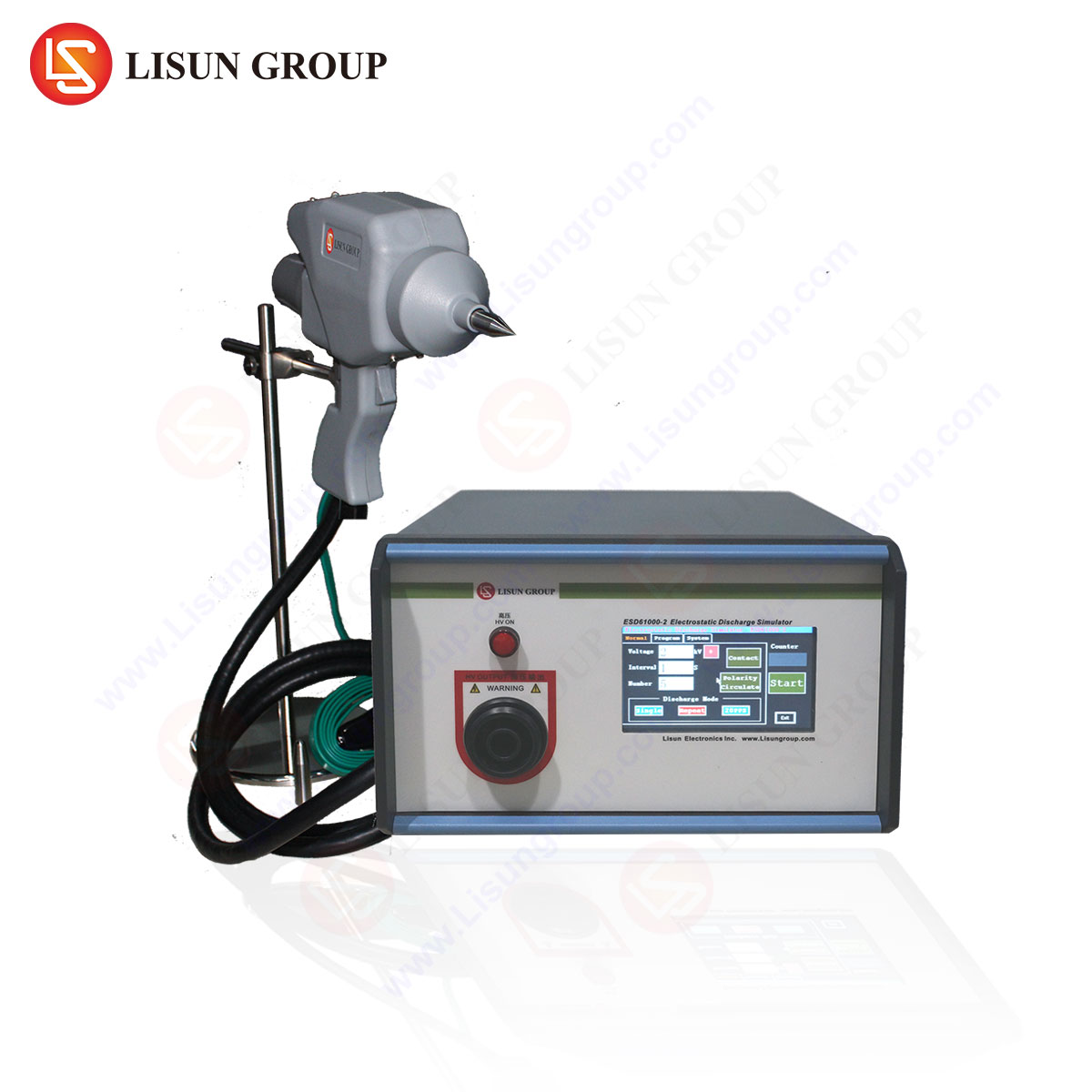
In the context of modern industrial operations, the demand for uninterrupted, high-quality electrical power is paramount. The LISUN Advanced Electricity Generator, when integrated with precision testing instrumentation such as the LISUN ESD61000-2C Electrostatic Discharge (ESD) Gun, establishes a new benchmark for operational reliability and efficiency. This technical whitepaper examines the synergistic relationship between robust power generation and rigorous Electromagnetic Compatibility (EMC) compliance testing. An in-depth analysis of the ESD61000-2C’s operational principles, its application across diverse industrial sectors, and its role in mitigating downtime and failure rates is provided. The article further explores how advanced power generation systems, coupled with standard-compliant ESD testing, deliver measurable improvements in system longevity and performance for industries ranging from Rail Transit to Medical Devices and Spacecraft.
導入
Industrial electricity generators are no longer mere backup power sources; they are critical components of continuous manufacturing, data integrity, and safety-critical operations. The efficiency of these generators is often compromised by transient electrical phenomena, notably electrostatic discharge (ESD). Failures attributed to ESD in power electronics, control systems, and smart instrumentation lead to significant losses in productivity and equipment lifespan. LISUN, a recognized authority in test and measurement equipment, offers a dual solution: high-performance electricity generation systems and the ESD61000-2C ESD Gun. This article posits that the maximization of generator reliability is contingent upon the rigorous application of ESD immunity testing, a process made precise by the ESD61000-2C, which simulates real-world discharge events to validate system integrity.
1. The Role of Electrostatic Discharge Testing in Power Generation Stability
Electrostatic discharge represents a significant threat to modern power management systems, particularly those utilizing digital controllers and high-frequency switching power supplies. The LISUN ESD61000-2C is designed to evaluate the immunity of electrical and electronic equipment against such transient disturbances. Its relevance to industrial electricity generators lies in its ability to simulate contact and air discharges that can occur during routine maintenance, cable manipulation, or capacitive coupling in dry environments.
1.1 Technical Specifications of the LISUN ESD61000-2C
The ESD61000-2C is engineered to comply with IEC 61000-4-2, among other international standards. Its output parameters are critical for replicating the stress applied to generator control logic and auxiliary systems.
| パラメータ | 仕様 |
|---|---|
| 出力電圧 | 0.1 – 20.0 kV ±5% |
| 極性 | Positive / Negative |
| Discharge Modes | Contact Discharge, Air Discharge |
| Energy Storage Capacitor | 150 pF ±10% |
| Discharge Resistor | 330 Ω ±10% |
| Rise Time (tr) | 0.6 – 1.0 ns |
| Holding Time | >5 seconds per discharge |
| Pulse Repetition Rate | 0.1 – 20 Hz |
| Standards Compliance | IEC 61000-4-2, EN 61000-4-2, GB/T 17626.2 |
| Discharge Network | RC network with high-voltage relay switching |
The generator’s precision in maintaining a rise time under 1 nanosecond is essential for testing the high-speed logic gates found in modern inverter drives and digital signal processors (DSPs) used in power conversion.
2. Testing Principles: Simulating High-Energy Transients for Industrial Durability
The operational principle of the ESD61000-2C is based on the rapid transfer of stored electrostatic energy. When applied to a generator’s User Interface or I/O ports, the discharge simulates a human touching a metallic part while possessing a significant static charge.
2.1 Contact Discharge versus Air Discharge Protocol
- Contact Discharge: The gun’s tip is brought into direct contact with the conductive surfaces of the generator’s control panel, enclosure, or power output terminals prior to discharge. This method injects a defined, repeatable current waveform directly into the Unit Under Test (UUT). For a 4 kV contact discharge, the peak current can exceed 15 A, with a pulse duration of approximately 100–300 ns. This stress tests the robust design of EMI input filters and transient voltage suppression (TVS) diodes.
- Air Discharge: The tip approaches the UUT without physical contact, simulating the most common real-world scenario. The breakdown voltage is dependent on distance, humidity, and geometry. This test is crucial for evaluating the generator’s enclosure design and the effectiveness of air gaps around connectors.
2.2 Discharge Network Topology and Waveform Fidelity
The ESD61000-2C employs a precisely calibrated 330 Ω / 150 pF RC network. The 150 pF capacitor models the human body capacitance, while the 330 Ω resistor represents the resistance of the human skin and metallic object. The resulting current waveform, characterized by a fast initial peak followed by a slower decay, is the standard aggressor waveform for immunity testing. The generator’s ability to maintain this waveform across a voltage range of 0.1 kV to 20 kV ensures that tests are repeatable and correlates directly with field failure rates.
3. Industry Use Cases: Mitigating ESD-Induced Failures Across Sectors
The application of the LISUN ESD61000-2C in conjunction with high-reliability electricity generators is not limited to test houses. It is a critical design validation tool for end-users and manufacturers alike.
3.1 Automobile Industry and Electric Vehicle Charging Infrastructure
Modern Electric Vehicle (EV) charging stations are integrated with sensitive power electronics and communication protocols. The LISUN generator can be tested using the ESD61000-2C to verify its immunity to discharge events during plugin and unplug cycles. Testing at 8 kV contact and 15 kV air discharge levels ensures that the generator’s control software does not crash during a charging session, preventing damage to vehicle batteries and charging infrastructure.
3.2 Medical Devices and Hospital Power Systems
In a clinical environment, backup generators must switch on within milliseconds of a mains failure. The LISUN generator, when coupled with ESD testing, ensures that its Automatic Transfer Switch (ATS) and voltage regulation logic are immune to static from personnel or hospital equipment. A single ESD event could cause a control board latch-up, delaying power restoration to life-supporting devices. Compliance with IEC 61000-4-2 Level 4 (8 kV contact) is often a mandatory qualification for medical-grade power systems.
3.3 Information Technology Equipment and Data Centers
Data centers rely on Uninterruptible Power Supplies (UPS) and diesel generators for continuous operation. The ESD61000-2C is used to test the immunity of the generator’s remote monitoring interface, I/O cards, and network communication modules. A transient event causing the Ethernet controller to reset can lead to a cascade failure in server cooling and power distribution. Testing at 4 kV contact ensures the integrity of the generator’s digital communication backbone.
3.4 Lighting Fixtures and Industrial Equipment
High-power LED lighting systems employed in industrial settings often operate on 48V or 277V AC buses derived from generators. The ESD61000-2C verifies the immunity of the LED driver circuits and dimming controllers against static discharge. A failure in the dimming circuit can lead to sudden darkening in hazardous areas, posing safety risks. Testing ensures the lighting fixture maintains stable light output during an ESD event.
3.5 Rail Transit and Spacecraft Systems
In rail transit, generators provide power to signaling systems, air conditioning, and traction control. ESD testing with the ESD61000-2C at elevated voltages (up to 15 kV) is necessary to simulate the high electrostatic potentials found in low-humidity environments such as tunnels and high-altitude operation. For spacecraft, the generator’s power supply must be immune to electrostatic build-up from solar wind and cosmic rays. The LISUN ESD61000-2C validates the power conditioning stages against these severe transient conditions.
4. Competitive Advantages of the LISUN ESD61000-2C in Industrial Testing
Compared to alternative ESD simulation instruments (e.g., from Teseq or NoiseKen), the LISUN ESD61000-2C offers distinct engineering advantages for industrial generator and power equipment testing.
4.1 Wide Voltage Range and High Precision
The dynamic range of 0.1 kV to 20 kV covers all four test levels defined by IEC 61000-4-2, plus extends into custom high-voltage scenarios required for specialized industrial testing. The ±5% voltage accuracy is superior to many legacy systems, reducing test uncertainty.
4.2 Integrated Automation and Remote Control
The ESD61000-2C features an RS-232 and USB interface for full remote control. This is critical for automated test sequences where a generator control unit must be subjected to hundreds of discharges at various points and polarities. The ability to program test scripts reduces human error and accelerates design verification cycles.
4.3 Real-Time Waveform Monitoring and Calibration
The instrument includes an internal voltage monitoring port that allows engineers to observe the discharge waveform on an oscilloscope in real-time without additional high-voltage probes. This feature enables the validation of the discharge network’s integrity on-site, ensuring consistent test conditions.
Table 1: Comparative Performance Metrics of ESD Guns
| 特徴 | LISUN ESD61000-2C | Generic Competitor A | Generic Competitor B |
|---|---|---|---|
| Max Voltage | 20 kV | 16 kV | 15 kV |
| Polarity Switching | Automatic | Manual (via adapter) | Automatic |
| Discharge Frequency | 0.1 – 20 Hz | 1 – 10 Hz | 0.5 – 20 Hz |
| Remote Interface | RS-232, USB | GPIB (option) | USB only |
| Capacitance Options | Fixed 150 pF | Fixed 150 pF | Switchable 100/150/200 pF |
| Battery Life (Continuous) | >8 hours | 4 hours | 5.5 hours |
5. Methodology for Integration into Generator Qualification
To maximize the efficiency and reliability of a LISUN electricity generator, a structured ESD immunity test plan must be executed using the ESD61000-2C. The following methodology is recommended:
- Test Level Selection: Determine the required immunity level based on the installation environment. For stationary industrial equipment, Level 3 (6 kV contact / 8 kV air) is typical. For automotive and harsh environments, Level 4 (8 kV contact / 15 kV air) is mandatory.
- Point of Injection Mapping: Identify all accessible metal parts, I/O ports, and user interface elements on the generator. Discharges are applied at a minimum of 10 points per interface, with 10 positive and 10 negative pulses per point.
- Performance Criterion Definition: Define acceptable behavior. Criteria A (performance within specification) is required for safety-critical systems (e.g., Medical Devices, Rail Transit). Criterion B (temporary degradation with self-recovery) may be acceptable for non-critical control interfaces.
- Calibration Verification: Before testing, verify the discharge network’s current waveform into a 2 Ω target using a current transformer and oscilloscope. The peak current at 4 kV must be within 15 A ±10%.
- Statistical Analysis: Record the discharge voltage threshold where the generator experiences a logic upset or latch-up. This data is used to design adequate suppression circuitry, such as ferrite beads and transient suppressors, to increase the generator’s withstand voltage by 2–3 kV.
6. Standards Compliance and Legal Implications
Manufacturers of industrial electricity generators must demonstrate compliance with regional EMC directives. In the European Union, compliance with EN 55011 (emissions) and EN 61000-4-2 (immunity) is a prerequisite for CE marking. The LISUN ESD61000-2C is calibrated to meet the requirements of these directives, providing traceable test data. For the Chinese market, compliance with GB/T 17626.2 is mandatory. The ESD61000-2C natively supports this standard, making it the optimal test instrument for generator certification in global markets.
7. Conclusion
The efficiency and reliability of LISUN’s Advanced Electricity Generator are significantly enhanced through the systematic application of ESD immunity testing via the ESD61000-2C. This instrument provides the precise, repeatable transients necessary to validate the robustness of power control electronics across demanding industrial sectors. By adhering to the rigorous testing protocols outlined in IEC 61000-4-2 and leveraging the ESD61000-2C’s high-voltage range and automation capabilities, engineers can design generators that withstand real-world electrostatic threats. The result is a reduction in field failures, lower total cost of ownership, and assured operational continuity for critical applications in Automobile Industry, Medical Devices, and Spacecraft.
よくある質問(FAQ)
Q1: What is the specific difference between the LISUN ESD61000-2C and the ESD61000-2 model?
The ESD61000-2C integrates a faster internal relay switching mechanism for higher repetition rates (up to 20 Hz) and offers an extended voltage range to 20 kV compared to the standard 16 kV limit of the ESD61000-2. The ‘C’ variant also includes a more sophisticated remote control interface with real-time waveform monitoring capabilities, which is advantageous for automated industrial testing.
Q2: How often should the LISUN ESD61000-2C be calibrated to maintain accuracy for generator testing?
For industrial and medical device applications, annual calibration is recommended. LISUN provides a certified calibration procedure that validates the 150 pF / 330 Ω network’s response time and the accuracy of the voltage set point. Calibration is critical for maintaining traceability to IEC 61000-4-2.
Q3: Can the ESD61000-2C be used to test the power output terminals of a generator while it is running?
Yes, but with significant caution. The ESD61000-2C is designed for immunity testing on powered equipment. For testing generator output terminals (AC/ LV devices), the generator must be operating under load. The instrument’s grounding must be connected to the generator’s safety earth (PE) to avoid floating ground issues that could damage the tester or the generator’s main inverter.
Q4: What performance criterion is typically required for a backup generator used in a data center ATS system?
Performance Criterion A is generally required for the control logic of an Automatic Transfer Switch. This means no loss of function or performance degradation is permitted during or after the ESD test. The LISUN ESD61000-2C is used to verify that the ATS logic remains latched and responsive at 4 kV contact / 8 kV air discharge levels.
Q5: What is the procedure for verifying the discharge waveform of the ESD61000-2C before a test sequence?
The user must connect the gun’s discharge tip to a calibration target (2 Ω resistor) and a current transformer. An oscilloscope is set to 50 ns/div. A 4 kV positive contact discharge is triggered. The waveform should exhibit a first peak current of 15 A ± 20% and a second peak at 30 ns of 8 A ± 10%. If the waveform is distorted or the rise time exceeds 1 ns, the discharge network or HV connector requires servicing.
 English
  Spanish
  Russian
  Portuguese
  Turkish
  Arabic
  German
  Polish
  Italian
  French
  Korean
  Japanese
  Indonesian