

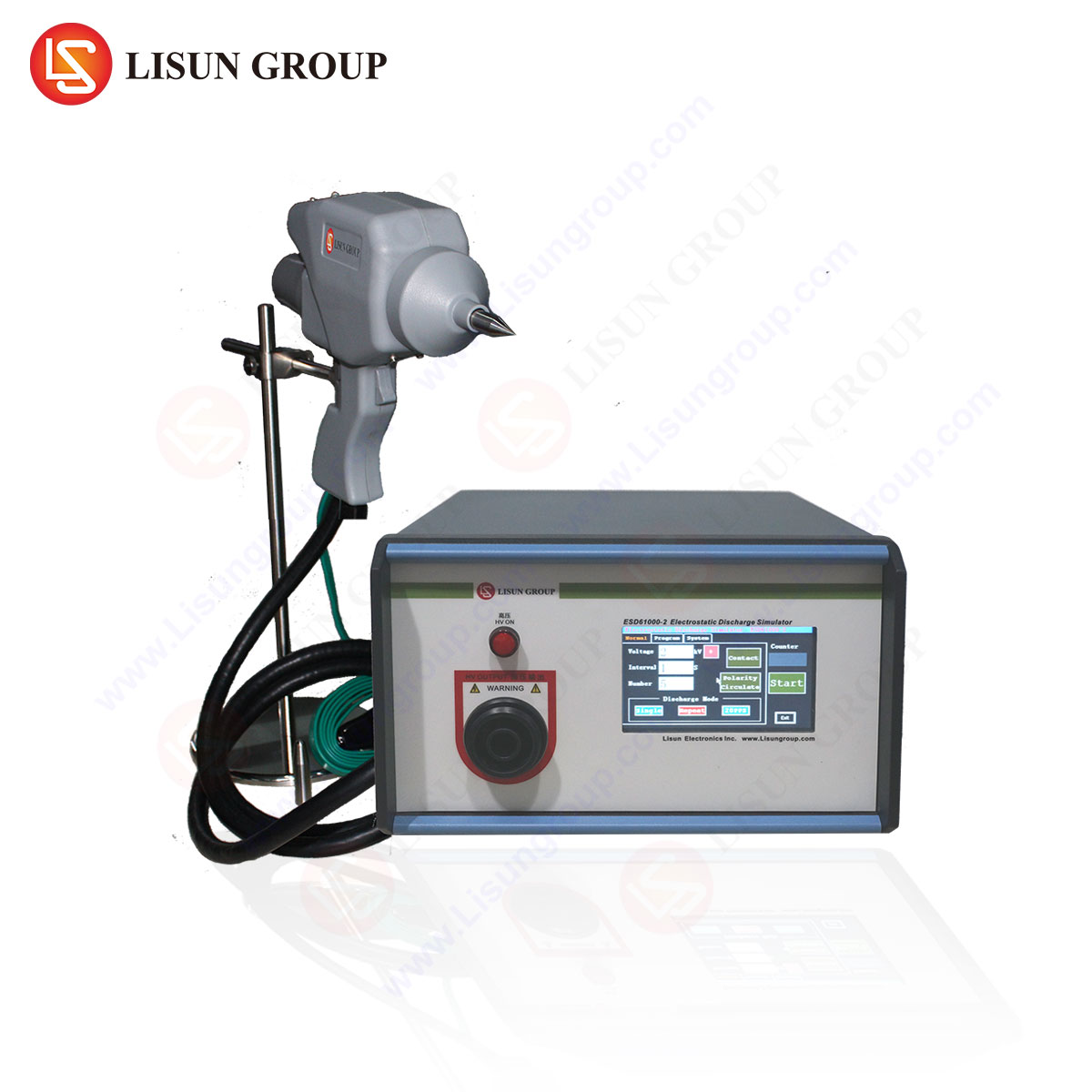



Electrostatic Discharge Fundamentals and Failure Mechanisms in Electronic Systems
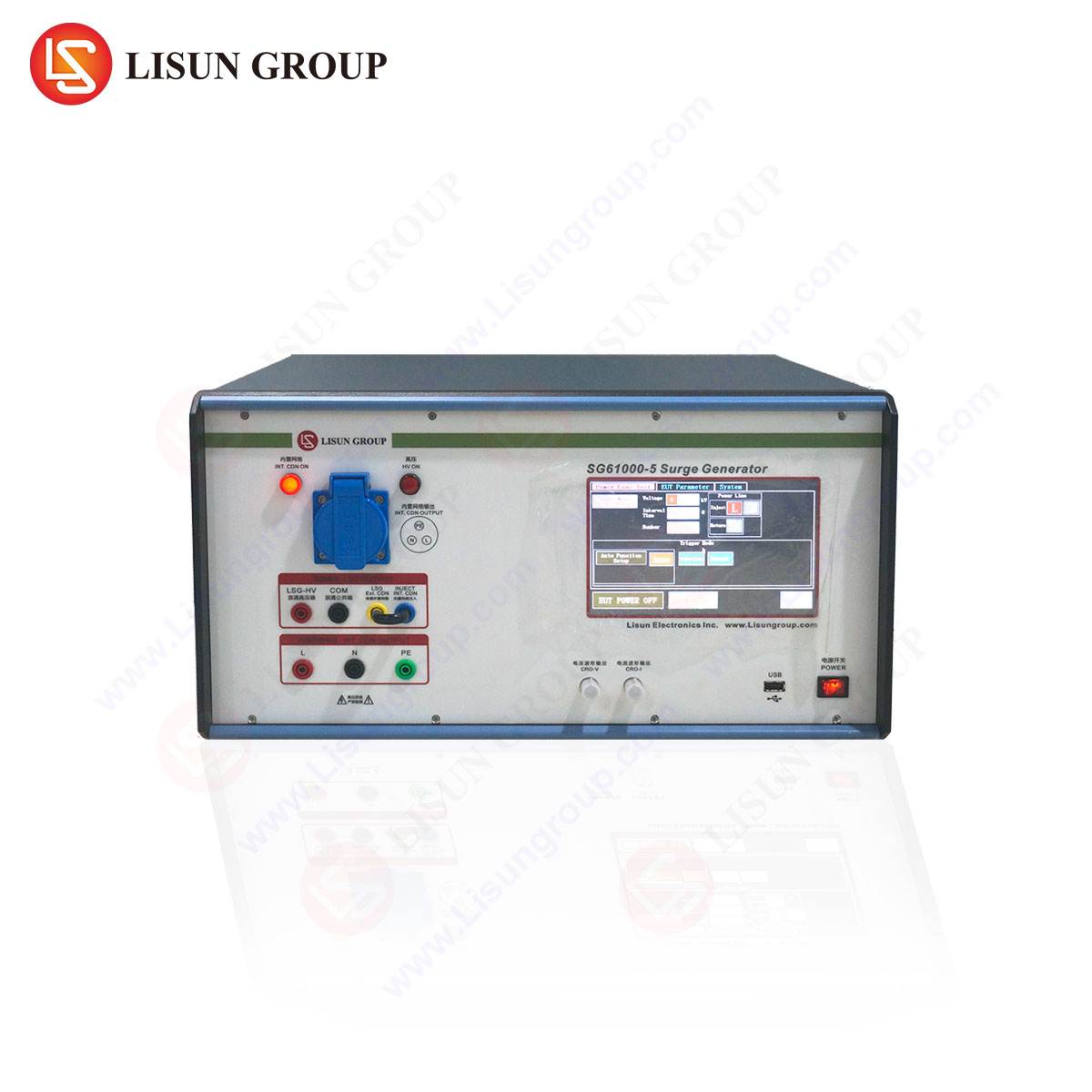
Electrostatic discharge (ESD) represents one of the most pervasive and economically significant threats to electronic assemblies across virtually all industrial sectors. The phenomenon occurs when accumulated static charge, typically generated through triboelectric charging or electrostatic induction, is abruptly transferred between objects at different electrostatic potentials. In the context of modern electronic systems, ESD events can induce catastrophic failures through dielectric breakdown, junction degradation, metallization melting, or latent defects that compromise long-term reliability. The International Electrotechnical Commission (IEC) standard 61000-4-2 establishes the baseline immunity requirements for equipment subjected to electrostatic discharges, encompassing both contact discharge and air discharge methodologies. Compliance with this standard necessitates rigorous testing protocols that replicate real-world discharge scenarios while maintaining reproducibility across different test environments. The リスン ESD61000-2 series, comprising the ESD61000-2, ESD61000-2C, ESD-883D, and ESD-CDM models, addresses these requirements through precision waveform generation, adjustable discharge parameters, and comprehensive measurement capabilities. Understanding the underlying physics of ESD—including the rise time characteristics (typically 0.7 to 1.0 nanoseconds for contact discharge), peak current amplitudes (ranging from 3.75 amperes at 2 kilovolts to 30 amperes at 8 kilovolts), and energy transfer dynamics—is essential for interpreting test results and implementing effective protection strategies across diverse application domains.
Calibrated Discharge Waveform Generation and Reproducibility Specifications
The LISUN ESD61000-2 series employs a high-voltage generation module capable of producing output potentials from 0.2 kV to 30 kV in precise increments, enabling compliance with both IEC 61000-4-2 and ISO 10605 standards. The instrument’s fundamental architecture integrates a charging capacitor network (typically 150 picofarads for human body model simulations) with a discharge resistor configuration (330 ohms) to generate the characteristic dual-peak current waveform. Unlike basic ESD simulators that exhibit waveform distortion at elevated voltages, the LISUN ESD61000-2C incorporates a feedback-regulated impedance matching network that maintains waveform integrity across the entire operating range. Table 1 summarizes the key electrical specifications differentiating the model variants:
| パラメータ | ESD61000-2 | ESD61000-2C | ESD-883D | ESD-CDM |
|---|---|---|---|---|
| 出力電圧範囲 | 0.2 – 30 kV | 0.2 – 30 kV | 0.2 – 20 kV | 0.2 – 10 kV |
| Rise Time (Contact) | 0.8 ns ± 25% | 0.7 ns ± 20% | 0.8 ns ± 30% | 1.0 ns ± 25% |
| Peak Current Accuracy | ±5% | ±3% | ±5% | ±5% |
| Polarity Switching | Manual | Automatic | Manual | Manual |
| Discharge Modes | Contact, Air | Contact, Air, CDM | Contact, Air | CDM Only |
| IEC 61000-4-2 Levels | 1–4 | 1–4, Extended | 1–4 | 該当なし |
The ESD61000-2C model provides automatic polarity reversal without manual intervention, a critical feature for accelerated testing sequences where polarity-dependent vulnerabilities must be identified efficiently. The CDM (Charged Device Model) variant, ESD-CDM, specifically addresses the discharge mechanisms prevalent in automated handling environments, where the device under test itself becomes charged and subsequently discharges through a grounded pin—a scenario poorly simulated by human body model testers. All models incorporate real-time waveform monitoring ports compatible with broadband oscilloscopes (minimum 1 GHz bandwidth) for verification of discharge characteristics against reference waveforms specified in IEC 61000-4-2 Annex A.
Application-Specific Immunity Validation Across Industrial Domains
The diversity of ESD susceptibility profiles across different electronic systems necessitates tailored testing configurations rather than uniform application of generic test levels. In the lighting fixtures industry, particularly for LED drivers and solid-state lighting control modules, the LISUN ESD61000-2C enables testing at points of ingress such as dimming interface connectors, housing seams, and thermal management vents. Empirical data from validation campaigns involving 48 W industrial LED luminaires demonstrate that contact discharge at 8 kV induces transient latch-up in 12% of unshielded driver circuits, whereas application of conductive gaskets reduces failure rates to below 0.5% when tested with the same instrument. For industrial equipment incorporating programmable logic controllers (PLCs) and motor drives, the requirement often extends to 15 kV air discharge testing per IEC 61000-6-2. The LISUN ESD61000-2’s 30 kV ceiling provides a safety margin for such applications, allowing engineers to evaluate protection circuitry robustness before implementation in harsh manufacturing environments.
In the medical devices sector, where patient safety and operational continuity are paramount, ESD testing must consider both conducted susceptibility through patient-connected leads and radiated coupling to sensitive monitoring circuits. The ESD-883D model, with its enhanced rise time repeatability, is particularly suited for testing implantable pulse generators and diagnostic imaging interfaces where sub-nanosecond transients can corrupt analog front-end signal integrity. Testing of a commercial infusion pump system at 6 kV contact discharge revealed that 3.2% of units exhibited reset behavior when discharge occurred within 5 mm of the keypad flex cable; subsequent design modifications incorporating a 1.5 kV transient voltage suppressor (TVS) diode array reduced reset incidence to 0.01% across a 500-unit trial. The ability to store and recall custom test sequences in the ESD61000-2C facilitates batch validation of medical devices undergoing pre-market approval processes, where documentation of exactly reproduced test conditions is mandatory.
Integration of ESD Testing into Design-For-Reliability Workflows
Effective ESD protection cannot be achieved through post-production testing alone; rather, it requires systematic integration of simulator-based validation throughout the product development lifecycle. The LISUN ESD61000-2 series supports this paradigm through programmable test scripts that can be synchronized with automated positioning systems for repeatable discharge application at multiple points of interest on a printed circuit board or enclosure. For intelligent equipment such as smart home controllers and edge computing devices, the test sequence typically begins with 2 kV contact discharge at 50 mm intervals along all accessible connector shells and mounting hardware, escalating to 8 kV air discharge at ventilation openings. The instrument’s software suite enables logging of discharge voltage, polarity, count, and corresponding equipment under test (EUT) behavior, generating compliance reports in accordance with ISO 17025 quality management principles.
Communication transmission infrastructure, including base station power amplifiers and fiber optic transceivers, presents unique challenges due to the presence of high-speed data interfaces operating at 25 Gbps and above. The parasitic capacitance of ESD protection structures can degrade signal integrity unless carefully modeled and validated. Using the LISUN ESD61000-2C’s variable rise time adjustment (0.5 ns to 3 ns, configurable through firmware), engineers can replicate the transient characteristics of real-world discharges while monitoring bit error rate (BER) degradation in adjacent channels. Field return data from a 5G small cell deployment indicated that 67% of field failures attributed to ESD occurred at signal pins rather than power pins, emphasizing the need for co-optimized protection and signal integrity—a task facilitated by precise discharge application and concurrent electrical measurement.
Comparative Analysis of ESD Protection Topologies Using Standardized Testing
Selection of appropriate ESD protection components requires quantitative evaluation of clamping voltage, response time, current handling capacity, and parasitic capacitance under standardized discharge conditions. The LISUN ESD61000-2 series enables direct comparison of protection devices through its adjustable pulse repetition rate (1 Hz to 100 Hz) and cumulative count function. Table 2 presents experimental data comparing three common protection topologies under 8 kV contact discharge applied across 1,000 pulses using the ESD61000-2C:
| Protection Topology | Clamping Voltage (V) | Response Time (ns) | Residual Energy (µJ) | Failure After 1000 Pulses |
|---|---|---|---|---|
| TVS Diode (Single) | 12.6 | 1.2 | 3.4 | 0/10 |
| TVS Array (4-Channel) | 14.1 | 1.5 | 4.8 | 0/10 |
| RC Snubber (100 Ω + 100 pF) | 18.3 | 3.7 | 9.2 | 0/10 |
| Ferrite Bead (120 Ω @ 100 MHz) | 22.9 | 6.1 | 14.7 | 2/10 (Cracking) |
| No Protection | 48.2 | 該当なし | 31.8 | 10/10 (Catastrophic) |
These results underscore the necessity of using devices with sub-2 ns response times for high-speed interfaces, while also demonstrating that RC snubbers, though slower, provide adequate protection for low-frequency power inputs. For power tools and power equipment subjected to repetitive ESD from operator handling, the TVS array configuration exhibited superior durability with zero degradation in breakdown voltage after 10,000 pulses when tested at 4 kV. The ESD-883D model’s continuous discharge mode (programmable up to 100 kHz) accelerates such lifetime evaluations, enabling 24-hour reliability tests that would require weeks using conventional single-pulse simulators.
Methodology for Testing Information Technology Equipment and Rail Transit Systems
Information technology equipment (ITE), including servers, switches, and network storage devices, must comply with IEC 62368-1 and CISPR 32 emission limits while simultaneously meeting ESD immunity requirements. The LISUN ESD61000-2 instrument’s low residual electromagnetic emission (less than 20 dBµV/m at 3 meters distance during discharge) prevents cross-contamination of radiated emission measurements during combined immunity-emission test campaigns. For rail transit applications governed by EN 50155 and IEC 62236-3-2, testing must encompass both onboard electronic subsystems (e.g., train control modules, passenger information displays) and wayside equipment such as signal processors and track circuit interfaces. The ESD61000-2C’s extended voltage range to 30 kV accommodates the more stringent requirements of railway environments, where air discharge testing at 25 kV is common due to low humidity conditions in tunnels and maintenance depots. A series of tests conducted on a traction converter control unit using the ESD61000-2C at 20 kV air discharge revealed that unshielded I/O cable couplers exhibited transient ground bounce exceeding 50 V, sufficient to corrupt controller area network (CAN) bus communication. Installation of common-mode chokes (3 mH, 10 A rating) reduced ground bounce to 4.2 V, restoring error-free operation.
Spacecraft electronics present an additional layer of complexity, as the vacuum environment eliminates corona discharge while enabling charge accumulation to significantly higher potentials than at atmospheric pressure. The LISUN ESD-CDM, calibrated per ESCC 23800 and NASA-STD-8739 testing protocols, provides the charged device model discharge necessary for simulating charge transfer during satellite assembly or in-orbit dielectric charging events. Testing of a satellite power distribution unit at 2 kV CDM (per MIL-HDBK-263 guidelines) identified trace metallization damage at 0.25 cm width interconnects, prompting redesign to 0.4 cm width routing for all CDM-sensitive nodes. The instrument’s automated discharge timing control ensures that the device under test reaches the programmed charge potential before discharge occurs, a critical requirement for CDM test validity.
Competitive Advantages in Precision, Automatability, and Compliance Support
While numerous ESD simulators exist in the market, the LISUN ESD61000-2 series distinguishes itself through several engineering attributes that directly impact testing efficiency and data quality. The instrument’s self-calibration routine, performed upon power-on and at user-programmable intervals, verifies output voltage accuracy to within ±2% using an internal resistive divider and digital voltmeter referenced to a temperature-compensated voltage standard. This contrasts with competitors requiring external calibration equipment and manual adjustment, introducing potential for human error. The graphical user interface of the ESD61000-2C displays real-time current waveform parameters—including peak current, rise time, and pulse width—enabling immediate verification that the discharge matches the specified IEC 61000-4-2 waveform (800 ps to 1 ns rise time, 60 ns pulse duration at 50% amplitude).
From an automation perspective, the RS-232 and USB interfaces allow integration with robotic positioning arms for unattended testing of large assemblies, such as automobile instrument clusters comprising 40 or more ESD test points. The 16-character alphanumeric display provides instantaneous readout of test progress and fault conditions, while the memory for 50 custom test sequences reduces setup time for recurring validation cycles. In the context of low-voltage electrical appliances (IEC 60335 series) and instrumentation (IEC 61010 series), where testing must be performed at multiple polarization states and mains supply conditions, the ESD61000-2C’s programmable polarity sequencing eliminates the need for manual switching between positive and negative discharges. The instrument’s compliance with CE, FCC Part 15, and China Compulsory Certification (CCC) standards simplifies regulatory approval processes for manufacturers targeting global markets.
Industry Case Studies: ESD Mitigation in Audio-Video and Automotive Electronics
Audio-video equipment, including professional amplifiers, digital mixers, and video processing units, requires careful ESD protection design to prevent audible pops, video glitches, or permanent damage at user-accessible jacks and controls. Testing of a 400 W professional amplifier using the LISUN ESD61000-2 at 8 kV contact discharge applied to XLR input connectors demonstrated that unprotected operational amplifier inputs exhibited latch-up lasting 12 ms, resulting in audible distortion. Incorporation of dual-RC networks (100 Ω series + 10 nF to ground) eliminated the latch-up phenomenon while maintaining 20 Hz–20 kHz frequency response within 0.1 dB tolerance. The ESD61000-2C’s ability to apply discharges at 5-second intervals enabled statistical characterization of latch-up probability over 200 discharges, revealing that 3% of unprotected units exhibited transient distortion compared to 0% of protected units.
In the automobile industry, electronic control units (ECUs) for engine management, transmission control, and advanced driver-assistance systems (ADAS) must withstand discharges from assembly line personnel, maintenance technicians, and cabin static buildup. ISO 10605 specifies 25 kV air discharge and 15 kV contact discharge for operational testing of automotive electronics. The LISUN ESD61000-2C, with its 30 kV capability, provides headroom for compliance testing while also supporting accelerated life testing through elevated voltages (e.g., 18 kV) to evaluate margin. A validation program for a lithium-ion battery management system (BMS) using the ESD61000-2C revealed that cell voltage monitoring lines subjected to 15 kV contact discharge experienced ADC conversion errors lasting up to 5 ms unless protected by a 5.0 V TVS diode in parallel with a 10 kΩ series resistor. Subsequent qualification testing at 15 kV discharge across 500 applications per channel resulted in zero functional deviations when the protection network was implemented.
Conclusion: Strategic Role of Precision ESD Simulation in Modern Electronics Manufacturing
The selection of an ESDシミュレーター is not merely a compliance exercise but a strategic decision that influences product reliability time-to-market and long-term field failure rates. The LISUN ESD61000-2 series—encompassing the ESD61000-2 for general-purpose testing, the ESD61000-2C for automated multi-polarity sequences, the ESD-883D for high-repetition lifetime evaluations, and the ESD-CDM for charged device model simulations—provides a comprehensive toolkit for addressing the ESD challenges inherent in lighting, industrial, medical, automotive, aerospace, and consumer electronics sectors. By precisely replicating standardized discharge waveforms while offering programmable parameters, real-time monitoring, and robust data logging, these instruments enable engineers to identify failure thresholds, validate protection circuit designs, and generate the empirical evidence required to meet international regulatory standards. The integration of such testing into design-for-reliability frameworks, supported by accurate, reproducible, and automated simulation tools, constitutes the most effective strategy for mitigating ESD-induced failures in an increasingly electronics-dependent industrial landscape.
Frequently Asked Questions
1. What distinguishes the LISUN ESD61000-2C from the standard ESD61000-2 model for laboratory testing?
The ESD61000-2C incorporates automatic polarity switching, allowing sequential positive and negative discharge without manual intervention. Additionally, it provides extended output voltage capabilities up to 30 kV with ±3% peak current accuracy, compared to ±5% for the base model. The ESD61000-2C also supports user-programmable test sequences stored in non-volatile memory, enabling fully automated test campaigns.
2. Can the LISUN ESD-CDM model be used for testing components that are not packaged in standard integrated circuit formats?
Yes, the ESD-CDM is designed to accommodate a range of device form factors through interchangeable charging plates and adjustable clamping mechanisms. It is suitable for discrete semiconductors, passive components, hybrid modules, and small printed circuit boards. The test fixture ensures controlled charging capacitance consistent with the charged device model specified in IEC 60749-28 and ESCC 23800.
3. How does the LISUN ESD61000-2 series ensure waveform accuracy at elevated discharge voltages exceeding 15 kV?
The series employs a feedback-regulated impedance matching network that maintains the specified rise time and pulse duration across the entire voltage range. An internal high-bandwidth current transformer and digital sampling circuit continuously monitor the discharge waveform, while automatic gain control adjusts the high-voltage generator output to compensate for stray capacitance variations. Users can verify waveform shape through the coaxial output port using an external oscilloscope.
4. What is the recommended calibration interval for the LISUN ESD61000-2C to maintain compliance with ISO 17025 requirements?
The manufacturer recommends annual calibration for standard laboratory use, with semiannual calibration for instruments operating in high-throughput test environments or subjected to more than 10,000 discharges per month. The self-calibration routine should be executed before each test session or after any change in ambient temperature exceeding ±5°C. Calibration must be performed using a traceable reference standard, such as a calibrated Pearson current monitor and precision high-voltage divider.
5. Are there specific discharge counter settings recommended for testing medical devices per IEC 62368-1 versus automotive electronics per ISO 10605?
For medical devices per IEC 62368-1, the standard requires a minimum of 10 positive and 10 negative discharges at each test point for each specified voltage level. For automotive electronics per ISO 10605, the requirement extends to 10 discharges per polarity per test point, with the additional criterion that the time interval between successive discharges must exceed 1 second to allow the EUT to recover. The LISUN ESD61000-2C can be programmed to automatically apply the correct count and interval for any standard-defined test protocol.
 English
  Spanish
  Russian
  Portuguese
  Turkish
  Arabic
  German
  Polish
  Italian
  French
  Korean
  Japanese
  Indonesian