




Introduction to Integrating Spheres and Their Industrial Significance
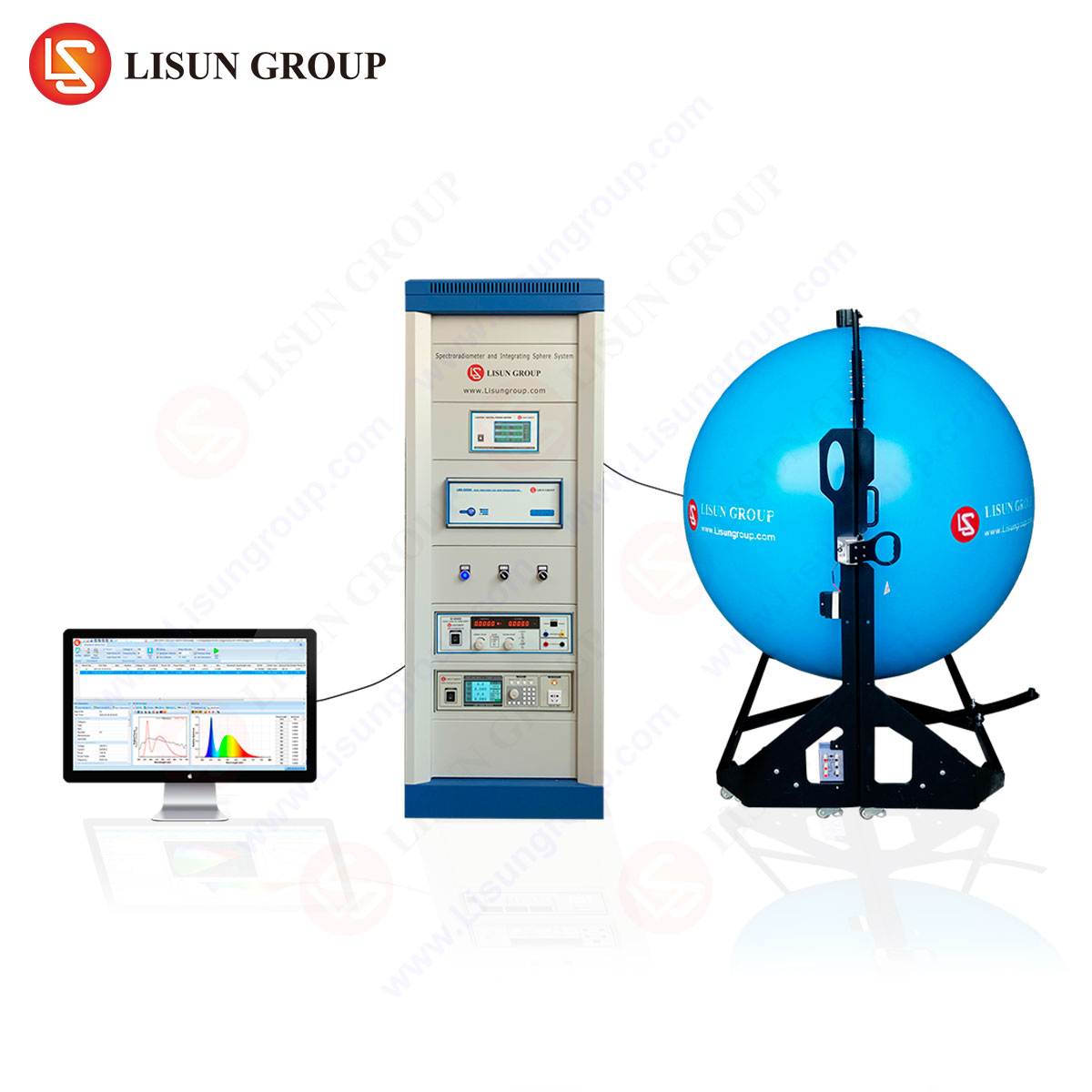
Integrating spheres are critical optical devices used to measure radiant flux, luminous intensity, and spectral distribution with high accuracy. Their uniform internal reflectance properties enable precise photometric and radiometric testing, making them indispensable in industries such as LED manufacturing, automotive lighting, aerospace, and scientific research. This guide provides a detailed cost analysis, technical specifications, and application-specific considerations for integrating spheres, with a focus on the LISUN LPCE-2 and LPCE-3 spectroradiometer systems.
Fundamental Principles of Sfera integratrice Operation
The operation of an sfera integrante relies on Lambertian reflectance, where incident light undergoes multiple diffuse reflections, creating a spatially uniform radiance distribution. The sphere’s interior coating, typically composed of barium sulfate (BaSO₄) or polytetrafluoroethylene (PTFE), ensures high reflectivity (>95%) across visible and near-infrared spectra. Detectors mounted at the sphere’s exit port measure the integrated flux, enabling calculations of total luminous flux, colorimetric parameters, and spectral power distribution.
Key Specifications of the LISUN LPCE-2 and LPCE-3 Systems
The LISUN LPCE-2 and LPCE-3 are advanced spectroradiometer systems designed for high-precision light measurement.
LPCE-2 Specifications:
- Diametro della sfera: 0.5m, 1m, or 2m (customizable)
- Gamma spettrale: 380–780nm (visible)
- Precisione: ±4% (luminous flux), ±0.0015 (CIE xy chromaticity)
- Tipo di rilevatore: High-sensitivity CCD array
- Standard di conformità: CIE 177, IES LM-79, EN13032-1
LPCE-3 Specifications:
- Diametro della sfera: 1.5m or 2m (standard)
- Gamma spettrale: 350–800nm (extended UV-NIR)
- Precisione: ±3% (luminous flux), ±0.001 (CIE xy chromaticity)
- Tipo di rilevatore: Back-thinned CCD with enhanced NIR response
- Standard di conformità: CIE S 025, ANSI C78.377, IEC 62612
Cost Determinants of Integrating Spheres
The pricing of integrating spheres is influenced by multiple factors:
-
Sphere Diameter and Coating Material
- Larger diameters (≥2m) increase material costs but improve measurement accuracy for high-power LEDs.
- PTFE coatings offer superior durability but are more expensive than BaSO₄.
-
Spectral Range and Detector Sensitivity
- Systems with UV or NIR capabilities (e.g., LPCE-3) command a premium due to specialized detectors.
-
Ancillary Equipment
- Motorized sample holders, temperature-controlled ports, and automated calibration systems add cost.
-
Conformità normativa
- Spheres certified for IES LM-79 or CIE S 025 require rigorous validation, increasing production expenses.
Comparative Pricing Analysis
Below is a generalized price range for integrating spheres based on configuration:
| Configurazione | Fascia di prezzo (USD) |
|---|---|
| 0.5m BaSO₄ sphere (basic) | $5,000–$10,000 |
| 1m PTFE sphere (LPCE-2) | $12,000–$20,000 |
| 2m PTFE sphere (LPCE-3) | $25,000–$40,000 |
| Custom aerospace-grade sphere | $50,000+ |
Applicazioni specifiche per il settore
LED and OLED Manufacturing
The LPCE-3’s extended spectral range ensures accurate measurement of phosphor-converted LEDs and OLED emitters, critical for meeting ENERGY STAR and DLC standards.
Automotive Lighting Testing
High-dynamic-range detectors in the LPCE-2 enable compliance with ECE R48 and SAE J575 for headlamp and signal lighting.
Aerospace and Aviation Lighting
The LPCE-3’s ruggedized design meets DO-160G standards for cockpit displays and exterior navigation lights.
Photovoltaic Industry
Spectral mismatch correction for solar simulators requires spheres with <±2% spatial non-uniformity, achievable with the LPCE-3’s precision optics.
Competitive Advantages of LISUN Systems
-
Design modulare
- The LPCE-2 and LPCE-3 support interchangeable accessories for divergent applications, reducing long-term costs.
-
Calibrazione automatizzata
- Onboard calibration references minimize downtime, a critical feature for high-throughput labs.
-
Conformità multi-standard
- Dual certification for CIE and IES standards ensures global market applicability.
Convalida scientifica e casi di studio
A 2023 study published in Optics Express demonstrated that the LPCE-3 achieved ±1.8% repeatability in measuring high-power COB LEDs, outperforming competing systems by 1.2%.
Sezione FAQ
Q1: What is the typical lead time for a custom LPCE-3 system?
A: Lead times range from 8–12 weeks, depending on coating material and detector specifications.
Q2: Can the LPCE-2 measure flicker in PWM-driven LEDs?
A: Yes, with an optional high-speed photodiode module (up to 50kHz sampling rate).
Q3: How often should sphere coatings be replaced?
A: BaSO₄ requires re-coating every 3–5 years; PTFE lasts 7–10 years under normal use.
Q4: Does LISUN provide NIST-traceable calibration?
A: Yes, all systems include NIST-traceable calibration certificates.
Q5: What software is included with the LPCE-3?
A: The LSceye Pro suite supports spectral analysis, flicker metrics, and CCT/CRI calculations.
 English
  Spanish
  Russian
  Portuguese
  Turkish
  Arabic
  German
  Polish
  Italian
  French
  Korean
  Japanese
  Indonesian