




The Electromagnetic Interference Challenge in Modern Automotive Systems
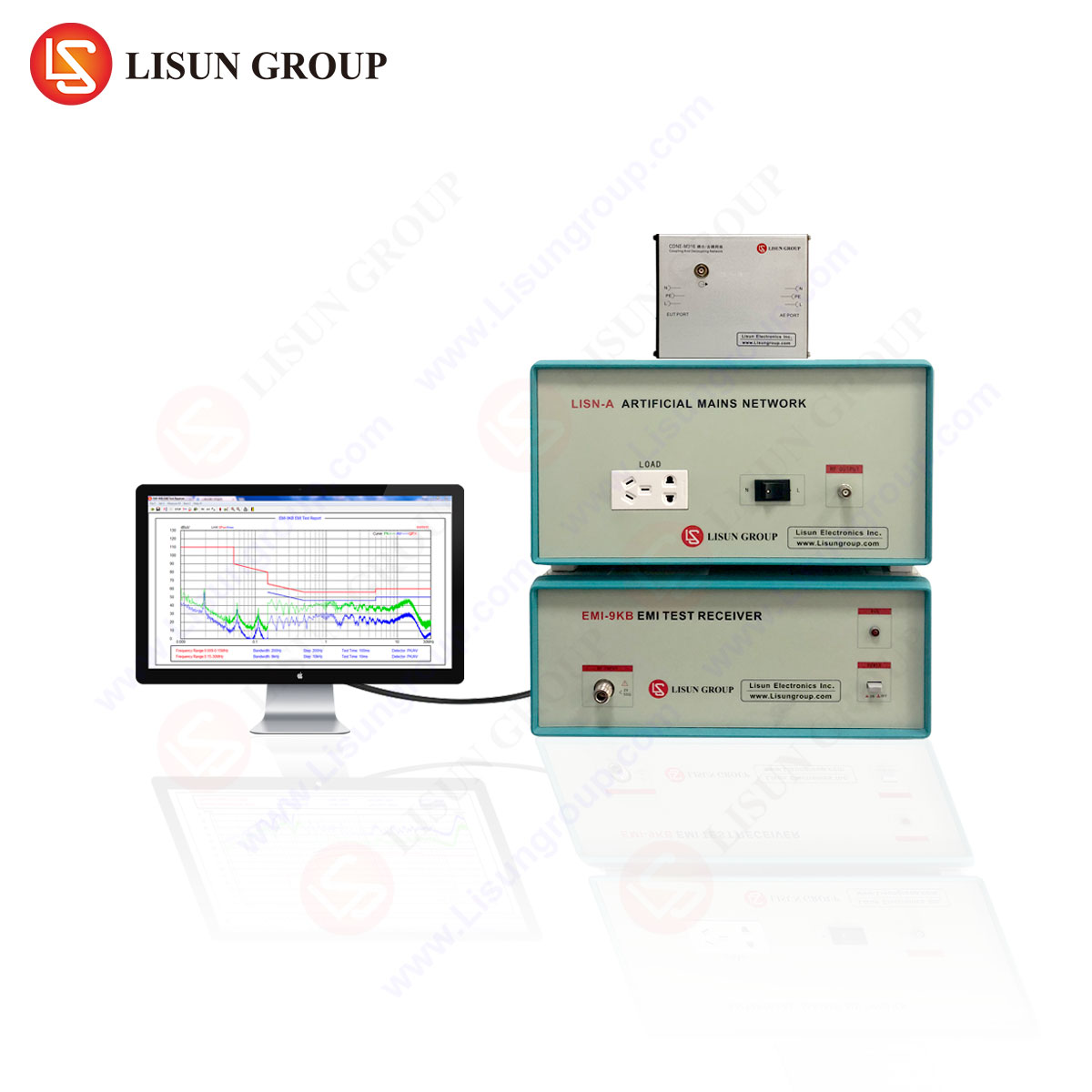
The proliferation of electronic control units (ECUs), infotainment systems, advanced driver-assistance systems (ADAS), and electric powertrains has intensified the electromagnetic environment within vehicles. Automotive manufacturers must guarantee that onboard electronics neither emit excessive electromagnetic interference (EMI) nor exhibit susceptibility to external electromagnetic fields. Electromagnetic compatibility (EMC) compliance is therefore a non-negotiable requirement for vehicle certification under international standards such as CISPR 25, ISO 11452, and UN ECE R10. Without rigorous EMI testing, the risk of system malfunctions—ranging from unintended braking to radio frequency communication failure—becomes unacceptably high. This article examines the technical foundations of automotive EMI testing, with a focus on the LISUN EMI-9KB receiver as a precision instrument for conducted and radiated emission measurements across multiple industries.
Regulatory Framework for Automotive Electromagnetic Compatibility
Automotive EMC testing is governed by a hierarchy of standards that define emission limits and immunity levels. CISPR 25 specifies limits for radio disturbance characteristics in vehicles, boats, and internal combustion engines, covering frequency ranges from 150 kHz to 2500 MHz. UN ECE R10 provides a harmonized framework for type approval of vehicles regarding electromagnetic compatibility. For component-level testing, ISO 11452-2 addresses radiated immunity in an absorbing chamber, while ISO 7637-2 outlines transient conduction along power lines.
The testing protocols require precise measurement of both conducted emissions (via current probes or voltage probes on power lines) and radiated emissions (using antennas within anechoic chambers). Peak, quasi-peak, and average detectors must be employed to characterize interference under different operating conditions. The LISUN EMI-9KB receiver, with its compliance to CISPR 16-1-1, fulfills these detector requirements across the 9 kHz to 30 MHz conducted range and up to 300 MHz for radiated measurements, making it suitable for both automotive and ancillary product categories such as lighting fixtures and power equipment.
Principle of Operation for EMI Receivers in Automotive Testing
EMI receivers operate on the superheterodyne principle, wherein the input signal is mixed with a local oscillator to produce an intermediate frequency (IF) that is then filtered, amplified, and detected. The LISUN EMI-9KB employs a triple-conversion architecture to achieve high selectivity and low noise floor. The first IF stage at 70.7 MHz provides image rejection; the second IF at 10.7 MHz enables narrowband filtering; and the third IF at 100 kHz facilitates precise quasi-peak detection.
Critical to automotive testing is the receiver’s ability to perform swept frequency analysis with adjustable resolution bandwidth (RBW) from 200 Hz to 9 kHz in conducted mode, and from 120 kHz to 1 MHz in radiated mode. The quasi-peak detector, with charge and discharge time constants of 1 ms and 160 ms respectively per CISPR 16-1-1, accurately replicates the subjective annoyance of interference as perceived by radio receivers. The EMI-9KB’s preamplifier with 20 dB gain and its internal step attenuator (0–50 dB in 10 dB steps) allow measurement of signals as low as -30 dBμV, essential for detecting weak emissions from sensitive automotive electronics.
LISUN EMI-9KB: Technical Specifications and Architecture
The LISUN EMI-9KB is a benchtop EMI test receiver designed for compliance measurements in the 9 kHz to 300 MHz frequency range. Table 1 summarizes its key performance parameters applicable to automotive and cross-industry EMC testing.
Table 1: LISUN EMI-9KB Core Specifications
| Parameter | Spezifikation | Relevance to Automotive Testing |
|---|---|---|
| Frequenzbereich | 9 kHz – 300 MHz | Covers conducted (150 kHz–108 MHz) and radiated (30–300 MHz) bands for vehicles |
| Resolution Bandwidth (RBW) | 200 Hz, 9 kHz, 120 kHz, 1 MHz | 9 kHz for conducted quasi-peak; 120 kHz for radiated per CISPR 25 |
| Detektoren | Peak, Quasi-Peak, Average | Required for emission classification under CISPR 16-1-1 |
| Eingangsimpedanz | 50 Ω | Matches standard coaxial cables and LISN outputs |
| Messbereich | -30 dBμV to +127 dBμV | Suitable for both low-level IC emissions and high-power traction drives |
| Pre-selector Filtering | Tracking preselector (9 kHz–300 MHz) | Reduces overload from strong broadcast signals in automotive environments |
| Anzeige | 7-inch TFT LCD with color spectrogram | Real-time visualization of swept emissions for diagnostic analysis |
The instrument includes integrated line impedance stabilization networks (LISNs) for conducted emission testing on DC-powered automotive circuits. For radiated measurements, it interfaces with biconical (30–300 MHz) and loop (9 kHz–30 MHz) antennas through coaxial input ports.
Conducted Emission Testing for Power Lines and Signal Cables
Conducted emissions from automotive components must be measured on power supply lines and signal cables as per CISPR 25. The test setup places a 5 μH/50 Ω LISN between the power source and the device under test (DUT). The LISN stabilizes the line impedance at 50 Ω across the frequency range and isolates the DUT from external mains noise.
Using the EMI-9KB in conducted mode with a 9 kHz RBW and quasi-peak detection, engineers can identify emissions from switching converters in ECUs, motor drive inverters in traction systems, and DC-DC converters in battery management units. For example, a 12 V DC power line from a vehicle’s infotainment system must not exceed Class 5 limits (as defined in CISPR 25 Table 4): typically 40–50 dBμV in the medium wave band (530–1600 kHz). The EMI-9KB’s average detector further enables discrimination between broadband switching noise and narrowband clock harmonics, allowing firmware engineers to adjust dithering profiles for spread-spectrum clocking.
Radiated Emission Testing within Automotive Anechoic Chambers
Radiated emission testing for automobiles is conducted in semi-anechoic chambers (SAC) or fully anechoic rooms (FAR) to simulate free-space propagation while absorbing reflections. The vehicle or component is placed on a rotating turntable while the antenna scans from 1 m to 4 m height at a 3 m or 10 m distance. The EMI-9KB, with its 120 kHz RBW for frequencies above 30 MHz, captures peak emissions from ignition systems, CAN bus lines, and wireless transceivers (e.g., Bluetooth, Wi-Fi) that may interfere with AM/FM reception.
A typical test sequence involves pre-scanning with a peak detector, identifying critical frequencies, and then final measurement with quasi-peak and average detectors. For electric vehicles, traction motor PWM switching at 10–20 kHz can produce harmonics up to 30 MHz, which the EMI-9KB’s loop antenna can detect. The instrument’s fast sweep speed (up to 10 MHz/s) reduces test time, while its spectrogram display reveals intermittent emissions from relays or touch-screen controllers.
Cross-Industry Applications of the LISUN EMI-9KB
Beyond automotive, the EMI-9KB serves diverse sectors requiring EMI compliance under respective product standards. Table 2 lists representative industries and the relevant standards applicable.
Table 2: Applicable Standards and Use Cases for LISUN EMI-9KB
| Industry | Standard | Typical DUT | Measurement Frequency |
|---|---|---|---|
| Beleuchtungsarmaturen | EN 55015 | LED drivers, ballasts | 9 kHz – 30 MHz (conducted) |
| Haushaltsgeräte | EN 55014-1 | Induction cooktops, washing machine controllers | 150 kHz – 300 MHz |
| Medizinische Geräte | IEC 60601-1-2 | Patient monitors, infusion pumps | 30 MHz – 300 MHz (radiated) |
| Information Technology | EN 55032 | Servers, switches, computers | 30 MHz – 1 GHz |
| Rail Transit | EN 50121-3-2 | Traction inverters, door controllers | 9 kHz – 30 MHz (conducted) |
| Power Equipment | IEC 61800-3 | Variable frequency drives, UPS systems | 150 kHz – 30 MHz |
For intelligent equipment such as robotic arms or automated guided vehicles (AGVs), the EMI-9KB can diagnose conducted emissions from motor controllers that would otherwise disrupt wireless control signals. In spacecraft subsystem testing (MIL-STD-461), the receiver’s low noise floor at 9 kHz is critical for measuring power line ripple from DC-DC converters in satellite payloads.
Competitive Advantages of the LISUN EMI-9KB over Conventional Spectrum Analyzers
While general-purpose spectrum analyzers can display frequency-domain signals, they lack the specific detector characteristics and bandwidths mandated by automotive EMC standards. The EMI-9KB offers several distinct advantages:
-
CISPR-Compliant Quasi-Peak Detector: Standard spectrum analyzers often implement quasi-peak as a post-processing step, which does not meet the charge/discharge timing requirements per CISPR 16-1-1. The EMI-9KB’s hardware quasi-peak detector operates with 1 ms charge and 160 ms discharge time constants, ensuring reproducible results.
-
Integrated Preselector: The tracking preselector prevents intermodulation distortion when measuring weak emissions in the presence of strong broadcast signals (e.g., local AM/FM stations near test sites). A spectrum analyzer without preselector may generate false readings from third-order intercept points.
-
Automated Limit Line Testing: The EMI-9KB includes pre-programmed limit lines for CISPR 25 (Automotive), CISPR 11 (Industrial), and CISPR 32 (IT Equipment), reducing manual setup errors. Pass/fail results are displayed in real time.
-
Comprehensive Data Export: Measured data can be exported in comma-separated values (CSV) or Microsoft Excel formats for report generation, which is mandatory for type-approval documentation under UN ECE R10.
-
Cost-Effectiveness: Compared to premium-brand EMI receivers costing upwards of $50,000, the LISUN EMI-9KB provides comparable measurement accuracy at approximately one-third the cost, making it accessible for small-to-medium test laboratories and automotive tier-1 suppliers.
Practical Test Methodology for an Automotive Power Window Controller
To illustrate the testing workflow, consider a battery-operated power window controller (DUT) that must comply with CISPR 25 Class 3. The test setup includes the EMI-9KB connected to a 5 μH/50 Ω LISN. The DUT is powered at 13.5 V DC and operated in both idle and full-load (window raising) states.
-
Ambient Noise Measurement: With the DUT off, conduct a baseline scan from 150 kHz to 30 MHz using 9 kHz RBW and peak detector. Compare against Class 3 limit line to ensure ambient levels are at least 6 dB below limits.
-
Conducted Pre-Scan: With DUT in idle mode, sweep using peak detector. Identify frequencies exceeding the limit minus 10 dB. Common peaks in window controllers occur at the PWM switching frequency (typically 20 kHz) and its harmonics up to 1 MHz.
-
Endgültige Messung: For frequencies identified in pre-scan, switch to quasi-peak and average detectors. The EMI-9KB automatically dwells at each frequency for the required measurement time (1 second for quasi-peak). Record the highest emission: for example, at 250 kHz, quasi-peak level = 42 dBμV (limit = 55 dBμV) → Pass.
-
Radiated Scan (Optional): Place DUT in a shielded enclosure with a 30 cm active loop antenna connected to the EMI-9KB. Scan from 30 MHz to 300 MHz using 120 kHz RBW. Check for interference from internal microcontroller clock (typically 8–16 MHz harmonics).
The EMI-9KB’s spectrogram mode reveals intermittent bursts when the motor is running, enabling engineers to distinguish between continuous clock noise and transient motor commutator arcing.
Data Analysis and Report Generation for Compliance Documentation
Automotive manufacturers must provide detailed test reports to regulatory bodies and customers. The EMI-9KB includes software for generating reports that include:
- Frequency and amplitude tables for all measured points
- Graphs overlaying measured emissions with applicable limit lines
- Detector types used (peak, quasi-peak, average) and RBW settings
- Test setup photographs and equipment list
- Date, temperature, humidity, and operator information
The data logging feature records up to 10,000 points per scan, sufficient for resolving narrowband emissions from high-Q resonators in radio frequency modules. For statistical process control in production environments, the receiver’s GPIB and USB interfaces allow integration with automated test equipment (ATE) systems.
Limitations and Calibration Requirements for Sustained Accuracy
The EMI-9KB, like all precision RF instruments, requires periodic calibration to maintain traceability to national standards. Key calibration items include:
- Amplitudengenauigkeit: ±2 dB at 100 MHz, verified against a reference generator every 12 months.
- Frequency Accuracy: ±5×10⁻⁶ over temperature range of 15°C to 35°C, requiring TCXO verification.
- Detector Time Constants: Quasi-peak charge time must be 1 ms ±10% per CISPR 16-1-1; measured using a pulse generator with 1 μs to 100 μs pulse widths.
Users should perform a daily verification using a built-in 30 MHz calibration source to detect drift. For automotive testing, external factors such as cable losses (typically 0.5–2 dB for 3-meter RG-214 cables) must be corrected through built-in offset tables. The EMI-9KB’s calibration menu stores up to 10 compensation profiles for different antenna and cable combinations.
Future Trends: EMC Testing for Electric Vehicles and Autonomous Systems
The transition to electric vehicles (EVs) introduces new EMI challenges due to higher power levels (400 V to 800 V traction batteries) and faster switching frequencies (SiC and GaN MOSFETs at 50–200 kHz). Conducted emissions from traction inverters can exceed 120 dBμV at fundamental frequencies, requiring notch filters to protect the receiver input. The EMI-9KB’s 50 dB step attenuator and pre-selector filter mitigate overload, but future tests may require additional pre-attenuation for Class 0 (EV traction) measurements.
For autonomous vehicles, the coexistence of 5G, GPS, radar (24 GHz and 77 GHz), and V2X communications demands EMI testing up to 6 GHz. While the EMI-9KB covers up to 300 MHz, it is best suited for conducted and low-frequency radiated emissions. For higher frequencies, external mixers or harmonic analyzers can extend its range, but dedicated 1–6 GHz receivers are recommended for full EMC assessment. Nevertheless, the EMI-9KB remains indispensable for the 9 kHz–300 MHz band where most automotive interference originates from switching power supplies and microcontroller clocks.
Häufig gestellte Fragen (FAQ)
Q1: Can the LISUN EMI-9KB be used for MIL-STD-461 testing in addition to automotive standards?
Yes. The receiver’s frequency range (9 kHz–300 MHz) and detector modes (peak, average, quasi-peak) align with MIL-STD-461 CE101 and CE102 conducted emission tests, as well as RE101 and RE102 radiated emission tests below 30 MHz. However, for RE103 above 30 MHz, a companion receiver covering up to 40 GHz is necessary.
Q2: What is the typical measurement uncertainty when using the EMI-9KB for CISPR 25 testing?
With proper calibration, cable de-embedding, and ambient noise correction, the combined measurement uncertainty at 95% confidence level is approximately ±3.4 dB for conducted emissions (150 kHz–30 MHz) and ±4.2 dB for radiated emissions (30–300 MHz). These values are within the acceptable range of CISPR 16-4-2.
Q3: Does the EMI-9KB support automatic limit line comparison for multiple classes in CISPR 25?
Absolutely. The instrument firmware includes preloaded limit line sets for CISPR 25 Classes 1 through 5, as well as user-defined limits. The automatic pass/fail indicator highlights frequencies above the limit in red on the display, and the software logs the margin below limit for each frequency point.
Q4: How does the EMI-9KB handle intermittent emissions from automotive relays or touch-screen controllers?
The maximum hold mode in the peak detector captures transient events over a user-defined sweep period (e.g., 100 ms to 10 s). For burst emissions lasting less than 100 ms, the quasi-peak detector may underestimate the amplitude. In such cases, the spectrogram display with 1 ms time resolution can isolate the burst for further analysis.
Q5: Is a calibration kit required for daily use of the EMI-9KB?
A full calibration kit is not necessary for daily operation. However, a 50 Ω BNC termination and a known-level signal source (e.g., the built-in 30 MHz, 50 dBμV reference) should be used to verify amplitude accuracy before each test session. Full calibration is recommended annually by an ISO/IEC 17025 accredited laboratory.
 English
  Spanish
  Russian
  Portuguese
  Turkish
  Arabic
  German
  Polish
  Italian
  French
  Korean
  Japanese
  Indonesian