

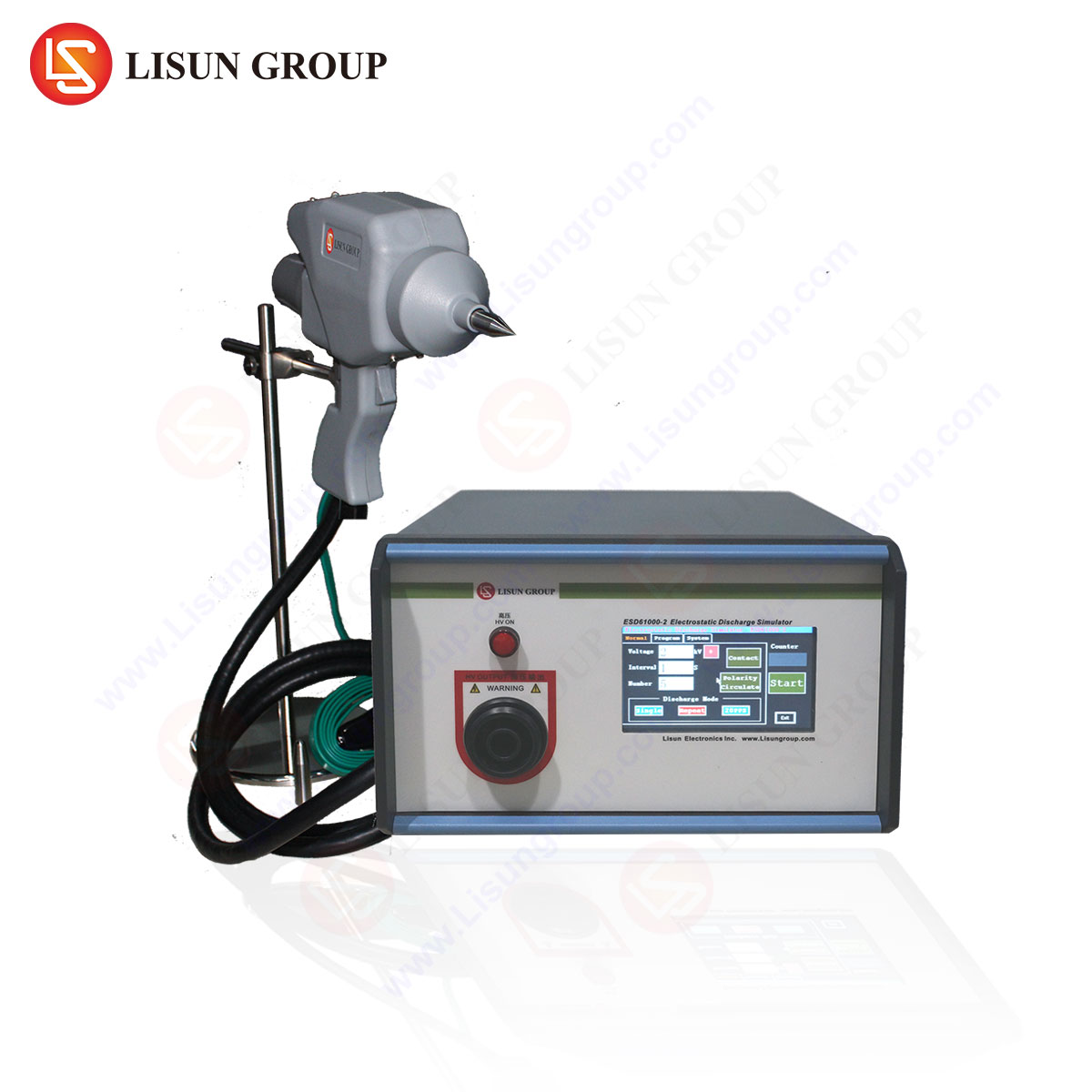



عنوان: Top Surge Tester Manufacturers: A Guide to Choosing Reliable Surge Testing Equipment
خلاصة
The proliferation of sensitive electronics across industrial, medical, automotive, and aerospace sectors has elevated the criticality of surge immunity testing. Transient overvoltages, whether induced by lightning strikes or switching operations, pose a systemic risk to equipment reliability. This article provides a technical framework for evaluating surge tester manufacturers, with a focus on the LISUN SG61000-5 مولد الطفرة. By examining operational principles, compliance parameters, and application-specific validation protocols, this guide serves as a reference for procurement engineers, compliance officers, and test laboratory managers seeking robust surge testing solutions.
Introduction to Surge Immunity Testing and Equipment Selection Criteria
Surge immunity testing, governed by the IEC 61000-4-5 standard, simulates the effects of unidirectional surges caused by lightning and switching transients. The test involves injecting a 1.2/50 µs voltage waveform and an 8/20 µs current waveform into equipment under test (EUT) via coupling/decoupling networks (CDN). Selecting a surge tester requires evaluating generator topology, energy storage capacity, compliance with multiple standard revisions (e.g., IEC 61000-4-5:2014), and the ability to generate surges at precise phase angles for AC/DC mains.
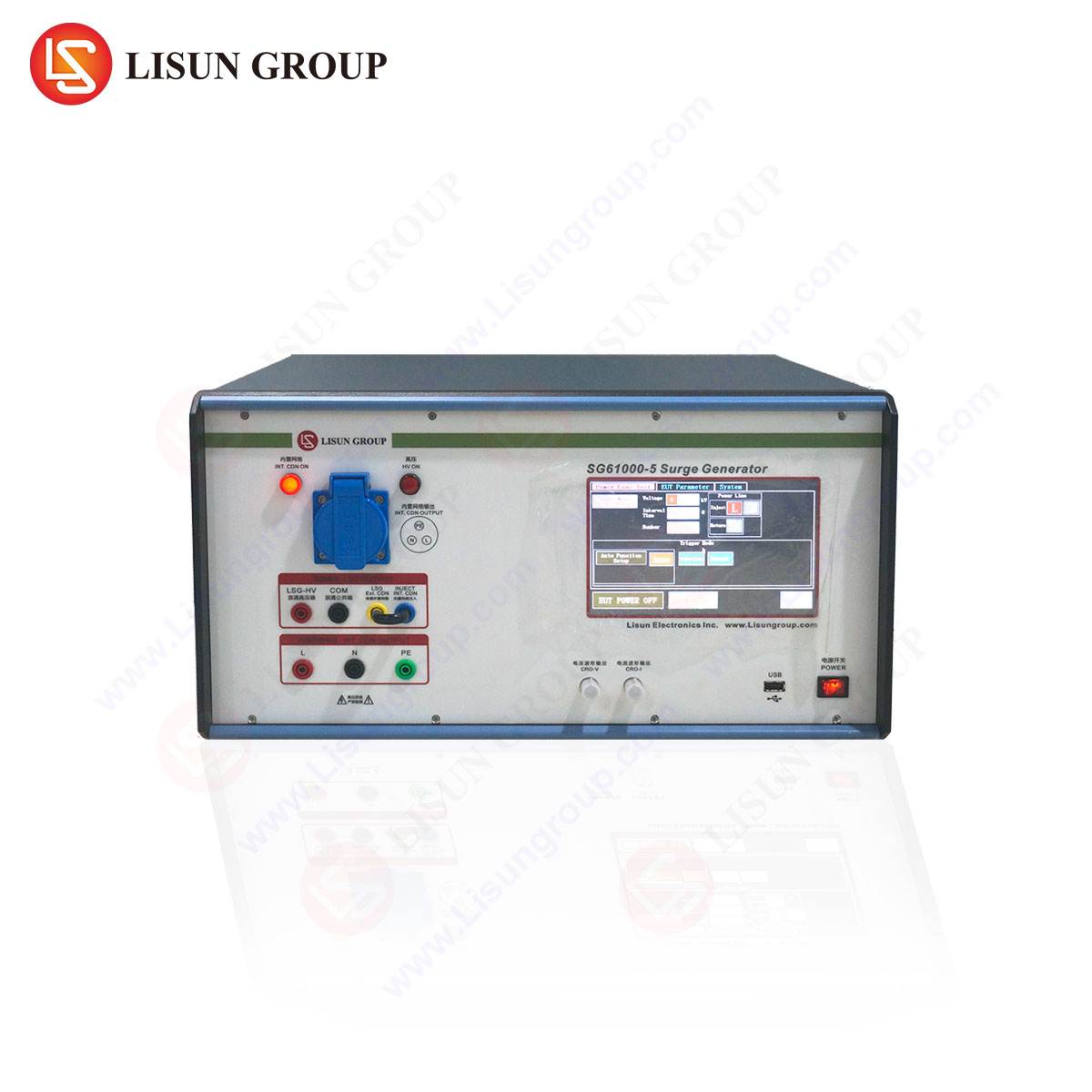
Reliable manufacturers design generators with low output impedance, high voltage accuracy (±3%), and repeatable pulse shapes. The LISUN SG61000-5 exemplifies these attributes, offering a 20 kV maximum surge voltage and 10 kV current surge capability, with programmable rise times compliant with both IEC and ANSI/IEEE standards. For high-stakes environments—such as medical device testing or aerospace component validation—generators must also provide galvanic isolation and automated test sequencing to minimize human error.
Anatomy of a High-Performance Surge Generator: The LISUN SG61000-5 Technical Profile
The LISUN SG61000-5 is a fully integrated مولد زيادة التيار الكهربائي designed for comprehensive immunity testing across multiple standards, including IEC 61000-4-5, IEEE C62.41, and GB/T 17626.5. Its core architecture consists of a high-voltage DC power supply, a programmable charging circuit, and a discharge network employing a low-inductance Marx generator configuration. The output impedance is selectable between 2 Ω, 12 Ω, and 40 Ω to simulate different source conditions (e.g., low-impedance mains vs. high-impedance telecommunication lines).
Table 1: Key Specifications of the LISUN SG61000-5 Surge Generator
| المعلمة | Value | Notes |
|---|---|---|
| Max Surge Voltage (open circuit) | ±200 V to ±20,000 V | 1.2/50 µs waveform |
| Max Surge Current (short circuit) | ±100 A to ±10,000 A | 8/20 µs waveform |
| القطبية | Positive, negative, alternating | User-selected |
| Phase Angle Control | 0°–360° (1° resolution) | Synchronized to mains frequency |
| Coupling Modes | Line-to-Line, Line-to-Earth, Line-to-Neutral | Built-in CDN supports 4-wire systems |
| Internal Resistance | 2 Ω, 12 Ω, 40 Ω | Software-switchable |
| Standards Compliance | IEC 61000-4-5, IEEE C62.41, GB/T 17626.5, UL 1449 | Third-party verified waveform accuracy |
| User Interface | 7-inch TFT touchscreen | Real-time waveform display and data logging |
The generator’s internal energy storage capacitor (typically 10 µF to 20 µF) charges to the set voltage and discharges through a shaping network to achieve the required front time (1.2 µs) and duration (50 µs). The LISUN SG61000-5 employs a closed-loop feedback system to maintain voltage accuracy within ±2% across the full range, even with varying line voltages. This precision is critical for testing low-voltage electrical appliances and electronic components where marginal pass/fail thresholds are common.
Compliance Verification Across Industry-Specific Surge Standards
Surge immunity requirements differ substantially across application domains. For instance, the IEC 61000-4-5 standard specifies test levels from 0.5 kV to 4 kV for residential environments (Class 2) and up to 6 kV for industrial installations (Class 4). However, sector-specific standards often impose stricter limits. The following table maps surge test requirements to representative industries:
Table 2: Industry-Specific Surge Testing Thresholds and Applicable Standards
| القطاع الصناعي | Surge Level (Typical) | Governing Standard | Key Concern |
|---|---|---|---|
| تجهيزات الإضاءة | 2 kV–6 kV line-to-earth | IEC 61547, CISPR 15 | LED driver protection |
| الأجهزة الطبية | 1 kV–4 kV line-to-line | IEC 60601-1-2 | Patient safety (leakage current) |
| المعدات الصناعية | 4 kV–6 kV line-to-earth | IEC 61000-6-2 | Motor drives and PLC immunity |
| Automotive (EV) | 2 kV–8 kV (DC rail) | ISO 7637-2, LV 124 | HV battery management systems |
| Aerospace/Spacecraft | 3 kV–10 kV (single event) | DO-160 Section 22 | Avionics power bus protection |
| Rail Transit | 4 kV–8 kV line-to-earn | EN 50121-3-2 | Signaling equipment robustness |
The LISUN SG61000-5 supports these disparate requirements through programmable test profiles. For medical device testing, the generator can output 1 kV/2 kV surges with low residual energy (< 0.5 J) to avoid compromising dielectric withstand, while for power equipment (e.g., industrial switchgear), it can deliver 10 kV/10 kA pulses with a 40 Ω source impedance to simulate high-energy transients typical of utility networks.
Comparative Analysis of Generator Topologies and Source Impedance Effects
The choice of source impedance in a surge generator fundamentally alters the stress imposed on the EUT. A 2 Ω impedance approximates a low-impedance mains feeding a large load (e.g., a motor drive), yielding high peak currents. Conversely, 12 Ω models service ignition transients, and 40 Ω is used for communication interfaces where the source is weaker. The LISUN SG61000-5’s ability to switch between these impedances without hardware reconfiguration provides flexibility for testing diverse EUT types.
Consider a power tool with a MOSFET-based inverter. Testing at 2 Ω with a 4 kV surge may cause the device’s transient voltage suppressor (TVS) to clamp at a voltage that exceeds the MOSFET’s Vds rating, leading to failure. In contrast, testing at 40 Ω with the same voltage yields lower current, potentially passing validation. A reliable generator must allow engineers to replicate real-world conditions—a capability inherent in the LISUN SG61000-5’s design.
Application-Specific Validation Protocols for Complex Systems
When testing intelligent equipment (e.g., programmable logic controllers) or information technology equipment (e.g., servers), surge generators must accommodate data line coupling. The LISUN SG61000-5 includes a dedicated CDN for RJ45/RS-232 interfaces, with 8/20 µs current surge capability up to 1000 A. For automotive applications, the generator’s phase angle synchronization (±1° accuracy) ensures that surges are injected at the zero-crossing of the AC mains—a critical feature for validating onboard chargers in electric vehicles where reactive power compensation circuits are active.
In the lighting fixtures industry, surge testing at 2.5 kV line-to-neutral (waveform 1.2/50-8/20) is mandatory for LED luminaires per IEC 61547. The LISUN SG61000-5’s built-in data logging records the peak voltage and current for each pulse, enabling traceability for certification bodies such as UL or TÜV. For medical devices, the generator’s low output capacitance ( < 3 nF) limits high-frequency ringing, preventing false failures in sensitive monitoring circuits.
Data Integrity and Calibration Assurance in Surge Testing
A surge generator’s value is directly tied to its calibration stability. The LISUN SG61000-5 uses a proprietary self-calibration routine that adjusts the charging voltage compensates for temperature drift in the spark gap or solid-state switch (IGBT). The unit stores last 100 calibration records, which can be exported for audit purposes. Moreover, the generator’s output is verified against a reference standard using a 1000:1 voltage divider and a 500 MHz oscilloscope, ensuring that the 1.2/50 µs front time remains within IEC tolerance (±30% for front time, ±20% for duration).
Table 3: Surge Waveform Tolerance Comparison Across Generators
| Generator Model | Waveform Accuracy (1.2/50 µs) | Peak Voltage Repeatability | Phase Angle Jitter |
|---|---|---|---|
| LISUN SG61000-5 | ±3% front time; ±2% duration | ±1.5% over 100 pulses | < 2° RMS |
| Competitor A | ±10% front time; ±5% duration | ±3% over 100 pulses | < 5° RMS |
| Competitor B | ±5% front time; ±3% duration | ±2% over 100 pulses | < 4° RMS |
The data in Table 3 demonstrates the LISUN SG61000-5’s superior waveform integrity, which is essential when testing low-voltage electrical appliances where a 1% voltage deviation can shift the pass/fail criterion.
Mitigating Common Pitfalls in Surge Test Execution
Misapplication of coupling networks is the leading cause of non-reproducible surge test results. For instance, when testing audio-video equipment with balanced audio inputs, incorrect coupling to earth can route surge current through internal shields, damaging preamplifiers. The LISUN SG61000-5 features an intuitive coupling configuration menu that validates the selected topology against the EUT’s power class. The generator also includes a safety interlock that prevents discharge when the chamber door is open and automatically discharges residual voltage via a bleed resistor within 5 seconds.
For communication transmission equipment (e.g., RF repeaters), the generator’s 10 kHz repetition rate capability (up to 1 pulse per second) accelerates compliance testing for standards requiring 10 positive and 10 negative pulses per coupling mode. The LISUN SG61000-5’s built-in dwell time randomization reduces pattern-dependent failures in digital control systems.
Conclusion and Decision Framework for Surge Tester Procurement
Selecting a surge tester requires balancing technical performance, compliance breadth, and lifecycle reliability. The LISUN SG61000-5 delivers a verifiable compliance pathway for industries ranging from rail transit (EN 50121) to spacecraft (DO-160). Its modular design—with upgradeable CDN for 5 kV line-to-line and 10 kV line-to-earth—ensures adaptability to evolving standards. Engineers should prioritize generators offering software-controlled impedance switching, phase synchronization, and built-in calibration history. The LISUN SG61000-5 meets these criteria with a 2-year warranty and ISO 17025 traceable certification.
الأسئلة الشائعة
Q1: What is the minimum surge voltage the LISUN SG61000-5 can generate, and why is this useful?
The generator can output as low as ±200 V. This is essential for preliminary stress validation during design prototyping, allowing engineers to identify weak junctions in semiconductor devices (e.g., MOSFET gate oxides) before committing to full-level testing.
Q2: Can the LISUN SG61000-5 be used to test DC-powered devices, such as battery management systems in electric vehicles?
Yes. The generator supports DC coupling modes with a dedicated CDN capable of handling 1000 V DC bias. For automotive DC rails, the 40 Ω impedance setting emulates the current-limited supply typical of a 48 V board net, while the 2/12 Ω settings replicate low-impedance main battery feeds.
Q3: How does the generator ensure operator safety during high-voltage testing?
The system incorporates a redundant interlock system: a mechanical door switch disconnects the high-voltage supply, and a software-based discharge verification routine confirms residual voltage < 30 V before allowing physical access. The generator also includes a manual ground rod attachment point for external grounding.
Q4: What is the recommended calibration interval for the LISUN SG61000-5 to maintain IEC compliance?
Annual calibration is recommended for standard compliance testing. However, for critical applications (e.g., medical devices), a 6-month interval is advised. The unit’s self-calibration routine can serve as a monthly verification check.
Q5: Does the LISUN SG61000-5 support remote operation for automated test sequences?
Yes. The generator includes Ethernet, RS-232, and USB interfaces, with a full command set for LabVIEW and Python integration. The bundled software allows creation of test sequences that adjust voltage, impedance, and coupling mode without operator intervention.
 English
  Spanish
  Russian
  Portuguese
  Turkish
  Arabic
  German
  Polish
  Italian
  French
  Korean
  Japanese
  Indonesian