




Introduction to Ultraviolet Radiation and Its Measurement
Ultraviolet (UV) radiation occupies the electromagnetic spectrum between visible light and X-rays, spanning wavelengths from 100 to 400 nanometers (nm). It is categorized into three bands: UVA (315–400 nm), UVB (280–315 nm), and UVC (100–280 nm). Accurate measurement of UV radiation is critical across industries such as lighting manufacturing, aerospace, medical equipment development, and photovoltaic research, where precise spectral analysis ensures compliance with safety standards and performance optimization.
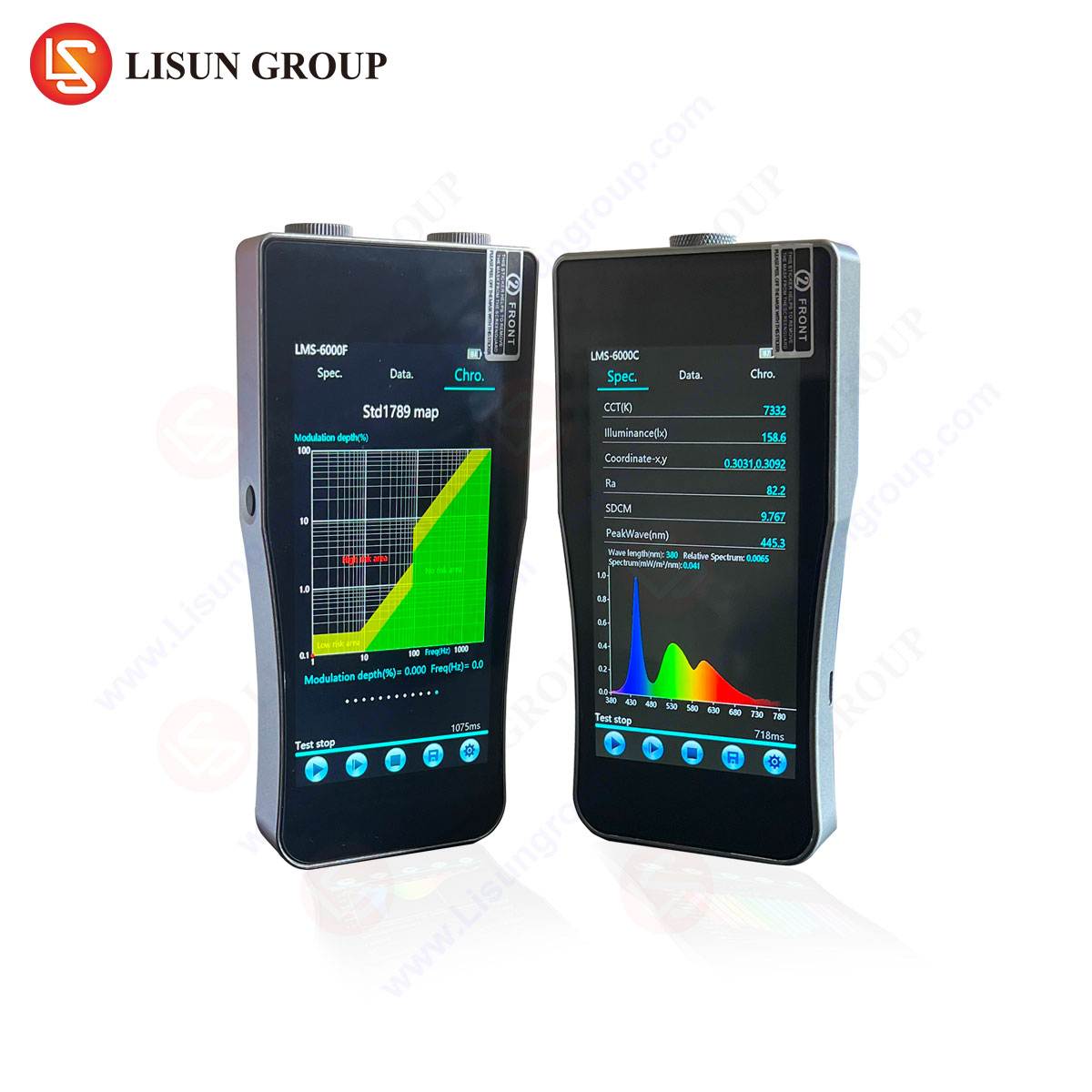
UV radiometers and spectroradiometers, such as the ЛИСУН ЛМС-6000УФ, provide high-precision measurements of irradiance, spectral power distribution, and radiant exposure. These instruments are indispensable for validating UV-emitting devices, assessing material degradation, and ensuring human safety in occupational and environmental settings.
Principles of UV Radiation Measurement
UV measurement relies on detecting photon energy across specific wavelength ranges. The fundamental principles include:
- Photodetector Sensitivity: Silicon photodiodes, photomultiplier tubes (PMTs), or thermopiles convert UV photons into electrical signals.
- Spectral Calibration: Instruments must be calibrated against traceable standards (e.g., NIST) to ensure accuracy.
- Optical Filtering: Bandpass filters isolate UV sub-bands (UVA/UVB/UVC) to prevent interference from visible or infrared radiation.
The LISUN LMS-6000UV employs a high-resolution spectrometer with a wavelength accuracy of ±0.3 nm, enabling precise spectral analysis for applications such as UV curing, sterilization efficacy testing, and solar simulation.
Key Specifications of the LISUN LMS-6000UV
The ЛМС-6000УФ is engineered for laboratory and industrial environments requiring rigorous UV measurement. Its specifications include:
| Параметр | Value |
|---|---|
| Диапазон длин волн | 200–400 nm |
| Точность длины волны | ±0.3 nm |
| Irradiance Measurement Range | 0–2000 mW/cm² |
| Spectral Bandwidth | 1.5 nm |
| Dynamic Range | 1:10,000 |
| Integration Time | 1 ms–10 s |
This instrument supports compliance with CIE 171:2006, ISO 21348, and FDA 21 CFR for UV sterilization devices.
Industry Applications of UV Radiation Measurement
UV-C Disinfection in Medical Equipment
Hospitals and laboratories use UV-C radiation (100–280 nm) for germicidal applications. The ЛМС-6000УФ validates the irradiance levels of UV sterilization lamps, ensuring microbial inactivation efficacy per ISO 15858.
LED and OLED Manufacturing
UV LEDs are critical for curing inks, adhesives, and coatings. The ЛМС-6000УФ measures peak wavelengths and irradiance uniformity, ensuring consistent curing performance in industrial printing processes.
Automotive and Aerospace Lighting Testing
UV stability testing assesses material degradation in headlamps and cockpit displays. The ЛМС-6000УФ quantifies UV exposure levels, aiding compliance with SAE J2527 и AIR7355.
Photovoltaic Industry
Solar cells degrade under prolonged UV exposure. The ЛМС-6000УФ monitors UV irradiance in solar simulators, supporting IEC 61215 и IEC 61646 testing protocols.
Competitive Advantages of the LMS-6000UV
- High Spectral Resolution: 1.5 nm bandwidth enables precise UV sub-band differentiation.
- Broad Dynamic Range: Suitable for low-intensity UV monitoring and high-power industrial applications.
- Multi-Standard Compliance: Соответствует CIE, ISO, and FDA requirements for diverse industries.
- Modular Software Integration: Compatible with LISUN’s LPCE-2 sphere systems for goniophotometric analysis.
Scientific and Regulatory Standards in UV Measurement
UV measurement must adhere to international standards:
- CIE S 019/E:2014 – Photocarcinogenesis action spectrum for UV risk assessment.
- ANSI/IESNA RP-27.1-05 – Recommended practice for UV hazard evaluation.
- IEC 62471 – Photobiological safety of lamps and lamp systems.
The ЛМС-6000УФ automates compliance reporting, reducing manual errors in regulatory submissions.
Раздел часто задаваемых вопросов
Q1: How does the LMS-6000UV ensure measurement accuracy in high-temperature environments?
The instrument features thermal stabilization and dark current compensation, maintaining precision in ambient temperatures up to 40°C.
Q2: Can the LMS-6000UV measure pulsed UV sources?
Yes, its fast sampling rate (1 ms integration time) captures transient UV emissions from xenon flash lamps and excimer lasers.
Q3: What software supports the LMS-6000UV?
LISUN’s LS-UV Analysis Suite provides spectral graphing, irradiance mapping, and export to Excel/CSV formats.
Q4: Is the LMS-6000UV suitable for underwater UV measurements?
With a waterproof probe accessory, it can assess UV transmittance in marine navigation lighting.
Q5: How often should calibration be performed?
Annual recalibration is recommended, though industrial users may opt for semi-annual checks under heavy usage.
 English
  Spanish
  Russian
  Portuguese
  Turkish
  Arabic
  German
  Polish
  Italian
  French
  Korean
  Japanese
  Indonesian