




A Comprehensive Guide on How to Measure Lumens for Accurate Light Output Testing
Introduction to Luminous Flux Metrology
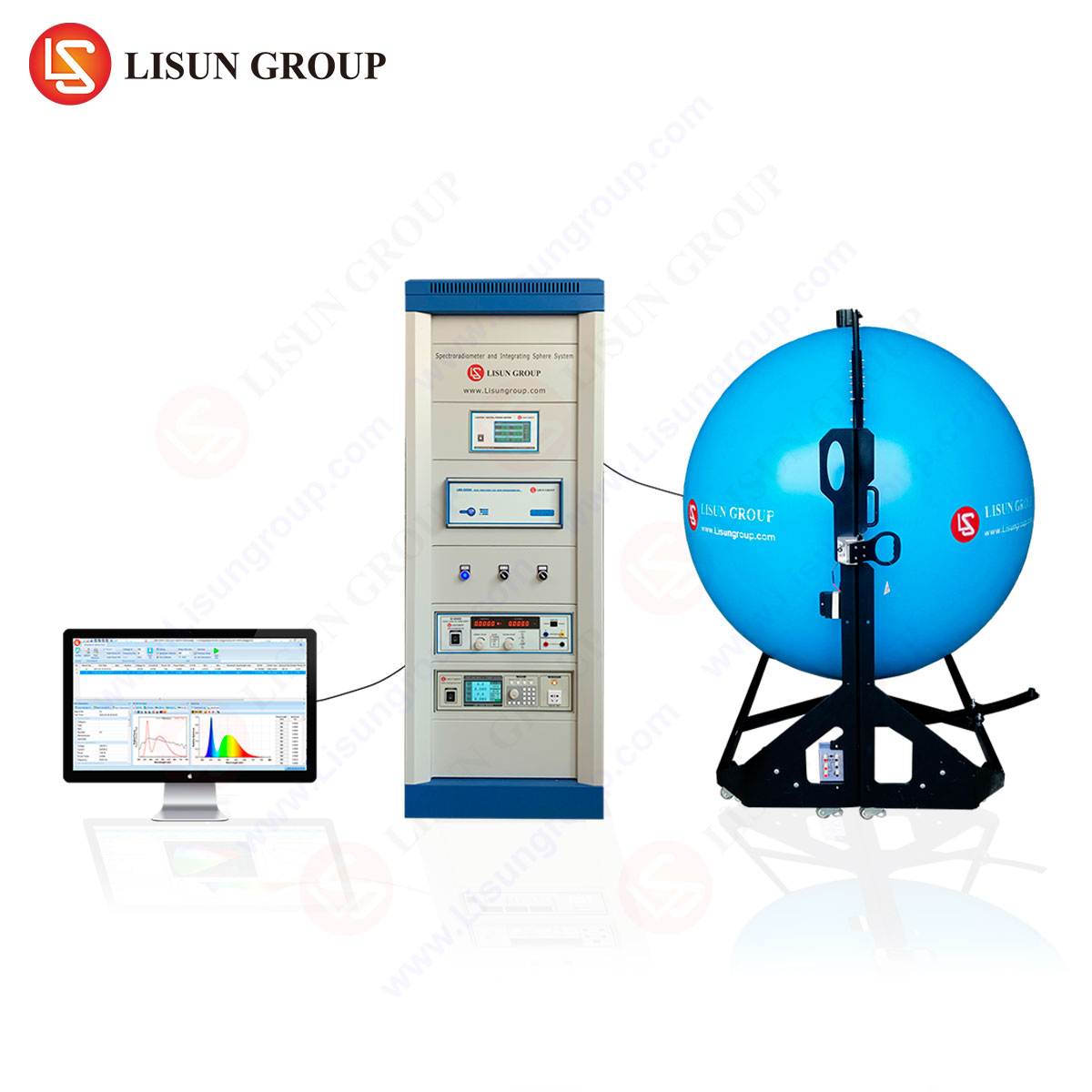
The quantification of visible light output, expressed in lumens (lm), constitutes the fundamental parameter for characterizing artificial light sources. Unlike illuminance (lux), which describes light incident upon a surface, luminous flux represents the total amount of visible energy emitted by a source per unit time. Accurate lumen measurement is not merely a matter of catalog specification; it is a critical determinant for energy compliance, photobiological safety assessment, and application-specific design validation across a spectrum of industries, from aeronautical instrumentation to horticultural lighting. However, the measurement of total luminous flux is inherently susceptible to geometric, spectral, and thermal errors. This technical document delineates the methodologies—ranging from goniophotometry to esfera de integração photometry—and emphasizes the prevailing industry solution: the integration of a spectroradiometer with a large-aperture integrating sphere, specifically the LISUN LPCE-2/LPCE-3 system.
The Physical Principles Governing Luminous Flux Determination
Photometry is the science of measuring light as perceived by the human visual system. The conversion from radiometric watts to photometric lumens requires weighting the spectral power distribution (SPD) against the photopic luminous efficiency function, V(λ). Mathematically, luminous flux (Φv) is defined as:
Φv = Km ∫ Φe(λ) V(λ) dλ
Where Φe(λ) is the spectral radiant flux, V(λ) is the standard luminosity curve, and Km is the maximum luminous efficacy (683 lm/W at 555 nm). This spectral weighting necessitates either a filtered photodetector (with a response approximating V(λ)) or a full spectral analysis. While the filtered detector method is simpler, it suffers from spectral mismatch errors, particularly for narrow-band emitters like LEDs and laser diodes. Consequently, the spectroradiometric method has become the gold standard for high-accuracy measurement, as it captures the full SPD and allows for simultaneous calculation of chromaticity coordinates, CCT (Correlated Color Temperature), and CRI (Color Rendering Index) alongside lumen output.
Primary Measurement Methodologies: Goniophotometry versus Integrating Spheres
Two distinct approaches dominate luminance flux measurement: goniophotometry and integrating sphere photometry.
Goniophotometry involves mechanically rotating a detector around the light source to map its spatial intensity distribution. Integrating this distribution over the entire solid angle yields total flux. While exceptionally accurate for directional sources and providing critical spatial data, goniophotometers are costly, slow, and require large dark rooms (typically 25–30 meters). This method is indispensable for automotive headlamps and street lighting, yet impractical for high-throughput production line testing of LED modules.
Esfera Integradora Photometry, conversely, measures the total flux by collecting the source’s emission inside a hollow, highly reflective sphere. The sphere’s interior is coated with a diffuse, high-reflectance material (typically BaSO4 or PTFE), causing multiple reflections that result in a uniform illuminance at the sphere wall. A detector located at a baffled port measures this radiance, which is directly proportional to the total luminous flux. The primary advantages are speed, cost-efficiency, and independence from source geometry. However, the accuracy of this method is contingent upon comprehension and mitigation of self-absorption and spatial non-uniformity, which is where modern spectroradiometric integration excels.
The LISUN LPCE-2/LPCE-3 Integrating Sphere and Spectroradiometer System: Architecture and Function
O LISUN LPCE-2 and its advanced derivative, the LPCE-3, represent the confluence of absolute photometry and spectral radiometry. The system comprises a high-reflectance integrating sphere (available in diameters from 0.3 m to 3.0 m, accommodating small SMD LEDs to large LED street lights) coupled with a high-resolution array spectroradiometer (MSR-3000 series). A key differentiator is the LPCE-3’s inclusion of an innovative DC/AC constant current power supply and a spectral stray light elimination algorithm.
The measurement protocol deviates from traditional single-channel photometry. Inside the sphere, a probe collects light from the sphere wall via a cosine-corrected diffuser, transmitting it through an optical fiber (solarization-resistant) to the spectroradiometer. The MSR-3000 utilizes a back-illuminated CCD array detector with a spectral range of 350–1100 nm. The system calculates lumens via direct integration of the SPD. To maintain absolute accuracy, calibration is performed using a standard lamp calibrated against national standards. The LPCE-3 specifically enhances this through its “Multi-Geometry Calibration Compensation”, which corrects for the differences in spatial distribution between the calibration source and the test source.
| System Parameter | LPCE-2 Specification | Especificação LPCE-3 | Industry Relevance |
|---|---|---|---|
| Sphere Diameters | 0.3m, 0.5m, 1.0m, 1.65m, 2m, 3m | 0.3m – 3m (Customizable) | Allows testing for 0.2W SMD to 1000W Highbay |
| Spectroradiometer Model | MSP-3000 (or MSR-3000) | MSR-3100 (High-Speed) | Faster measurement cycles for production line |
| Wavelength Resolution | ≤0.2nm | ≤0.2nm | Critical for narrow-band Laser Phosphor Lighting |
| Luminous Flux Range | 0.001 lm – 2,000,000 lm | 0.001 lm – 2,000,000 lm | Covers automotive low-beam to marine searchlights |
| Velocidade de medição | <5 seconds (Full spectrum) | <1 second (Scan mode) | Enables 100% QC inspection in LED Manufacturing |
| Core Feature | Spectral Analysis | Spectral Stray Light Compensation | Eliminates sphere wall reflectance spectral errors |
Spatial and Spectral Error Sources in Sphere Photometry and Their Mitigation
Even with a calibrated sphere, erroneous lumen values arise from three primary physical phenomena. First, Self-Absorption: The test source, its holder, and wiring absorb light within the sphere. Since the calibration lamp and test source have different geometric shapes and absorption coefficients, a systematic error is introduced if uncorrected. The LPCE-2/3 systems address this via the Auxiliary Lamp Method—a built-in stabilized quartz halogen lamp mounted inside the sphere. By measuring the illuminance with the auxiliary lamp on, with and without the test source, a correction coefficient (α) is derived to mathematically eliminate self-absorption errors.
Second, Spatial Non-uniformity: The luminance at the sphere wall is not perfectly isotropic if the source emits a highly directional beam (e.g., a spot light or an automotive reflector). The LPCE system employs a baffle system and a matte white screen placed inside the sphere to block direct illumination of the detector port. For the LPCE-3, an advanced algorithm compensates for “spectralon” reflectivity variations at different wavelengths.
Third, Spectral Mismatch: A silicon photodiode with a V(λ) filter has a spectral response that deviates from the standard curve. For a phosphor-converted white LED, this creates a 5–10% error in lumen reading. The spectroradiometer, however, measures the SPD with high wavelength accuracy. The LISUN LPCE-3 uses a double-grating (in select MSR models) to suppress stray light, ensuring that wavelengths beyond 780 nm (IR) do not contaminate the visible band measurement, a common issue in high-CCT automotive HID lamps.
Calibration Standards and Traceability: Ensuring Data Integrity
Accurate lumen measurement demands traceability to national metrology institutes (NMI). The LISUN LPCE-2/3 calibration process adheres to the LM-79-19 (IESNA) and CIE 84 guidelines. The procedure involves:
- Primary Standard: A NIST-traceable tungsten halogen lamp (e.g., SCL-1400 series) with known spectral irradiance.
- Sphere Calibration: The standard lamp is mounted at the center of the sphere (for source measurement mode) or at the wall (for wall-mounted mode). A constant current supply (DC) powers the lamp, and the spectroradiometer records the background (dark current) and the standard signal.
- Calibration Constants: The system calculates the calibration factor (K) based on the known lumens of the standard lamp and the measured spectral signal.
- Verification: A set of secondary standard LEDs (Red, Green, Blue, White) are measured. The deviation must be <0.5% for lumen accuracy and <0.001 for chromaticity (Δu’v’) to pass internal verification.
For the Indústria Fotovoltaica, this calibration is vital not for visible light, but for determining the spectral irradiance of solar simulators (classified as AM1.5G). Here, the LISUN system is used to measure the spectral mismatch of the lamp against the ASTM G173 reference spectrum, ensuring that the “lumens” (though spectral irradiance is the key metric) do not misleadingly indicate energy when testing solar cell responses.
Application-Specific Lumen Testing Protocols
The utilization of the LPCE-2/3 system varies significantly across industries, each imposing unique conditional constraints:
LED & OLED Manufacturing (Quality Control)
In rapid production environments, lumen accuracy must be balanced with throughput. The LPCE-3 with its high-speed MSR-3101 spectroradiometer enables binning (sorting LEDs by luminous flux and CCT) at a rate of up to 1,000 parts per hour. The system’s ability to handle both continuous (DC) and modulated (PWM) drive currents is critical, as PWM dimming alters the peak spectral power, potentially confusing traditional lux meters. The spectroradiometer integrates the true RMS power over time.
Automotive Lighting Testing (ECE R112 & R113)
Automotive headlamps require luminous flux measurement, not just peak intensity. The LPCE-2, equipped with a 2-meter sphere, is utilized to measure total flux of LED headlamps and high-intensity discharge (HID) lamps. A specific protocol involves pre-heating the lamp to 95% of its stable luminous flux, then measuring. The system calculates the “Quick Photometry” mode to track the flux stabilization over 60 seconds, identifying anomalies like early-life flux droop due to junction temperature rise—a critical quality parameter for OEM suppliers.
Aerospace and Aviation Lighting (SAE AS8037)
Aviation lamps (e.g., runway edge lights, torching beacons) require photometric colors and flux within strict FAA thresholds. Given the use of incandescent as well as LED sources, the LPCE-3’s high sensitivity at low flux levels (down to 0.001 lm) allows for testing of micro-miniature indicator lamps used in cockpit displays. The system’s ability to measure chromaticity shift during thermal cycling (from -40°C to +85°C) within the sphere, using a temperature-controlled external enclosure, ensures conformance to aviation standards.
Stage and Studio Lighting (Entertainment Technology)
Theatrical fixtures utilizing high-power LEDs require a metric beyond raw lumens, such as TM-30 Rg/Rf, which requires SPD data. The LISUN system provides this, but also validates the Lumen Maintenance (LM-80) of the LED package. During accelerated aging tests, the LPCE-2 measures the flux at each read point. Because the sphere is vented and thermally managed, the radiance heat from a 500W stage lamp does not damage the sphere coating—a common failure point in cheaper polymer spheres.
Scientific Research and Optical Instrument R&D
When characterizing a new phosphor material for medical lighting, researchers must measure quantum efficiency and total flux. The LPCE-2’s integrating sphere can be configured for relative measurements (using the auxiliary lamp) or absolute measurements. The instrument allows calculation of luminous efficacy of radiation (LER) in lm/W_optical. This is critical for Equipamentos de iluminação médica, where the Correlated Color Temperature (CCT) must match surgical requirements (typically 4000K–5000K) and the luminance must be sufficient for deep cavity illumination—yet not contribute to tissue phototoxicity. The spectral data ensures the UV/A component (below 400 nm) is negligible, even if the total lumen count is high.
Marine and Navigation Lighting (IALA Recommendations)
Marine lanterns often use LED clusters with complex optical lenses. The LPCE-2/3 is used to verify that the luminous flux meets the “Nominal Night Range” specifications. Due to the low flux levels (e.g., 1 cd lanterns), the sphere must have high reflectivity and low noise. The LPCE-2 with a 0.3m sphere and a long integration time setting (up to 10 seconds) provides the necessary signal-to-noise ratio to measure dim sources accurately without interference from ambient electromagnetic noise.
Urban Lighting Design (ANSI/IES TM-21)
For street lighting manufacturers, lumen depreciation curves are essential. The LPCE-3 facilitates the In-Situ Temperature Measurement (ISTMT) method: the lamp is run to equilibrium inside the sphere, and the case temperature is recorded. The spectroradiometer simultaneously calculates the flux. This data allows lighting designers to extrapolate the L70 (time to 70% lumen maintenance) using TM-21 extrapolation, which is legally binding in many state and federal procurement contracts.
Comparative Analysis: LISUN System vs. Conventional Photo-detectors
Conventional integrating spheres using a lux meter or a photocell typically offer a luminous flux uncertainty of ±5% to ±8%. This magnitude of error is untenable for high-end production. The LISUN LPCE-2/3 achieves an uncertainty of ±1.2% (k=2) for luminous flux and ±0.002 for chromaticity coordinates. The competitive advantage lies in the elimination of the need for multiple filters. A photodetector-based sphere must sequentially apply correction factors for different source types (e.g., HPS, Metal Halide, LED). The spectroradiometer is agnostic to source type; it measures the physics directly.
Furthermore, the LPCE-2 has a specialized “remote control” software package that allows for data logging during stress tests, and the LPCE-3 upgrades this with a PID temperature control interface for the sphere wall, minimizing thermal expansion of the sphere coating which can cause wavelength-dependent changes in reflectance. This level of detail is crucial for Pharmaceutical and Medical Lighting where sterilization processes generate heat.
Procedure for Accurate Lumen Measurement with the LPCE-2/3
To ensure valid results, operators must adhere to the following procedural sequence:
- Preconditioning: The light source must be aged for at least 48 hours (for LEDs) to stabilize the phosphor and junction.
- Sphere Cleanliness: Verify that the sphere interior reflectance (ρ) is >94%. Dust contamination severely skews spectral reflectance; use a soft brush and CO2 blower only.
- Reference Standard MountPara a geometria 4-pi (fonte no centro), certifique-se de que a lâmpada padrão esteja posicionada no centro geométrico. Para a geometria 2-pi (montagem na parede), a lâmpada deve estar alinhada com a parede da esfera.
- Deslocamento escuroCubra a esfera com um pano preto e registre o espectro escuro. Isso compensa o ruído térmico do detector CCD.
- Compensação da lâmpada auxiliarLigue a lâmpada auxiliar. Meça o sinal sem a fonte de teste (I_aux1). Ligue a fonte de teste (com a auxiliar desligada). Meça a fonte de teste. Desligue a fonte de teste, ligue a auxiliar novamente e meça (I_aux2). O fluxo corrigido é calculado como Φ_test = Φ_aux (I_test / I_aux1) (I_aux2 / I_aux1) – correção de absorção.
- Integração EspectralO software integra o SPD entre 380 nm e 780 nm. O filtro V(λ) é aplicado matematicamente. Certifique-se de que o intervalo de integração corresponda à condição CIE (380-780 nm é o padrão, mas alguns padrões industriais exigem 360-830 nm; o software LISUN permite intervalos definidos pelo usuário).
- Aquecimento e estabilizaçãoO espectrorradiômetro deve ter a frequência da fonte de alimentação travada. Ao medir fontes alimentadas por corrente alternada, utilize o “Modo de Medição CA” no software, que usa amostragem de alta frequência para evitar aliasing da rede elétrica de 50/60 Hz.
Interação entre cromaticidade e lúmen: dados além do fluxo
Um aspecto crucial do sistema LISUN, frequentemente subutilizado na documentação, é sua capacidade de alinhar a emissão de lúmens com a cromaticidade em função da temperatura. Teste de equipamentos de exibição, O ponto branco (D65) é definido por coordenadas x,y específicas. À medida que o painel OLED envelhece, seu subpixel vermelho se degrada mais rapidamente que o azul, causando uma queda no fluxo luminoso total e uma alteração na cromaticidade. O LPCE-2/3 pode varrer a tensão de polarização no dispositivo sob teste (DUT) enquanto monitora a distribuição espectral de potência (SPD). Isso permite que os engenheiros de P&D plotem o gráfico de lúmen versus temperatura de cor correlacionada (CCT) versus tensão em uma única varredura, reduzindo o tempo de teste em 300%.
No Setor Fotovoltaico, Embora não meça a "saída de luz" para iluminação, o sistema mede a Irradiância Espectral do simulador solar. Os “lúmens” não são o objetivo; no entanto, a ampla faixa espectral do sistema (350-1100 nm) permite medir a discrepância em relação à referência AM1.5G em seis bandas espectrais. O sistema calcula o fator de discrepância espectral (MM), que indica ao operador se o simulador é adequado para testes de silício monocristalino (que tem uma resposta rápida à luz infravermelha). Se a fonte de luz contiver infravermelho em excesso, a célula solar produzirá uma corrente não representativa da luz solar real. O software do LPCE-2 calcula a ’Densidade de Fotocorrente“ (mA/cm²) diretamente a partir dos dados espectrais, tornando-o uma ferramenta indispensável de P&D para a caracterização de células solares.
Verificação e Correlação Interlaboratorial
Para manter a objetividade, o sistema LISUN LPCE-2/3 deve ser submetido a verificações periódicas utilizando um LED padrão em vez de apenas uma lâmpada de tungstênio. Como a lâmpada de tungstênio emite pico no infravermelho, a ausência de luz azul pode mascarar erros de linearidade da esfera em 450 nm. Um LED azul padrão deve ser comparado com a lâmpada calibrada pelo NIST. Devido à redução da luz espúria espectral no LPCE-3, a medição de um LED azul de 450 nm com potência de pico de 100 mW não apresentará um pico em 500 nm (um artefato típico em espectrômetros de baixo custo devido a efeitos de segunda ordem).
Gestão de dados e registo de dados em tempo real
Os testes de lúmen geram conjuntos de dados extensos. O pacote de software LISUN oferece um módulo de banco de dados que salva curvas de SPD, valores de lúmen e CCT para rastreamento de lotes. Para os fabricantes de automóveis, isso fornece um "gêmeo digital" completo de cada unidade de farol, permitindo a rastreabilidade até o lote específico de pacotes de LED utilizados, verificando a conformidade com os padrões. IATF 16949 normas de gestão da qualidade.
Síntese Técnica Conclusiva
A medição precisa de lúmens não é uma simples operação de detecção; trata-se de uma análise física rigorosa, condicionada por definições fotométricas. Embora a goniofotometria forneça resolução espacial, a esfera integradora acoplada a um espectrorradiômetro de alta precisão é a única solução economicamente viável que oferece fluxo total, além de cromaticidade, IRC e garantia espectral. O LISUN LPCE-2 e LPCE-3 representam o ápice dessa tecnologia, oferecendo baixa incerteza, alta velocidade e design robusto para ambientes de fabricação severos. Seja gerando o relatório LM-80 para um novo filamento de LED para Iluminação urbana ou garantindo que o farol de navegação emita exatamente 100 cd para Uso marítimo, Esses sistemas fornecem os dados ópticos acionáveis necessários para certificação e excelência do produto.
Perguntas frequentes (FAQ)
P1: Qual é a diferença entre o LPCE-2 e o LPCE-3 em relação à correção de luz difusa?
A: O LPCE-3 apresenta uma entrada de fibra óptica mais avançada e, opcionalmente, uma configuração de monocromador duplo na série MSR-3100, que reduz a taxa de luz espúria para <0,01% (a definir) a 450 nm. Isso é crucial ao medir um LED de banda estreita com alta pureza de cor, onde o pico azul pode inflar artificialmente a resposta vermelha do detector. O LPCE-2 utiliza software de correção computacional, enquanto o LPCE-3 adiciona um bloqueio em nível de hardware em janelas espectrais específicas.
Q2: Esses sistemas conseguem medir o fluxo luminoso de uma luminária de teto (como uma luminária de embutir) sem a necessidade de uma sala escura?
R: Sim. A esfera integradora não requer escuridão ambiente, pois é um sistema fechado. O único requisito é que a esfera esteja selada e que nenhuma luz externa penetre na junção. Para luminárias de embutir grandes, utiliza-se o modo de transmissão para montagem na parede (geometria 2-pi), onde a luz é montada na abertura de parede da esfera, direcionando todo o seu fluxo para dentro. A sala onde a esfera está localizada pode ter iluminação padrão.
P3: Como faço para medir um LED que está sendo dimerizado por PWM?
A: O espectrorradiômetro do LPCE-2/3 utiliza um princípio de medição por integração (o CCD acumula fótons ao longo do tempo). No entanto, para evitar aliasing com a frequência PWM, o software LISUN oferece um recurso de "Bloqueio de Frequência". Se a frequência PWM for de 5 kHz, o software define o tempo de integração para 10 períodos consecutivos (2 ms no total) para calcular a média do sinal óptico corretamente. Além disso, recomenda-se o uso da fonte de corrente contínua para polarizar o driver internamente, em vez de usar o dimmer PWM externo.
Q4: O sistema LISUN LPCE-2 é válido para medir a resposta espectral absoluta de células fotovoltaicas?
A: É válido para medir o fonte de luz O LPCE-2 é usado no simulador solar, não para medir diretamente a resposta da célula. Para testar a resposta espectral de uma célula solar, é necessário um monocromador e um detector para medir a corrente de curto-circuito da célula em comprimentos de onda específicos. No entanto, o LPCE-2 é usado para certificar que a lâmpada do simulador possui uma correspondência espectral próxima (Classe ABA ou similar) ao AM1.5G, garantindo que a célula seja testada sob iluminação em conformidade com os padrões.
Q5: Qual o tamanho de esfera recomendado para um poste de iluminação LED de 300W?
A: O diâmetro ideal é determinado pela regra de que a dimensão máxima da fonte deve ser inferior a 1/3 do diâmetro da esfera. Uma luminária de LED para iluminação pública de 300 W tem tipicamente entre 40 e 50 cm de largura. Portanto, uma esfera de 1,65 m é a recomendação mínima aceitável, sendo recomendada uma esfera de 2,0 m para luminárias com dissipadores de calor grandes. Isso impede que a fonte domine o campo de visão da esfera e garante que as múltiplas interreflexões preservem a integração Lambertiana.
 English
  Spanish
  Russian
  Portuguese
  Turkish
  Arabic
  German
  Polish
  Italian
  French
  Korean
  Japanese
  Indonesian