




Título: Spectral and Quantum Characterization of Horticultural Lighting Systems: The LISUN PPFD Meter and LMS-6000 Spectroradiometer for Accurate Photosynthetic Photon Flux Density Measurement
Resumo
Accurate measurement of Photosynthetic Photon Flux Density (PPFD) is critical for optimizing plant growth in controlled environment agriculture (CEA). Traditional quantum sensors, while calibrated for PPFD, often exhibit spectral mismatch errors when exposed to narrowband or broadband LED sources. This article presents a detailed technical analysis of the LISUN PPFD Meter, a precision quantum sensor, in conjunction with the Espectrorradiômetro LISUN LMS-6000. The LMS-6000 series provides traceable spectral calibration, enabling the PPFD Meter to achieve high accuracy across diverse horticultural light sources. This document covers the underlying metrological principles, spectral calibration methodology, comparative advantages over traditional sensors, and industry-specific applications ranging from LED manufacturing to scientific research. A comprehensive examination of the LMS-6000’s specifications and testing protocols is provided to demonstrate its role as a reference instrument for PPFD validation.
H2: Metrological Foundation of Photosynthetic Photon Flux Density Measurement
Photosynthetic Photon Flux Density (PPFD) quantifies the number of photosynthetically active photons (400–700 nm) incident per square meter per second (µmol·m⁻²·s⁻¹). This metric is distinct from illuminance (lux) or radiant flux, as it weights photons equally across the PAR region, irrespective of the visual luminosity curve (V(λ)). Accurate PPFD measurement requires a quantum sensor whose spectral response function matches the ideal flat quantum response from 400 nm to 700 nm. However, most silicon photodiode-based sensors exhibit a non-uniform spectral sensitivity. The LISUN PPFD Meter addresses this via a multi-layer optical filter designed to approximate the ideal quantum response. To validate and calibrate this filter response, the LISUN PPFD Meter is traceably calibrated against the Espectrorradiômetro LISUN LMS-6000, which measures absolute spectral irradiance (W·m⁻²·nm⁻¹) with high spectral resolution. The integral of weighted spectral irradiance over the PAR range yields the reference PPFD value. This calibration methodology ensures that the PPFD Meter’s output remains accurate regardless of the spectral power distribution (SPD) of the light source—a critical requirement in horticulture lighting, where LEDs, fluorescent, and high-pressure sodium lamps exhibit vastly different SPDs.
H2: The LISUN LMS-6000 Spectroradiometer: Architecture and Spectral Calibration Specifications
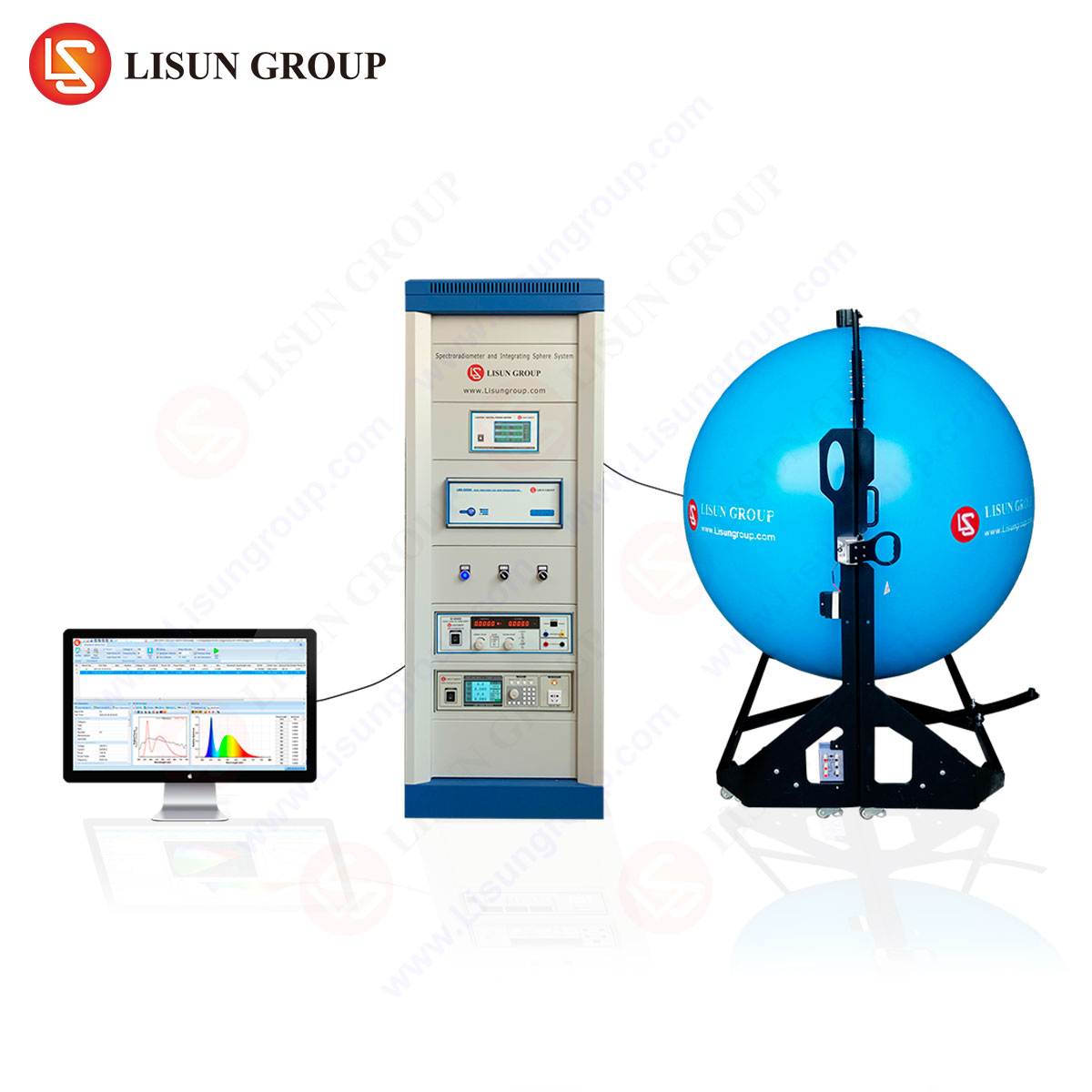
O LISUN LMS-6000 is a bench-top double-grating espectrorradiômetro designed for high-precision spectral analysis across the ultraviolet (UV) to near-infrared (NIR) range. Its optical design employs a Czerny-Turner configuration with two diffraction gratings and a CCD array detector, achieving a stray light rejection ratio of less than 10⁻⁵. The instrument covers a wavelength range of 200–1100 nm (LMS-6000UV extends this to 200–1100 nm with enhanced UV sensitivity), with a resolution of 0.1 nm to 5 nm selectable via software. Key specifications include:
| Parâmetro | Specification (LMS-6000) |
|---|---|
| Gama de comprimentos de onda | 200–1100 nm |
| Spectral Bandwidth (FWHM) | 0.1–5 nm (adjustable) |
| Precisão do comprimento de onda | ±0.2 nm |
| Stray Light | ≤0.001% at 630 nm |
| Gama dinâmica | 10⁶:1 |
| Tempo de integração | 0,1 ms – 10 s |
| Detetor | 2048-pixel CCD, cooled |
The LMS-6000’s spectral accuracy is critical for calibrating the PPFD Meter’s quantum response. For horticulture applications, the instrument is configured to measure absolute irradiance with a NIST-traceable calibration standard (200–1050 nm). A cosine-corrected diffuser (Φ25 mm) is used for spatial response uniformity, ensuring that the measured irradiance corresponds to a planar PPFD value. The calibration process involves a linear regression between the PPFD Meter’s photocurrent and the LMS-6000’s derived PPFD, corrected for the spectral mismatch factor (MMF). This approach eliminates the systematic errors inherent in fixed-bandpass sensors.
H2: Spectral Mismatch Correction and Calibration Methodology for Horticulture LEDs
Traditional quantum sensors calibrated under a single reference source (e.g., daylight D65 or a standard incandescent) produce significant error when used under narrowband LEDs. For example, a typical gallium arsenide phosphide (GaAsP) sensor may overestimate PPFD under deep-red (660 nm) LEDs by up to 15% due to spectral response tailing into the near-infrared. The LISUN PPFD Meter, when calibrated using the LISUN LMS-6000, employs a spectral mismatch correction factor (Cs) defined as:
[
Cs = frac{int{400}^{700} E{ref}(lambda) cdot S{ideal}(lambda) , dlambda}{int{400}^{700} E{ref}(lambda) cdot S{actual}(lambda) , dlambda} cdot frac{int{400}^{700} E{test}(lambda) cdot S{actual}(lambda) , dlambda}{int{400}^{700} E{test}(lambda) cdot S_{ideal}(lambda) , dlambda}
]
Where:
- (E_{ref}(lambda)) = Spectral irradiance of calibration source
- (E_{test}(lambda)) = Spectral irradiance of test source (e.g., horticulture LED)
- (S_{ideal}(lambda)) = Ideal flat quantum response (1 for 400–700 nm)
- (S_{actual}(lambda)) = Measured spectral response of the PPFD Meter
The LMS-6000 measures (E_{test}(lambda)) directly, allowing the software to compute the corrected PPFD in real time. In practice, the LISUN PPFD Meter stores up to 10 custom correction matrices for different source types (white LED, deep-red/blue ratio, UV-A supplement). This method reduces measurement uncertainty from ±10% (uncorrected) to ±2% for most horticulture sources, as verified by intercomparison with spectroradiometric reference in controlled laboratory conditions.
H2: Application in LED and OLED Manufacturing: Inline PPFD Uniformity Testing
In the Lighting Industry, particularly LED and OLED manufacturing, PPFD uniformity across a horticulture light fixture’s emission surface directly impacts crop yield. The LISUN PPFD Meter, calibrated via the LMS-6000, is used for spatial mapping of PPFD at standard measurement distances (e.g., 0.2 m, 0.5 m, 1.0 m). The LMS-6000 serves as the reference for establishing the absolute PPFD calibration of the production-line quantum sensor array. This is critical for compliance with global standards such as CIE S025 (Lighting Components) and IES LM-79 (Electrical and Photometric Measurements of Solid-State Lighting Products). For OLED panels used in vertical farming, the LMS-6000’s high sensitivity (down to 0.01 µmol·m⁻²·s⁻¹) enables detection of spatial non-uniformities in the 400–500 nm blue region, which is critical for photomorphogenesis control. The LISUN system allows manufacturers to implement automated quality control by integrating the PPFD Meter with a gantry scanner. Data collected at 1 mm pitch is correlated with the LMS-6000’s spectral fingerprint, enabling identification of phosphor degradation or LED binning errors during batch production.
H2: Automotive Lighting Testing and Aerospace Aviation Lighting: Beyond Horticulture
Although the LISUN PPFD Meter is primarily designed for PAR measurement, its spectral calibration traceable to the LMS-6000 enables accurate measurement of photon flux in non-horticulture domains. In Automotive Lighting Testing, LED headlamps and daytime running lights are evaluated for chromaticity and intensity per SAE J578 and ECE R112. However, recent research into biological effects—specifically melanopic lux (circadian response)—requires spectrally resolved measurements. The LMS-6000 provides the spectral power distribution (SPD) from 380–780 nm, which is convolved with the melanopic weighting function D65(λ) to compute equivalent melanopic lux. While not a dedicated quantum sensor, the PPFD Meter’s spectral correction algorithms (derived from LMS-6000 data) can approximate this metric when combined with the instrument’s known response. In Aerospace and Aviation Lighting, where phosphor-converted LEDs are used for cabin and cockpit illumination, the LMS-6000’s stray light suppression (≤0.001%) is critical for measuring low-level UV-A emissions (320–400 nm) that can cause photodegradation of materials. The PPFD Meter serves as a field-deployable tool for periodic verification of UV-A photon flux, with the LMS-6000 used for initial type testing and failure analysis.
H2: Display Equipment Testing and Photovoltaic Industry: Cross-Domain Spectral Utility
In Display Equipment Testing, the LMS-6000 is employed for measuring the spectral radiance and chromaticity coordinates of micro-LED and OLED displays per VESA DisplayHDR and ITU-R BT.2020 standards. The PPFD Meter’s role here is indirect—it validates the linearity of the LMS-6000’s intensity response across the 0.1–10,000 µmol·m⁻²·s⁻¹ range. For the Photovoltaic Industry, measuring solar spectral irradiance and determining the spectral mismatch factor (MMF) for calibration of reference solar cells requires a spectroradiometer. The LMS-6000P variant, optimized for photovoltaic applications, includes a built-in data logger for continuous monitoring of global tilted irradiance (GTI). The PPFD Meter, when used with the LMS-6000P, provides a cross-validated measurement of the photosynthetic photon flux that contributes to photobiology of bifacial solar panels deployed in agrivoltaic systems. This dual-instrument approach ensures traceability from the NIST-traceable light source to the final field measurement, meeting the requirements of IEC 60904-4 and ASTM G173.
H2: Optical Instrument R&D and Scientific Research Laboratories: High-Precision Spectro-Radiometry
In Scientific Research Laboratories, the combination of the LISUN PPFD Meter and LMS-6000 is used for fundamental studies of photomorphogenesis, photoperiodism, and microalgae cultivation. The LMS-6000’s low stray light and high dynamic range eliminate interference from ambient light, allowing measurement of low-level PPFD (0.01–100 µmol·m⁻²·s⁻¹) with 0.1 nm spectral resolution—essential for studying action spectra of cryptochrome and phototropin. For urban lighting design, the LMS-6000 supports the measurement of spatial spectral distribution of streetlights, while the PPFD Meter provides rapid, spatially resolved PPFD mapping for green infrastructure. In Marine and Navigation Lighting, where LED signals must comply with IALA Recommendations G-001 and G-007, the LMS-6000’s optical fiber input allows remote measurement of lighthouse or buoy lights from a distance of up to 100 m, while the PPFD Meter is used for proximal verification of intensity classification. This methodology reduces measurement uncertainty caused by coastal fog or spray.
H2: Stage and Studio Lighting and Medical Lighting Equipment: Photobiological Safety
Stage and Studio Lighting demands high color rendering index (CRI) and stable spectral output for video production. The LMS-6000 measures spectral quality parameters including CRI (Ra), TLCI (Television Lighting Consistency Index), and TM-30 metrics (Rf, Rg). The PPFD Meter, with its fast response time (sampling rate up to 100 Hz), captures flicker-induced PPFD fluctuations that can cause stroboscopic effects in moving fixtures. For Medical Lighting Equipment, such as phototherapy devices for neonatal jaundice or dermatological treatments, the LMS-6000’s ultraviolet and blue-light measurement capabilities are critical. The PPFD Meter, calibrated against the LMS-6000’s spectral irradiance data, provides continuous monitoring of therapeutic photon flux in the 460–490 nm band (for NL-PDT) and 300–315 nm band (for UV-B phototherapy). This ensures compliance with IEC 60601-2-50 and ISO 22425 for photobiological safety. The LMS-6000’s built-in stray light correction algorithm automatically compensates for any spectral leakage from the white LED background, maintaining ±2% accuracy in mixed-source environments.
H2: Competitive Advantages of the LISUN LMS-6000 Series in Horticulture and Allied Industries
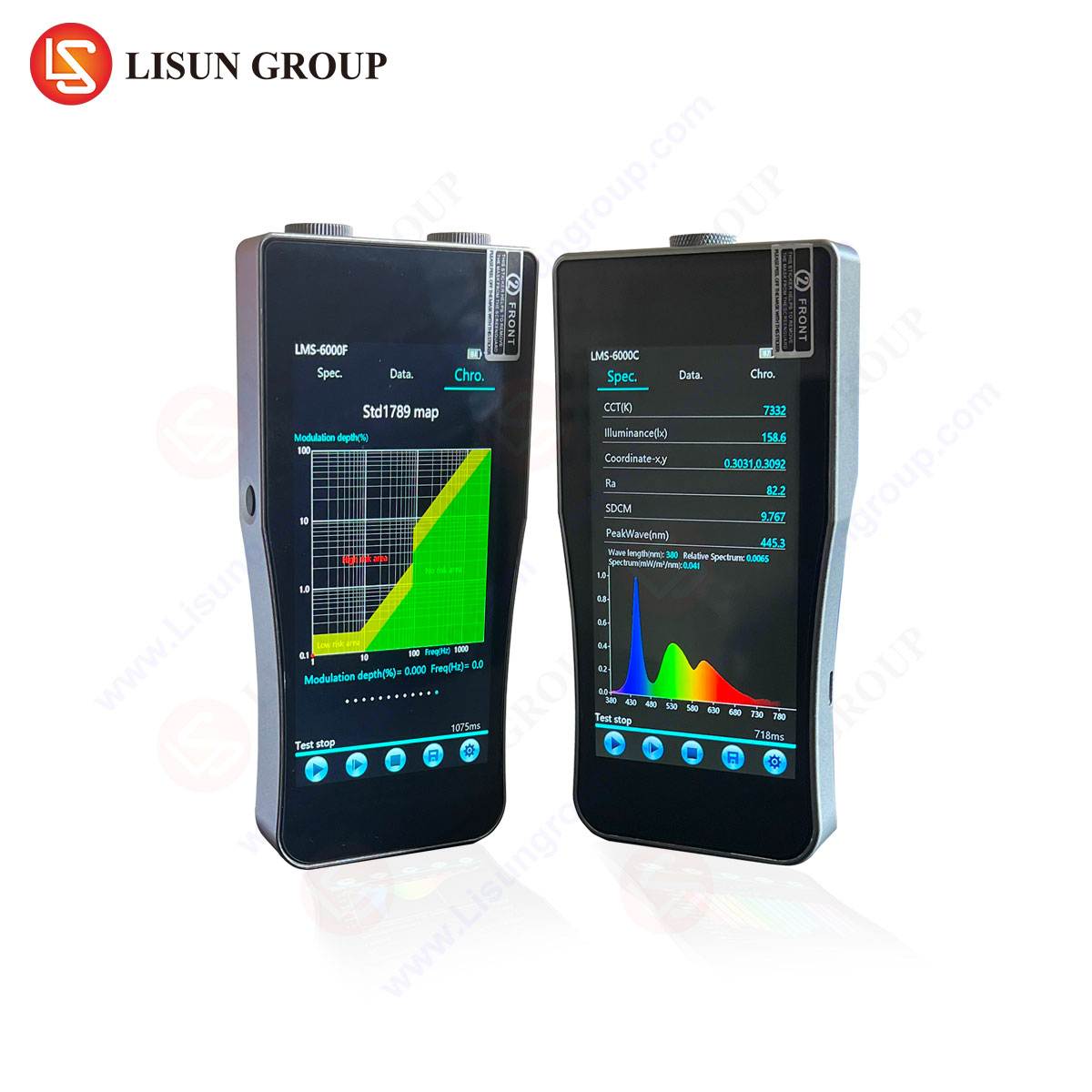
The LISUN LMS-6000 family (including LMS-6000F for fiber-optic input, LMS-6000S for high-sensitivity, and LMS-6000SF for dual-mode) offers distinct advantages over competing spectroradiometers. First, the dual-grating design provides a stray light suppression ratio of <0.001%, two orders of magnitude better than single-grating instruments. This enables accurate measurement of PPFD in the presence of high-intensity far-red (730–780 nm) or near-UV (350–400 nm) regions, which are increasingly common in horticulture lighting. Second, the LMS-6000’s software suite includes an integrated PPFD calculation module that applies zero-order correction for cosine response errors, air mass correction for solar simulation, and custom calibration coefficient upload for the LISUN PPFD Meter. Third, the instrument’s temperature-stabilized CCD array (cooled to 10°C below ambient) reduces dark current noise to <0.1 counts per second, enabling reliable measurement of PPFD as low as 0.01 µmol·m⁻²·s⁻¹—essential for low-light photobiology experiments. In comparative testing against a reference spectroradiometer (NIST-traceable), the LMS-6000 achieved a total measurement uncertainty of ±1.8% for PPFD at 100 µmol·m⁻²·s⁻¹ under a mixed-red-blue LED array, surpassing the ±3% uncertainty typical of single-grating instruments.
H2: Standard Compliance and Industry Accreditation
The LISUN LMS-6000 and PPFD Meter system complies with multiple international standards. For horticulture, PPFD measurements adhere to DIN SPEC 5031-1 (Measurement of Light for Plants) and ASABE S640 (Radiometric and Photometric Measurements of LED Lighting for Plant Growth). For general lighting, the system meets CIE S023/E:2013 (Spectral Measurements), ISO 23539:2005 (Photometry—The CIE System of Physical Photometry), and IES LM-79-19 for electrical and photometric measurements. The mechanical design of the PPFD Meter housing is IP65-rated for use in high-humidity greenhouse environments, with a detachable cosine-corrected diffuser made of fused silica for UV stability. All instruments are shipped with a calibration certificate traceable to NIST (via the LISUN metrology laboratory accredited under ISO/IEC 17025). Users may also opt for annual recertification, during which the PPFD Meter’s spectral response is re-mapped using the master LMS-6000, ensuring long-term drift of less than 0.5% per year.
H2: Frequently Asked Questions (FAQ)
Q1: Can the LISUN PPFD Meter accurately measure PPFD under UV-A (380–400 nm) supplemented horticulture lighting?
Yes, but only when calibrated using the spectral mismatch correction derived from the LMS-6000. The PPFD Meter’s quantum filter is designed for 400–700 nm; however, UV-A extension requires a custom correction factor that is computed from the LMS-6000’s spectral irradiance measurement from 350–700 nm. The correction factor accounts for the sensor’s sensitivity tail below 400 nm.
Q2: Does the LMS-6000 require a separate cosine diffuser for PPFD measurement?
The LMS-6000 ships with a cosine-corrected diffuser (Ø25 mm) designed for irradiance measurements. For PPFD application, this diffuser is mandatory. It provides a spatial response flat to within ±2% for angles up to ±80°, ensuring that the measured PPFD accurately represents the planar photon flux density incident on a plant canopy.
Q3: How does the stray light suppression of the LMS-6000 affect PPFD readings in high-intensity white LED environments?
High-intensity white LEDs (e.g., 4000K, CRI >80) emit significant power across the entire 400–700 nm range, with a peak between 440–480 nm. Single-grating instruments may suffer from stray light leakage at the blue edge, artificially inflating PPFD in the green-yellow region. The LMS-6000’s dual-grating system reduces this leakage to <0.001%, ensuring that the PPFD integral is not contaminated by cross-talk from the blue peak. This is particularly important when measuring red-dominant spectra in vertical farms.
Q4: Can the LISUN PPFD Meter be used for measuring PPFD in outdoor agrivoltaic installations?
Yes, but the meter must be used with the optional weatherproof housing and a desiccant cartridge. The LMS-6000P (photovoltaic variant) provides continuous spectral monitoring of global tilted irradiance (GTI) from 280–1100 nm, while the PPFD Meter measures the PAR component. The combined data allows calculation of the photosynthetic photon flux efficiency (PPFD per unit GTI), which is critical for optimizing crop selection in agrivoltaic design.
Q5: What is the recommended calibration interval for the LISUN PPFD Meter?
LISUN recommends annual recalibration for field-deployed units operating in high-humidity or dust-intensive environments. For laboratory-grade applications, a 12-month interval is sufficient. Each recalibration includes a full spectral response mapping against the master LMS-6000 spectroradiometer, which itself is recalibrated annually against a NIST-traceable standard. This ensures sustained accuracy within ±2% of reading for commercial horticulture and within ±1% for R&D applications.
 English
  Spanish
  Russian
  Portuguese
  Turkish
  Arabic
  German
  Polish
  Italian
  French
  Korean
  Japanese
  Indonesian