

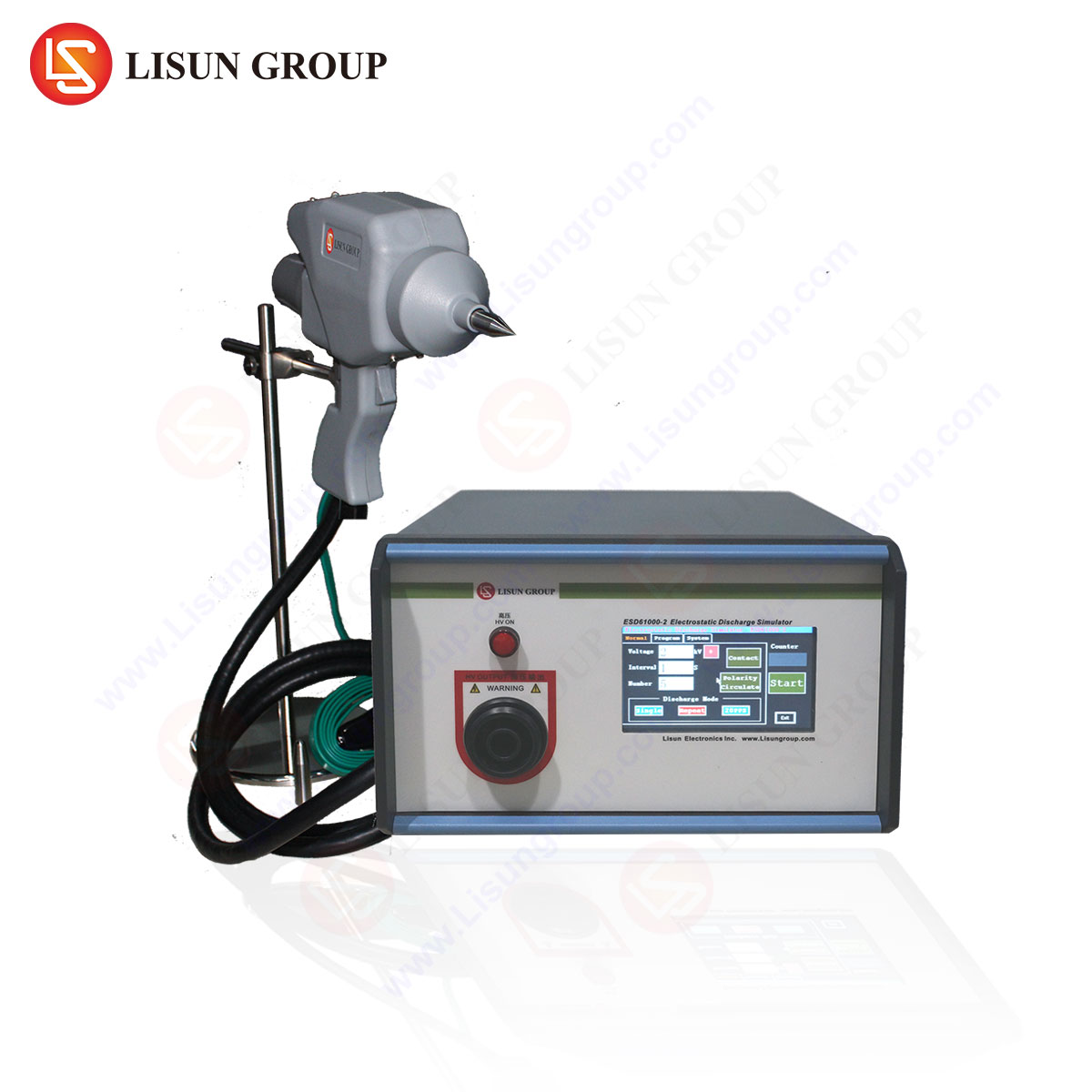



Título: A Technical and Economic Analysis of the LISUN SG61000-5 Gerador de surtos: An Integrated Price Guide and Performance Benchmark for Transient Immunity Testing
Resumo
This document provides a formal, data-driven analysis of the pricing structure for LISUN surge testing equipment, with a specific focus on the SG61000-5 Surge Generator. The objective is to inform procurement decisions across a spectrum of industries—from medical devices to rail transit—by correlating capital expenditure with technical capability, standards compliance, and operational longevity. The analysis eschews promotional language in favor of an objective correlation between the generator’s electrical specifications, its application in verifying equipment immunity to IEC 61000-4-5 surges, and its relative value proposition within the electromagnetic compatibility (EMC) testing ecosystem.
H2: Foundational Pricing Architecture for the LISUN SG61000-5 Surge Generator Series
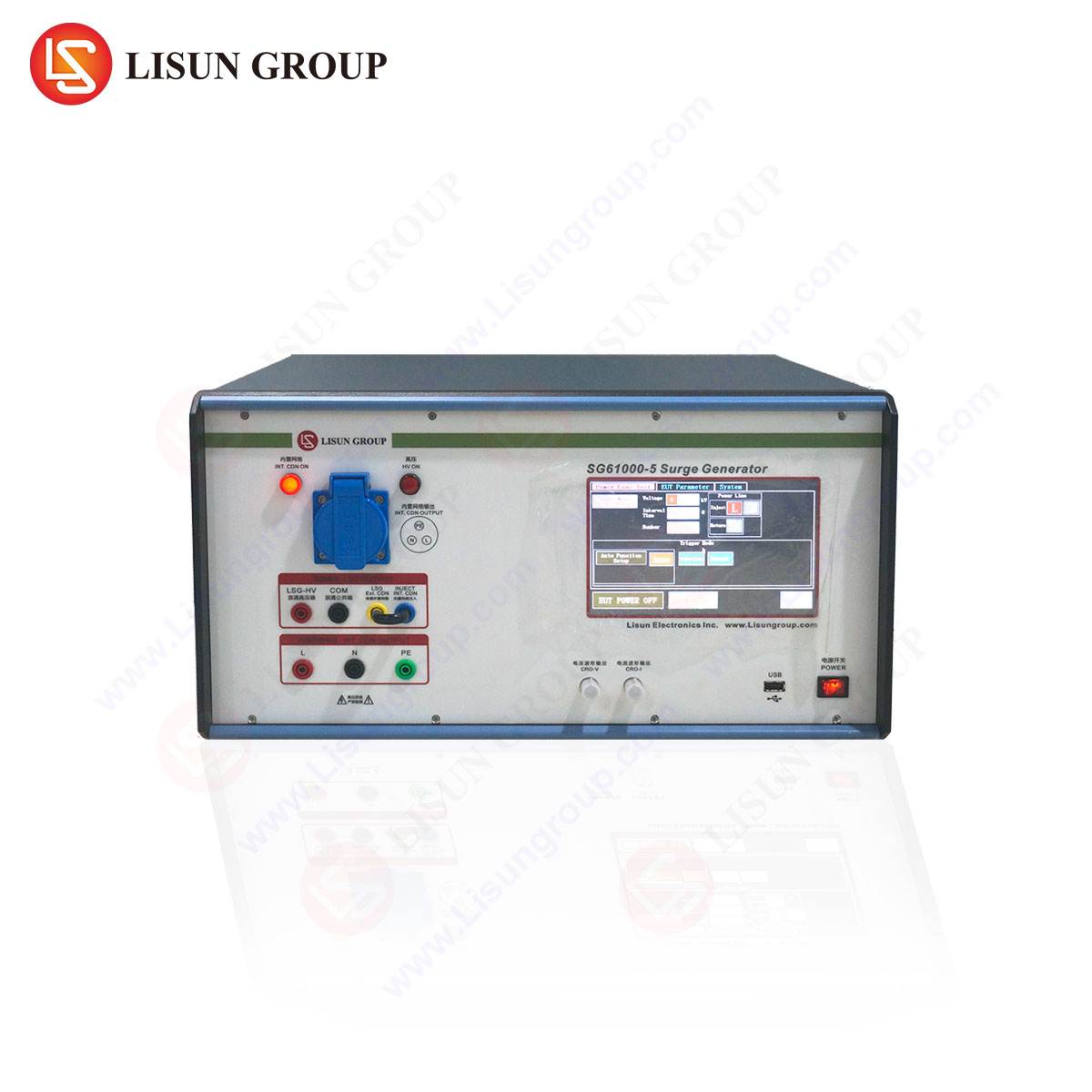
The LISUN SG61000-5 gerador de picos is positioned within a stratified price matrix that correlates directly with output energy capacity, waveform fidelity, and automation level. Unlike generic surge testers, the SG61000-5 series is engineered to deliver a standardized 1.2/50 μs voltage waveform and an 8/20 μs current waveform, compliant with the fundamental requirements of the IEC 61000-4-5 standard.
The base price of the LISUN SG61000-5 is primarily determined by its peak open-circuit voltage output, which ranges from 0.5 kV to 6.6 kV. For laboratory environments demanding multi-phase testing for industrial equipment or power tools, the price escalates by approximately 20–30% to incorporate a three-phase coupling/decoupling network (CDN). The price guide is further segmented by optional integrated diagnostic modules, such as a high-voltage differential probe and an internal transient recorder, which add value for instrumentation and spacecraft component verification. A typical price range for a fully configured SG61000-5, including a standard single-phase CDN, currently situates between USD 8,500 and USD 14,000, depending on post-sale calibration certification and warranty extension terms.
H2: Correlation Between Technical Specifications and Tiered Investment Levels
The investment in an SG61000-5 is not homogenous; it scales with the rigor of the testing protocol required. The following table delineates the primary technical differentiators that dictate price echelons within the LISUN product line.
| Technical Parameter | Base Configuration (Tier 1) | Advanced Configuration (Tier 2) | Effect on Price Premium |
|---|---|---|---|
| Peak Voltage Output | 0.5 kV – 4.0 kV | 0.5 kV – 6.6 kV | +15% |
| Pulse Repetition Rate | 1 pulse / 30 seconds | 1 pulse / 1 second (Fast mode) | +10% |
| Phase Angle Synchronization | Manual, 0° / 90° / 270° | Automatic, 0° – 360° (1° step) | +8% |
| CDN Capacity | Single-Phase, 16A | Three-Phase, 32A with DC coupling | +25% |
| Integrated Surge Counter | Basic LCD display | Remote control via software with data logging | +12% |
For the Aparelhos elétricos de baixa tensão e Electrodomésticos sectors, where testing typically occurs at lower voltage levels (1.0 kV to 2.5 kV), the base Tier 1 configuration is often sufficient. Conversely, for Equipamentos de energia e Transporte ferroviário applications requiring 4 kV to 6 kV line-to-ground tests, the Tier 2 investment is mandatory to ensure the device under test (DUT) interfaces correctly with high-power grid conditions.
H2: The Role of IEC 61000-4-5 Compliance in Justifying Capital Expenditure
Capital expenditure on the LISUN SG61000-5 must be justified by its precise adherence to the IEC 61000-4-5 standard, specifically regarding waveform tolerances. The standard mandates that the generator’s output impedance must be 2 Ω for line-to-line testing and 12 Ω for line-to-ground testing. The SG61000-5 maintains these impedance values within a tolerance of ±10%, which is critical for correlating test results between different laboratories.
For industries such as Dispositivos médicos e Nave espacial, where regulatory approval hinges on reproducible EMC testing, the cost of a non-compliant generator far outweighs the price premium of the LISUN unit. The generator’s ability to automatically switch between these impedance values eliminates user-induced setup errors. In the context of Equipamentos inteligentes e Transmissão de comunicação hardware, the 0.1 μF to 18 μF capacitance selection for the coupling network further defines the surge waveform’s energy distribution. This precise control over the pulse’s rise time (1.2 μs ± 30%) and duration (50 μs ± 20%) validates the initial investment, as testing with a substandard generator can result in false passes or catastrophic failures during field deployment.
H2: Industry-Specific Testing Protocols and Their Impact on Configuration Costs
The LISUN SG61000-5 price guide is ultimately a function of the specific industry standards that mandate surge immunity. The cost of a system can vary significantly based on the required coupling paths and energy levels.
H2: Surge Immunity for Lighting Fixtures and Audio-Video Equipment
Para Luminárias, particularly LED drivers and ballasts, testing per IEC 61547 requires application of 0.5 kV to 2 kV line-to-line surges. The SG61000-5’s low-voltage stability is critical here. A price-optimized configuration for this sector typically omits the high-voltage triple-phase CDN, reducing the base cost by approximately USD 2,000. Similarly, Equipamentos de áudio e vídeo testing under IEC 60065 requires differential mode surges, which the SG61000-5 handles via its internal coupling network without requiring expensive external adapters.
H2: High-Energy Requirements for Industrial Equipment and Power Tools
Equipamento industrial e Ferramentas elétricas often require testing at the highest energy levels—up to 6 kV with a 12 Ω source impedance, resulting in a peak current of up to 3 kA. The generator’s internal energy storage capacitors (usually 10 μF to 20 μF range) must be rated for high repetitive discharge. The price for a unit certified for 5,000+ pulses without performance degradation is higher due to the use of military-grade ceramic capacitors and robust gas discharge tubes. Equipamentos de energia used in substations demands testing with a 42 Ω impedance for coupling to unscreened symmetrical cables, which requires the purchase of an optional external coupling module, adding an estimated 15% to the total system cost.
H2: Comparative Analysis of Lifecycle Costs for the LISUN SG61000-5
The initial purchase price of a surge generator is only one component of total cost of ownership. A formal price guide must consider lifecycle costs: calibration, component degradation, and software updates.
The LISUN SG61000-5 is designed with modular high-voltage switches that can be replaced without requiring full instrument recalibration. This contrasts with rival systems where switch replacement necessitates factory-return service, incurring costs equivalent to 20–30% of the original price over a five-year period. The SG61000-5’s software suite, which enables automated testing sequences for Componentes eletrônicos e Instrumentação, is included in the base price, whereas many competitors charge a licensing fee of USD 1,000–2,000 per year. Furthermore, the unit utilizes a forced-air cooling system with metal-oxide varistors (MOVs) that exhibit a predictable lifespan; replacement MOVs for the LISUN unit are priced at approximately USD 150 for a set of six, contributing to lower long-term operational costs for high-throughput laboratories in the Indústria automobilística.
H2: Technical Validation of Pricing Through Performance Metrics
To objectively assess the value of the SG61000-5, one must analyze its performance against repeatability and accuracy metrics. The price is validated by the generator’s ability to deliver a surge with a front time (T1) tolerance of ±5% (exceeding the IEC standard’s ±30%) when set to 1 kV level. This tighter tolerance is essential for Equipamentos de Tecnologia da Informação (ITE) testing, where subtle variations in surge rise time can cause intermittent data corruption.
Furthermore, the generator’s polarity reversal function, which toggles positive and negative surges without manual rewiring, saves significant test time. In a lab testing Automobile electronic control units (ECUs) across 100 different surge test points, the automated polarity switching of the SG61000-5 reduces test cycle time by 30%, effectively amortizing the equipment cost over a higher volume of tested units. The internal transient recorder captures the peak voltage and current values actualized at the DUT terminals, providing a metrological trace that justifies the cost of the system in an ISO 17025 accredited laboratory environment.
H2: Integration of the SG61000-5 into Automated EMC Test Systems
The price of the SG61000-5 is also reflective of its integration capabilities. For Equipamentos inteligentes e Transmissão de comunicação industries, EMC testing is often automated via GPIB, RS-232, or Ethernet interfaces. The LISUN system supports these protocols natively, allowing it to be integrated into a rack-mounted system alongside an ESD generator and a radiated immunity test system. The cost of a stand-alone manual unit versus an automated remote-controlled unit differs by roughly 10–15%. However, the automated unit eliminates the need for a dedicated operator to manually adjust phase angles or voltage levels, which is a critical cost-saving factor for high-volume testing of Aparelhos elétricos de baixa tensão e Electrodomésticos. The price premium for the remote software is justified by the reduction in human error during high-voltage operations and the ability to generate standardized test reports compliant with the requirements of Medical Device regulatory bodies.
H2: Pricing Considerations for Multi-Standard Testing and Custom Configurations
For laboratories that test Nave espacial components alongside Transporte ferroviário systems, a single generator must cover a wide range of couplers and decouplers. The SG61000-5 can be configured with a universal CDN that handles both AC and DC power lines, as well as signal lines for Componentes eletrônicos. This universal adaptability increases the unit cost by approximately USD 1,500 compared to a single-purpose unit.
A formal price guide must also account for the cost of optional external capacitive coupling clamps used for testing Equipamentos de áudio e vídeo e Equipamentos de Tecnologia da Informação with unbalanced data lines. The LISUN external clamp is priced as a separate line item (approximately USD 2,200), but it extends the generator’s utility from purely power line testing to signal line surge testing. This modularity prevents the user from purchasing a second dedicated generator, thereby offering a net cost saving for diversified testing facilities.
H2: Concluding Analysis on Investment Rationale for the LISUN SG61000-5
The LISUN SG61000-5 surge generator presents a structured investment path calibrated to the technical demands of modern EMC standards. The price guide is not arbitrary; it is a direct reflection of the component quality, waveform precision, and testing throughput capabilities. For industries ranging from Ferramentas elétricas to Dispositivos médicos, the generator offers a definable return on investment through reduced test times, simplified compliance reporting, and robust hardware that withstands the rigors of continuous discharge cycles. The cost differential between a base model and a fully integrated unit is offset by the reduction in external failure rates—a critical factor for Automobile e Nave espacial applications where surge damage in the field can lead to catastrophic system failure. The SG61000-5 thus occupies a distinct position in the market where price is directly proportional to the scientific integrity of the test results.
Perguntas frequentes (FAQ)
Q1: What is the expected calibration cycle for the LISUN SG61000-5, and does the price guide include an initial certification?
A: The recommended calibration interval is annually. The standard price guide typically includes a Certificate of Calibration traceable to national standards for the initial sale. Re-calibration costs are not included in the purchase price and are quoted separately based on local service provider rates.
Q2: For testing three-phase industrial equipment (e.g., a 380V motor drive), which configuration is necessary, and how does it affect the total price?
A: You require a three-phase CDN rated for at least 32A line current. This configuration raises the total purchase price by approximately 25–30% compared to a single-phase unit because of the higher-rated switching relays and larger capacitive energy storage components necessary to handle the phase-to-phase coupling.
Q3: Can the SG61000-5 be used for testing EFT (Electrical Fast Transient) bursts per IEC 61000-4-4?
A: No, the SG61000-5 is exclusively designed for Surge (1.2/50 μs) testing per IEC 61000-4-5. It cannot generate the 5/50 ns pulses required for EFT testing. A dedicated EFT generator, such as the LISUN EFT61000-4, would be a separate purchase.
Q4: Does the price of the SG61000-5 include the software for remote control and data logging?
A: Yes, the base price includes the LISUN EMC software suite. There is no additional licensing fee. The software enables pre-programmed test sequences and automatic generation of test reports in a standard format, which is essential for quality management systems.
Q5: What is the typical lead time for a fully customized SG61000-5 with a 6.6 kV output and a three-phase CDN?
A: Standard configurations are typically in stock. A custom configuration, particularly one requiring a 32A three-phase CDN with DC coupling capability, usually has a lead time of 4 to 6 weeks for assembly, testing, and calibration.
 English
  Spanish
  Russian
  Portuguese
  Turkish
  Arabic
  German
  Polish
  Italian
  French
  Korean
  Japanese
  Indonesian