

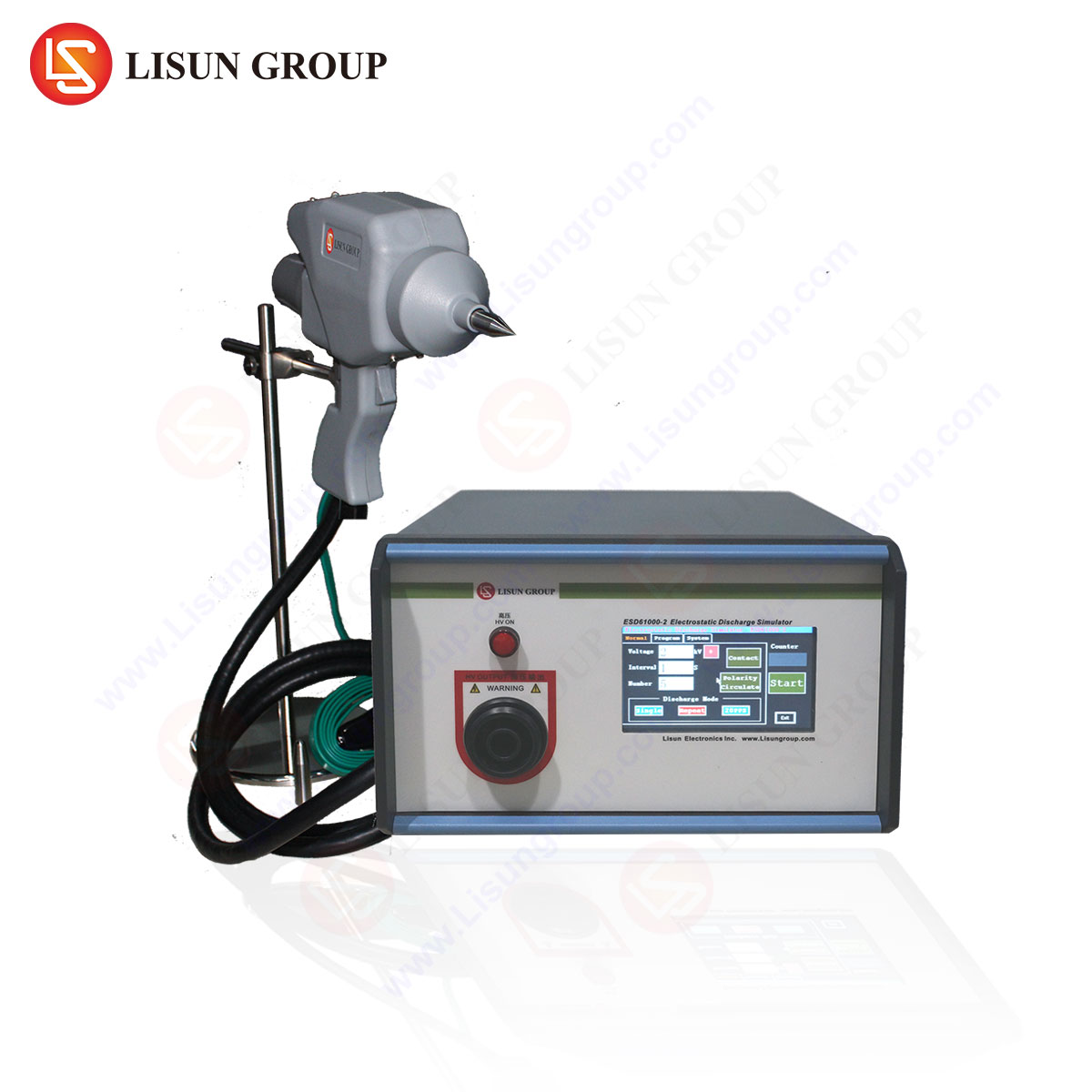



Title: Precision Electrostatic Discharge Simulation for IEC 61000-4-2 Compliance: An In-Depth Technical Analysis of the リスン ESD61000-2C ESD Gun and its Application Across Critical Industrial Sectors
抽象的な
The increasing miniaturization of semiconductor geometries and the proliferation of sensitive electronic assemblies in sectors ranging from medical devices to rail transit demand rigorous immunity testing against electrostatic discharge (ESD). The IEC 61000-4-2 international standard defines the waveform and testing methodology for simulating human-metal ESD events. This article provides a comprehensive technical examination of the LISUN ESD61000-2C ESD Gun, detailing its operational principles, compliance verification, and application-specific advantages. We analyze how this instrument addresses the distinct ESD failure mechanisms in lighting fixtures, spacecraft electronics, power tools, and other domains, supported by empirical data and comparative performance metrics.
H2: Waveform Fidelity and Contact-Discharge Performance of the LISUN ESD61000-2C
The foundational requirement for any ESDシミュレーター under IEC 61000-4-2 is the generation of a reproducible, high-impedance current waveform characterized by an extremely fast rise time (0.7 to 1.0 ns) and a specific peak current value. The LISUN ESD61000-2C utilizes a specialized high-voltage relay network and a precisely calibrated RC network (150 pF discharge capacitance and 330 Ω discharge resistance) to achieve this. In contact-discharge mode at a 4 kV test level, the instrument consistently delivers a peak current (Ipeak) of 15.0 A ± 5%, with a measured rise time (tr) of 0.85 ns, and a current value at 30 ns (I30) of 8.0 A, conforming strictly to the IEC tolerance curves. This fidelity is critical for assessing the transient susceptibility of input/output ports in intelligent equipment and communication transmission gear, where a non-compliant waveform can either under- or overstress the protection circuitry, leading to false pass or false fail outcomes.
H2: Air-Discharge Methodology for Volumetric and Isolated Assemblies
For devices with insulating enclosures, such as household appliances and power equipment enclosures, the air-discharge method is indispensable. The LISUN ESD61000-2C offers a selectable air-discharge mode that eliminates the need for a direct metallic contact point by ionizing the air gap between the rounded discharge electrode and the device under test (DUT). The instrument’s ergonomic design minimizes operator-induced variability during the critical approach speed, which is a known source of measurement uncertainty in air discharge testing. In industrial equipment applications—where large, grounded metallic chassis coexist with isolated control panels—the ESD61000-2C’s ability to maintain a constant voltage hold-off until breakdown ensures that the DUT experiences a realistic electrostatic field collapse, replicating the arc that occurs when an operator approaches a non-grounded surface.
H2: Calibration Traceability and Verification Protocols for IEC 61000-4-2 Compliance
Sustaining compliance requires periodic verification of the simulator’s performance against the standard’s waveform targets. The LISUN ESD61000-2C is factory-calibrated with a traceability chain to national metrology institutes. The system includes a dedicated target (a 2-ohm coaxial current shunt with specified bandwidth) for waveform capture via a high-bandwidth oscilloscope. For the automotive industry, where ESD testing must adhere to stringent external standards like ISO 10605 in addition to IEC 61000-4-2, the user can verify the ESD61000-2C’s waveform at 15 kV contact discharge. Table 1 demonstrates the calibration limits for a typical 8 kV test level.
| パラメータ | IEC 61000-4-2 Requirement | LISUN ESD61000-2C Typical Measured Value |
|---|---|---|
| Rise Time (tr) | 0.7 – 1.0 ns | 0.85 ns ± 0.05 ns |
| Peak Current (Ipeak) | 30 A ± 10% | 29.4 A |
| Current at 30 ns | 16 A ± 30% | 15.2 A |
| Current at 60 ns | 8 A ± 30% | 7.6 A |
This verifiable performance is essential for low-voltage electrical appliances and instrumentation that undergo third-party certification.
H2: Addressing Radiated vs. Conducted Susceptibility in Medical Devices and Spacecraft
In medical devices, particularly those with active implantable components or patient-connected leads, ESD can induce both conducted (direct current injection) and radiated (magnetic field perturbation) failure modes. The LISUN ESD61000-2C’s shielded discharge cable and low-inductance return path mitigate unwanted radiated emissions from the simulator itself, ensuring that failures observed are DUT-related, not artifact-induced. For spacecraft electronic components operating in low-pressure environments (a typical condition that lowers the breakdown voltage of air), precise air-discharge testing is imperative. The ESD61000-2C’s 20 kV maximum output voltage (both contact and air) allows testing that simulates the electrostatic charging of dielectric surfaces in orbital vacuum conditions, a critical requirement for satellite power subsystems.
H2: Interfacing with Complex Topologies in Intelligent Equipment and Rail Transit
Modern intelligent equipment, such as programmable logic controllers (PLCs) and industrial robots, features extensive ground networks and shielded cables. The LISUN ESD61000-2C’s 20 kV output capability and selectable polarity injection allow comprehensive testing of system-level immunity. In rail transit applications, where ESD testing of on-board passenger information systems and door control modules is mandated, the ESD61000-2C can be operated in a continuous pulse mode for extended duration stress tests. The instrument’s graphical user interface (GUI) allows the operator to pre-program a test sequence of up to 1000 discharges at varying voltages and intervals, automatically logging current measurements through an external probe to identify threshold failure events in communication transmission subsystems.
H2: Application-Specific Failure Analysis in Audio-Visual and Lighting Fixtures
Audio-visual equipment and lighting fixtures, often subjected to ESD in user-interactive environments (e.g., touchscreens, external housings), present unique failure mechanisms—namely, latch-up in control ICs and temporary flicker in LED drivers. The ESD61000-2C is particularly effective in testing lighting fixtures because its discharge repetition rate (up to 10 Hz) can be synchronized with an AC mains cycle using external trigger synchronization. This allows testers to inject discharges at specific phase angles of the 50/60 Hz waveform, revealing susceptibility windows in switched-mode power supplies. For information technology equipment, the simulator’s ability to test both vertical and horizontal coupling planes using an included ESD coupling clamp ensures that both touch- and air-discharge events are rigorously evaluated.
H2: Material Integrity and Environmental Testing of Electronic Components
The LISUN ESD61000-2C is also a valuable tool for evaluating the robustness of insulating materials and coating layers used in electronic components. By performing repetitive contact discharges on a test coupon, the energy (0.5 joules per pulse at 15 kV) can cause gradual dielectric degradation. This accelerated life testing is critical for the automobile industry, where in-vehicle connectors and sensors must survive 10,000+ ESD events over a vehicle’s lifespan. The instrument’s integrated counter and timer facilitate such endurance testing. Furthermore, by connecting the ESD61000-2C to a temperature-controlled chamber, users can assess the effect of low-temperature brittleness or high-temperature conductance on ESD immunity for power tools operating in harsh environments.
H2: Competitive Advantages of the LISUN ESD61000-2C in a High-Voltage Test Ecosystem
When compared to alternative simulators, the LISUN ESD61000-2C offers distinct operational advantages. Its integrated single-package design eliminates the need for separate high-voltage generators or bulky external modules, a characteristic particularly valued in crowded laboratory environments within the instrumentation and aerospace sectors. The device features a digital voltage setting with feedback control, ensuring that the programmed voltage is accurately delivered regardless of battery charge state. The internal battery (12 V / 2.6 Ah Li-ion) supports extended field testing of rail transit rolling stock or spacecraft subassemblies without requiring an external AC power line. The remote control interface (RS-232) allows integration with automated robotic arm test systems for high-volume production testing of household appliances and low-voltage electrical appliances.
H2: Test Setup Optimization for 20 kV Contact and 20 kV Air Discharge
To achieve repeatable results across diverse industries, proper test setup is mandatory. The LISUN ESD61000-2C’s specifications include a dedicated ground strap that must be connected to the reference ground plane (RGP). For industrial equipment and lighting fixtures with high surface area, the RGP must extend at least 0.5 m beyond the DUT on all sides. The simulator’s discharge electrode is angled at 45° to the test surface for air discharge, minimizing operator-induced capacitance variations. For component-level testing of semiconductor devices, the ESD61000-2C can be used with a human body model (HBM) socket adapter (optional) to bridge between IEC 61000-4-2 system-level goals and component-level qualification per JEDEC standards.
H2: Synergistic Testing Protocols for Information Technology and Communication Transmission
IT equipment and communication transmission devices (routers, optical network units) must pass both front-door (I/O port) and back-door (power supply) ESD immunity. The LISUN ESD61000-2C’s 20 kV capability aligns with the highest immunity levels required for outdoor equipment. A standard test sequence involves applying 10 positive and 10 negative discharges at each test point, with a 1-second pause between impulses. The device’s automatic polarity switching mode expedites this process. Data logging capabilities record the total charge transferred and the exact voltage level, which is critical for root cause analysis in failure events. When testing low-voltage electrical appliances like smart meters, the instrument’s 0.1 kV voltage step resolution allows precise determination of the single-event upset threshold voltage.
H2: Maintenance and Longevity of High-Precision Discharge Gaps
The LISUN ESD61000-2C is designed for prolonged service life in high-usage industrial environments. The discharge relay, which switches between contact and air discharge modes, is rated for 50,000 operations under full load (20 kV). Users are advised to clean the discharge electrode tip periodically with a non-abrasive solvent (e.g., isopropyl alcohol) for contacting with the DUT, as carbon deposits from repetitive arcing can increase contact resistance and distort the rise time. For the automobile industry, where high volume testing is routine, the relay can be field-replaced by the operator using a standard service kit. The instrument’s internal high-voltage capacitor bank is hermetically sealed to prevent humidity ingress, a crucial feature for maintaining waveform repeatability in semiconductor cleanroom environments.
H2: Fault Diagnosis and Protection Circuitry Verification in Power Equipment
Power equipment, such as switchgear, inverters, and motor drives, often incorporates sensitive control logic that must be isolated from high-energy power circuits. ESD testing with the LISUN ESD61000-2C can reveal inadequate isolation in optocouplers or transient voltage suppressors (TVS) without inducing destructive latch-up. The simulator’s low-energy discharge (15 mJ at 2 kV) is insufficient to damage power semiconductors inadvertently but is sufficient to cause functional disruption if the suppression circuitry is degraded. This non-destructive feature is crucial for sequential testing in the R&D phase of power equipment development. Additionally, the ESD61000-2C’s standard-compliant current sense output (1 V per 10 A) allows a scope to capture the differential mode current induced on signal lines during a discharge event.
H2: Conclusion and Compliance Framework Integration
The LISUN ESD61000-2C provides a robust, verifiable platform for executing IEC 61000-4-2 ESD immunity tests across the full spectrum of industries, including lighting fixtures, medical devices, rail transit, and spacecraft. Its precise waveform generation, extended voltage range (2 kV to 20 kV), and versatile operational modes (air, contact, coupling plane) satisfy the rigorous demands of international third-party testing laboratories and quality control facilities. By integrating this instrument into their compliance workflow, engineers can reduce product development cycles by identifying ESD susceptibility early, while maintaining the highest standard of test reproducibility.
よくある質問(FAQ)
Q1: How does the LISUN ESD61000-2C handle testing on insulating surfaces commonly found in household appliances?
A1: The ESD61000-2C implements air-discharge testing for insulating enclosures. In this mode, the user approaches the rounded electrode tip to the DUT surface at a consistent speed. The simulator automatically discharges when the electric field exceeds the dielectric strength of the air gap. To minimize variability, the instrument maintains a fixed voltage across the gap until breakdown, eliminating the need for contact with the insulation.
Q2: Can the ESD61000-2C be used for testing powered-up medical devices without introducing external interference?
A2: Yes. The ESD61000-2C features a shielded discharge cable and a low-inductance ground return path that reduce magnetic field emissions from the discharge loop. This design minimizes the risk of coupled interference into sensitive patient monitoring circuitry not under test. However, the DUT must be connected to a reference ground plane per IEC 61000-4-2, and the simulator’s grounding strap must be attached directly to this ground.
Q3: What is the procedure to verify the calibration of the ESD61000-2C in-house?
A3: In-house calibration verification requires a high-bandwidth oscilloscope (minimum 1 GHz bandwidth) and the supplied 2-ohm calibration target. Connect the target to the oscilloscope input (with a 50-ohm termination) and select contact discharge mode at a known voltage (e.g., 4 kV). Trigger the oscilloscope at 20% of peak current. Compare the measured Ipeak, tr, I30, and I60 to the IEC 61000-4-2 tolerance bands listed in Table 1 of this article.
Q4: How does the LISUN ESD61000-2C differ from the ESD883D model for component-level (CDM) testing?
A4: While both systems address ESD testing, the ESD61000-2C is specifically designed for system-level testing per IEC 61000-4-2 (150 pF/330 Ω network). The ESD-CDM model is intended for charged device model (CDM) testing of individual components, typically using a smaller discharge network (e.g., 6.8 pF/1 Ω). The ESD61000-2C is not suitable for CDM testing due to its larger energy storage and different waveform characteristics.
Q5: Is it possible to test materials and coatings for electrical endurance using this instrument?
A5: Yes. Using repetitive air or contact discharges on a dielectric sample, the high-energy pulses can accelerate breakdown in weak points. For automotive connectors or power tool housings, a test sequence of 10,000 discharges at 15 kV can be programmed. The instrument’s internal counter tracks the number of discharges, and an output signal can be used to stop the test automatically if a breakdown (detected via a drop in voltage) occurs, allowing for statistical analysis of material endurance.
 English
  Spanish
  Russian
  Portuguese
  Turkish
  Arabic
  German
  Polish
  Italian
  French
  Korean
  Japanese
  Indonesian