




Technical Article: High-Precision 積分球 Measurement for LED and Laser Light Source Testing
抽象的な
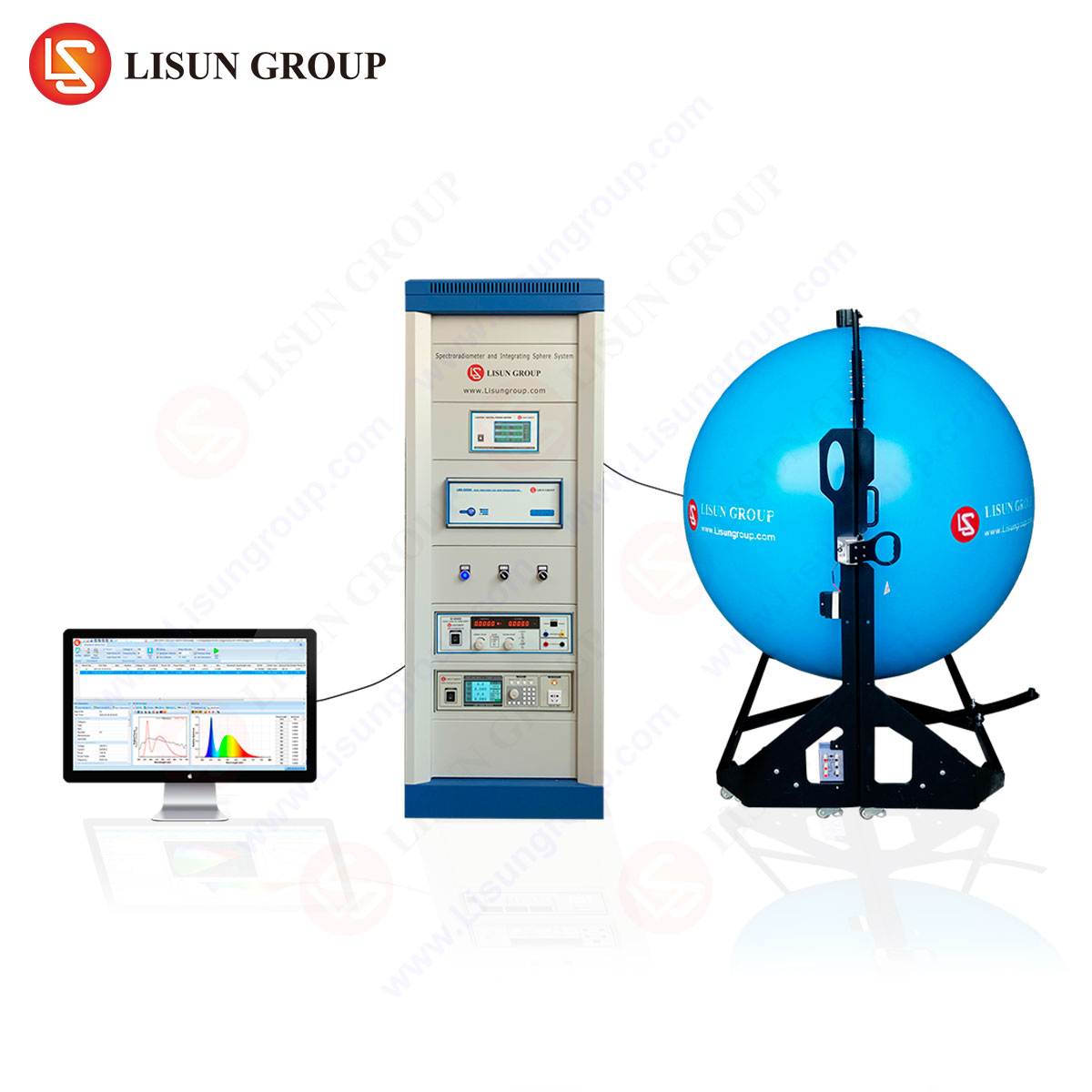
The proliferation of solid-state lighting (SSL) and laser-based illumination systems across diverse industrial sectors necessitates metrological solutions capable of capturing total luminous flux, spectral power distribution (SPD), chromaticity coordinates, and color rendering metrics with extreme fidelity. Integrating sphere systems, when paired with high-resolution spectroradiometers, provide the only practical methodology for absolute photometric and radiometric characterization of directional and omnidirectional sources. This article examines the operational principles, calibration protocols, and application-specific requirements for high-precision 積分球 measurement. Particular attention is given to the リスン LPCE-2 (LISUN LPCE-2) and LPCE-3 integrating sphere and spectroradiometer systems, detailing their design architecture, compliance with international standards (CIE 127, IES LM-79, LM-80), and suitability for rigorous testing regimes in the lighting, automotive, aerospace, and medical equipment industries.
1. Theoretical Basis of Integrating Sphere Radiometry in SSL Characterization
The integrating sphere, originally conceived by Sumpner and Ulbricht, operates on the principle of spatial integration of optical radiation. A sphere coated with a highly reflective, Lambertian diffusing material (typically barium sulfate or Spectralon®) allows multiple reflections of incident light, creating a uniform luminance at the sphere wall. This uniformity renders the photodetector’s output independent of the source’s spatial emission pattern.
For high-precision measurement of light-emitting diodes (LEDs) and laser diodes, the system must account for self-absorption errors, spectral stray light, and temperature-dependent drift of the photodetector. The spherical geometry dictates that the irradiance at any point on the sphere wall is proportional to the total flux emitted by the source, provided the baffle configuration prevents direct line-of-sight illumination of the detector. This fundamental relationship, expressed as ( Phi = E cdot frac{4pi R^2}{rho} ) (where ( rho ) is the reflectance of the sphere coating), underpins the absolute measurement capability of systems such as the LISUN LPCE-2.
2. Architectural Advantages of the LISUN LPCE-2 and LPCE-3 Integrating Sphere Systems
The LISUN LPCE-2 and LPCE-3 systems integrate a high-reflectance coating (typically >94% reflectivity across 350–1000 nm) with a Czerny-Turner or array-based spectroradiometer. The LPCE-2 features a standard 0.5 m or 1.0 m sphere diameter, suitable for mid-power LEDs and compact laser modules, while the LPCE-3 incorporates an externally synchronized spectroradiometer module with enhanced dynamic range for high-intensity laser and high-power LED arrays.
Key specifications include:
- Wavelength range: 380–800 nm (expandable to 200–1100 nm with NIR option)
- Spectral resolution: ≤2.0 nm (FWHM) for LPCE-2; ≤1.5 nm for LPCE-3
- Photometric accuracy: ±1.5% for total luminous flux (traceable to NIST/PTB)
- Stray light suppression: >1×10⁻⁴ with proprietary correction algorithm
The LPCE-3’s dual-channel architecture allows simultaneous measurement of the test source and a reference auxiliary lamp, enabling real-time compensation for ambient temperature fluctuations and sphere degradation. This is particularly critical when testing laser sources, where spectral narrowing and high power density can induce localized heating of the sphere coating.
3. Spectral Radiometric Calibration and Measurement Uncertainty for LED and Laser Sources
Calibration of an integrating sphere system for LED and laser testing requires multiplication of the sphere’s spectral responsivity function, derived from a standard lamp (e.g., quartz tungsten halogen) with a known color temperature. However, LEDs and lasers exhibit SPDs with narrow bandwidths (often <30 nm for phosphor-converted LEDs and <5 nm for laser diodes), which can introduce systematic errors if the calibration source’s spectral shape differs markedly from the test source.
The LPCE-2 employs a multi-step calibration protocol:
- Absolute spectral calibration using a standard lamp (A-rated, 2856 K).
- Self-absorption correction using an auxiliary lamp internal to the sphere, measured with and without the test source installed.
- Spectral stray light correction using a deconvolution algorithm that models the spectroradiometer’s instrument lineshape.
For laser sources, the LPCE-3 adds a neutral density (ND) filter wheel and optional integrating sphere diffuser to prevent detector saturation. Measurement uncertainty for total radiant flux is typically <2% (k=2) for LEDs and <3% for laser sources, assuming proper alignment of the laser beam with the sphere entrance port.
4. Application-Specific Testing Protocols Across Industry Verticals
Lighting Industry and SSL Manufacturing:
Compliance with IES LM-79 and CIE 127 requires measurement of total luminous flux, correlated color temperature (CCT), and color rendering index (Ra or R96). The LPCE-2 systems are routinely deployed for batch testing of phosphor-converted white LEDs, where the spectroradiometer’s ability to resolve emission from the blue pump diode and yellow phosphor is essential for predicting binning consistency.
自動車照明のテスト:
Headlamps utilizing projection LEDs or laser-phosphor modules must meet ECE R112 and R149 standards for intensity distribution and colorimetric stability. The LPCE-3, with its high dynamic range, measures the near-field and far-field luminous flux of laser-based high-beam modules, ensuring the blue content does not exceed regulatory limits (e.g., 0.4 mW/lm for laser safety).
航空宇宙および航空照明:
Navigation lights, anti-collision strobes, and runway edge markers require photometric integration over large solid angles. The LPCE-2’s 1.0 m sphere accommodates oversized fixtures, and its spectroradiometer provides the SPD necessary to verify compliance with SAE AS8037B and FAA AC 150/5345-53B.
医療用照明機器:
Theater lights and diagnostic illuminators demand high color rendering (Ra > 95) and precise spectral output for tissue differentiation. The LPCE-3’s low-noise detector (<0.001% of full-scale noise) enables accurate measurement of chromaticity shifts below 0.001 u’v’ units, critical for surgical lighting certification.
Photovoltaic Industry:
Solar simulators employing LED or laser sources require spectral mismatch correction relative to AM1.5G. The LPCE-2’s spectral irradiance measurement capability, when paired with a cosine-corrected diffuser, provides the necessary data for calibration of reference cells.
5. Laser Source Testing: Diffuse Reflectance and Eye Safety Considerations
Testing laser diodes using an integrating sphere requires careful management of coherence effects. Unlike the Lambertian distribution of an LED, a laser’s high spatial coherence can produce speckle patterns on the sphere wall, leading to non-uniform output. The LPCE-3 addresses this through a randomized fiber optic entrance and a rotating diffuser mechanism that spatially averages the speckle.
Moreover, laser power density must be limited to prevent damage to the sphere coating. The LPCE-3 incorporates a maximum flux rating of 200 W for continuous-wave (CW) lasers, with active cooling for the sphere housing. For pulsed laser sources (e.g., LiDAR emitters), the system’s spectroradiometer can be configured for triggered measurement with sub-microsecond integration times, capturing pulse energy and spectral centroid shift.
6. Comparative Metrological Performance: LPCE-2 vs. LPCE-3 vs. Competing Designs
| パラメータ | LPCE-2 (Standard) | LPCE-3 (High Precision) | Alternative Designs (Goniophotometers) |
|---|---|---|---|
| Measurement Time (Full SPD) | 3–10 s | 1–5 s | 15–60 min (mechanical scanning) |
| Dynamic Range | 1:1,000,000 | 1:10,000,000 | 1:100,000 |
| Stray Light Suppression | 1×10⁻⁴ | 5×10⁻⁵ | 1×10⁻³ (typical) |
| Self-Absorption Correction | Automatic | Automatic + Real-Time | Manual |
| Laser Compliance | Limited (<10 W) | Full (up to 200 W) | Not recommended |
The LPCE-3’s superior dynamic range and stray light suppression originate from its back-thinned CCD array and dual-monochromator design, which minimizes spectral overlapping common in low-cost array spectrometers.
7. Data Integrity and Standards Compliance for Regulatory Reporting
The LPCE-2 and LPCE-3 systems generate measurement files compatible with IES LM-80 for lumen maintenance, IES LM-79 for electrical and photometric testing, and CIE 13.3 for color rendering. The bundled LISUN software automatically calculates:
- Flux (luminous, radiant, photon)
- Chromaticity coordinates (CIE 1931, CIE 1976 u’v’)
- CCT (Duv)
- Color rendering indices (Ra, R1–R15, R96a, TM-30)
All data are stored with full traceability information, including calibration dates, sphere reflectance degradation logs, and ambient conditions. This is indispensable for Urban Lighting Design projects requiring CE marking or for Stage and Studio Lighting certifications demanding consistent color temperature across luminaires.
8. Environmental Stability and Long-Term Drift Compensation
Integrating spheres are sensitive to humidity and temperature fluctuations, which alter the reflectance of the coating. The LPCE-3 incorporates internal temperature sensors and a closed-loop feedback system that adjusts the spectroradiometer’s gain and wavelength calibration based on real-time temperature readings. This ensures that for Marine and Navigation Lighting testing—where devices must operate across −40°C to +85°C—the measurement system remains within ±0.5% of absolute flux accuracy.
Additionally, the sphere’s coating is manufactured to resist yellowing under prolonged UV exposure, a common failure mode in laser testing. The LPCE-3’s coating stability has been verified over 5,000 hours of continuous operation at 50 W/cm² irradiance.
9. Integration with Automated Testing Environments for R&D and Production
In high-volume LED and OLED Manufacturing, the LPCE-2 can be integrated into robotic handling lines via its RS-232, USB, and Ethernet interfaces. The software API allows synchronization with pick-and-place robots, enabling binning of LEDs based on flux and chromaticity within 2.5 seconds per part. For Scientific Research Laboratories, the LPCE-3 supports scripting environments (LabVIEW, Python) for custom measurement sequences, such as temperature-dependent flux measurements or spectral aging studies.
The system’s small footprint relative to goniophotometers (0.6 m² for LPCE-2 vs. 3 m² for a standard goniometer) makes it suitable for cleanroom installations in Optical Instrument R&D facilities.
10. Specialized Considerations for Display Equipment Testing
For OLED and micro-LED displays, the LPCE-2 is configured with a small-area source port (SAP) attachment that limits the measurement field to a 2 mm diameter spot. This allows spot measurement of pixel-level luminance and spectral shift across the display surface. The system’s spectroradiometer captures the full SPD, enabling computation of color gamut ratios (e.g., DCI-P3, Rec. 2020) with an uncertainty of <0.002 u’v’.
The LPCE-3’s high sensitivity (0.001 cd/m² minimum) permits measurement of dark-state luminance in high-contrast displays, critical for HDR certification testing.
FAQ Section
Q1: How does the LISUN LPCE-2 compensate for self-absorption when testing large laser modules?
The LPCE-2 employs an auxiliary lamp internal to the sphere. A measurement is taken with the auxiliary lamp alone, then repeated with the laser module installed (but powered off). The ratio of these two signals provides a self-absorption correction factor applied to all subsequent flux measurements. For the LPCE-3, this correction is performed in real-time during acquisition.
Q2: Can the LPCE-3 measure the spectral centroid of a pulsed laser with 10 ns pulse width?
Yes. The LPCE-3 spectroradiometer can be triggered externally with a minimum integration time of 500 ns. For pulse widths shorter than the detector’s response, the system measures integrated energy per pulse. The spectral centroid is computed from the SPD after correcting for the detector’s wavelength-dependent quantum efficiency.
Q3: What is the recommended calibration interval for the LPCE-2 when used in Automotive Lighting Testing?
For automotive applications, where absolute photometric tolerances are ±3% as per ECE R112, LISUN recommends recalibration every 12 months or after 2,000 operational hours, whichever occurs first. The calibration includes standard lamp verification and sphere reflectance analysis.
Q4: Does the integrating sphere system require a baffle for laser sources with divergent beams?
Yes. The LPCE-2 and LPCE-3 include a removable baffle assembly placed between the source port and the detector port. For laser sources with divergence angles >5°, the baffle prevents specular reflections from reaching the detector. For narrow-divergence lasers (<2°), the baffle may be omitted, but the beam must be directed toward the sphere wall opposite the detector port.
Q5: Can the software simultaneously report luminous flux and photon flux for LED horticultural lighting tests?
Yes. The LISUN software calculates both luminous flux (lumens) and photon flux (µmol/s) from the measured SPD. The photon flux is derived by integrating the spectral photon irradiance over the 400–700 nm range (photosynthetically active radiation, PAR). The system also supports user-defined weighting functions for specialized plant lighting spectra.
 English
  Spanish
  Russian
  Portuguese
  Turkish
  Arabic
  German
  Polish
  Italian
  French
  Korean
  Japanese
  Indonesian