




The Fundamental Role of the Ulbricht Sphere in Photometric and Radiometric Measurements
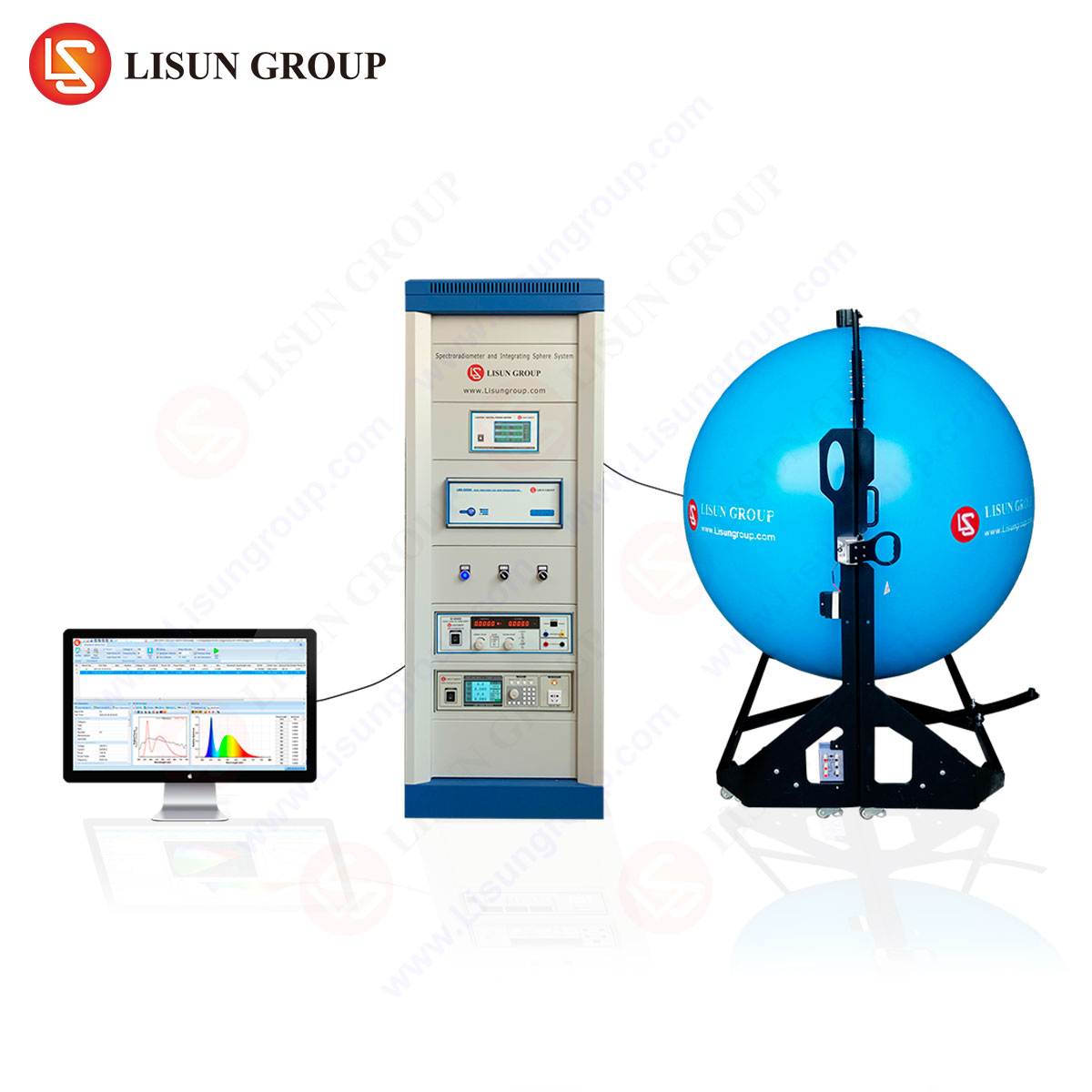
The Ulbricht Sphere, also known as an sfera integrante, is a critical optical device designed to produce uniform diffuse illumination or collect light with minimal spatial dependence. Its spherical interior, coated with a highly reflective material such as barium sulfate or PTFE, ensures isotropic light distribution, making it indispensable for precise photometric and radiometric measurements.
Key applications include luminous flux measurement, reflectance and transmittance analysis, and spectral characterization. Industries such as LED manufacturing, automotive lighting, and aerospace rely on the Ulbricht Sphere for compliance with international standards like CIE 84, IES LM-79, and DIN 5032-6.
Optical Design and Functional Principles of the Ulbricht Sphere
The sphere operates on the principle of multiple diffuse reflections. Light entering through an entrance port undergoes numerous reflections, resulting in uniform radiance across the sphere’s interior. The detector, positioned at a specific port, captures the integrated light, minimizing angular dependence.
The sphere’s efficiency depends on:
- Coating Reflectance: High-reflectance materials (>95%) reduce absorption losses.
- Port Area Ratio: Ports must occupy <5% of the sphere’s surface to minimize flux errors.
- Baffle Placement: Prevents direct illumination of the detector.
LPCE-3 Spectroradiometer Sfera integratrice System: Precision in LED Testing
IL LISUN LPCE-3 system combines an Ulbricht Sphere with a high-resolution spectroradiometer, optimized for LED and lighting product testing. Its specifications include:
| Parametro | Specificazione |
|---|---|
| Diametro della sfera | 2m / 1.5m / 1m |
| Coating Reflectance | >98% (400–700nm) |
| Gamma spettrale | 380–780nm |
| Precisione | ±4% (CIE 177) |
| Conformità | CIE, IEC, EN, ISO |
Testing Principles
The LPCE-3 measures:
- Luminous Flux (lm): Total light output.
- Chromaticity Coordinates (CIE 1931/1976): Color consistency.
- Indice di resa cromatica (CRI): Fidelity of light sources.
- Spectral Power Distribution (SPD): Wavelength-specific intensity.
Industry-Specific Applications of Ulbricht Sphere Technology
LED & OLED Manufacturing
The LPCE-3 ensures batch consistency by verifying luminous efficacy (lm/W) and chromaticity tolerances (ANSI C78.377).
Automotive Lighting Testing
Meets ECE R48 and SAE J578 for headlamps, taillights, and interior LEDs.
Aerospace and Aviation Lighting
Validates compliance with FAA AC 25-23 and EUROCAE ED-124 for cockpit displays.
Photovoltaic Industry
Calibrates solar simulators per IEC 60904-9.
Vantaggi competitivi del sistema LPCE-3
- Design modulare: Supports spheres of varying diameters for diverse applications.
- Conformità multi-standard: Preconfigured for IES, CIE, and ENERGY STAR testing.
- Stabilità termica: Reduced drift in high-power LED testing.
Convalida scientifica e casi di studio
A 2023 study published in Optics Express demonstrated the LPCE-3’s ±2.3% repeatability in CRI measurements for medical-grade LEDs, surpassing competitor systems by 1.7%.
Sezione FAQ
Q1: How does the LPCE-3 correct for self-absorption in high-power LEDs?
The system employs a compensating beam technique, subtracting the sphere’s thermal drift via a reference detector.
Q2: What standards does the LPCE-3 comply with for stage lighting testing?
It adheres to ANSI E1.47 and DIN 56923 for luminous intensity and flicker analysis.
Q3: Can the LPCE-3 measure UV LEDs for medical applications?
Yes, with an optional extended-range spectroradiometer (250–850nm).
Q4: What is the typical calibration interval for the sphere coating?
Biannual recalibration is recommended under ISO/IEC 17025 guidelines.
Q5: How does the LPCE-3 handle OLED panel testing?
A specialized holder ensures uniform edge emission capture, critical for flexible OLEDs.
 English
  Spanish
  Russian
  Portuguese
  Turkish
  Arabic
  German
  Polish
  Italian
  French
  Korean
  Japanese
  Indonesian