




Title: Itu LISUN PPFD PAR Meter: A Precision Instrument for Quantifying Photosynthetic Photon Flux Density in Controlled Environment Horticulture and Plant Growth Research
Abstrak
Accurate measurement of Photosynthetic Photon Flux Density (PPFD) and Photosynthetically Active Radiation (PAR) is fundamental to optimizing plant growth in controlled environment agriculture, photobiology research, and greenhouse management. The LISUN PPFD PAR Meter, integrated with the advanced LISUN LMS-6000 Spectroradiometer platform, provides a high-fidelity solution for spectral analysis and quantum flux measurement across the 400–700 nm range. This article details the technical architecture, calibration methodology, and operational principles of the LISUN LMS-6000 Series, examining its applications across diverse industries including LED manufacturing, automotive lighting, aerospace, and medical lighting equipment. The discussion includes comparative performance data, adherence to international standards, and the instrument’s role in bridging the gap between radiometric and photobiological metrics.
1. Instrument Architecture and Spectral Measurement Principles of the LISUN LMS-6000 Series
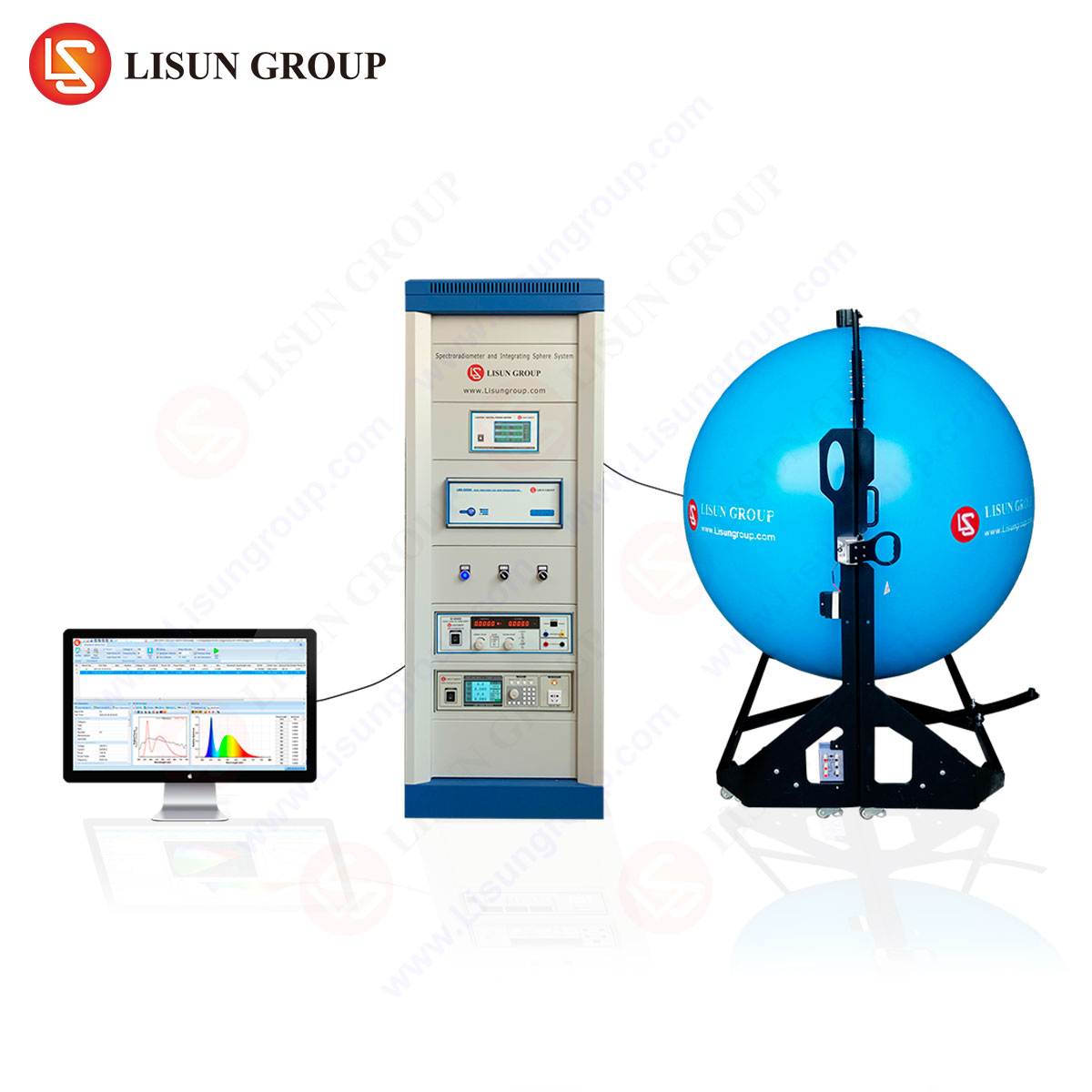
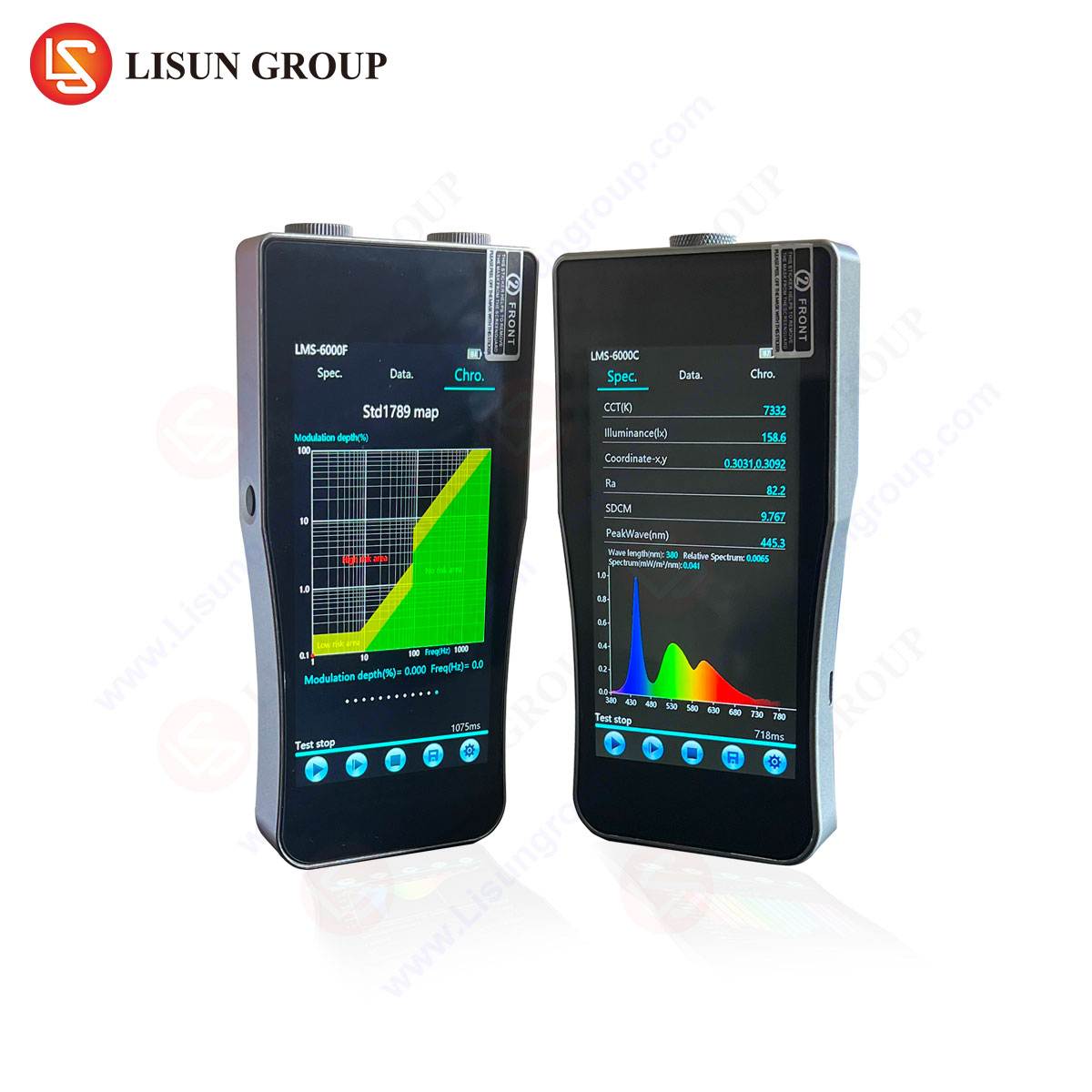
The LISUN LMS-6000 Spectroradiometer, comprising models LMS-6000, LMS-6000F, LMS-6000S, LMS-6000P, LMS-6000UV, and LMS-6000SF, is a high-resolution spectral measurement system designed for absolute irradiance and radiance quantification. The core architecture is based on a Czerny-Turner optical configuration employing a diffraction grating with 1200 lines/mm, coupled with a back-illuminated CCD array detector. This design enables simultaneous acquisition of spectral data from 200 nm to 1100 nm, with a full-width at half-maximum (FWHM) resolution of ≤ 2 nm.
The PPFD PAR Meter functionality is derived from the spektrometer’s ability to capture the spectral power distribution (SPD) of a light source. The instrument calculates PPFD (µmol·m⁻²·s⁻¹) by integrating the product of the spectral irradiance (W·m⁻²·nm⁻¹) and the standard photosynthetic photon flux conversion factor, normalized to the quantum yield of photosynthesis. Specifically, PPFD is computed using the following relation:
[
text{PPFD} = int_{400 , text{nm}}^{700 , text{nm}} E(lambda) cdot frac{lambda}{hc} , dlambda
]
Where (E(lambda)) is the spectral irradiance, (h) is Planck’s constant, and (c) is the speed of light. The LISUN LMS-6000 series performs this integration in real-time, outputting both raw spectral data and derived photobiological parameters.
Table 1: Key Optical Specifications of the LISUN LMS-6000 Spectroradiometer
| Parameter | LMS-6000F | LMS-6000S | LMS-6000P |
|---|---|---|---|
| Rentang Spektral | 200–1100 nm | 380–780 nm | 200–1100 nm |
| Optical Resolution (FWHM) | ≤2 nm | ≤2 nm | ≤1.5 nm |
| Akurasi Panjang Gelombang | ±0.3 nm | ±0.5 nm | ±0.2 nm |
| Stray Light Level | ≤0.01% | ≤0.01% | ≤0.005% |
| Kecepatan Pengukuran | 1 ms–10 s | 10 µs–10 s | 1 ms–5 s |
The instrument’s stray light suppression, achieved through double-grating monochromator design in the LMS-6000UV model, is critical for accurate PAR measurement under narrowband LED spectra, where out-of-band leakage can distort quantum flux readings.
2. Calibration Standards and Traceability for Photosynthetic Photon Flux Density Measurement
The LISUN PPFD PAR Meter is calibrated against NIST-traceable standard lamps that are themselves certified according to the International Commission on Illumination (CIE) S 023/E:2013 standard for spectroradiometric measurements. Calibration is performed using an FEL-type 1000 W tungsten halogen lamp with a known correlated color temperature (CCT) of 2856 K, and whose spectral irradiance is certified by a national metrology institute.
For PAR-specific applications, the instrument incorporates a cosine-corrected diffuser to ensure accurate measurement of incident photon flux from extended sources, which is essential for horticultural lighting environments. The spectral mismatch correction factor (MMF) is automatically applied based on the relative spectral responsivity of the instrument versus the theoretical quantum yield of photosynthesis, as defined by the McCree curve. This correction is particularly vital when measuring LED fixtures with peak emissions at 450 nm and 660 nm, common in vertical farming.
Traceability Chain:
- Primary standard: NIST cryogenic radiometer.
- Transfer standard: FEL lamp calibrated at 0.5 m distance.
- Working standard: LISUN internal calibration source re-calibrated biannually.
- Field measurement uncertainty: ±4.2% (k=2) for PPFD under typical horticultural LEDs.
The LMS-6000SF model additionally provides a self-absorption correction feature for fluorescence measurements, relevant when assessing phosphor-converted white LEDs used in supplemental greenhouse lighting.
3. Application in LED & OLED Manufacturing and Display Equipment Testing
In the LED and OLED manufacturing sector, the LISUN LMS-6000 series serves as a critical quality assurance tool for verifying spectral consistency and luminous efficacy of horticultural LEDs. Manufacturers rely on the instrument to measure PPFD uniformity across large-area arrays, identifying spatial non-uniformities that could lead to uneven plant growth. The instrument’s high dynamic range (0.1–200,000 lx) enables characterization of both low-intensity moonlight-simulating LEDs and high-intensity discharge replacement fixtures.
For display equipment testing, the LMS-6000S variant is employed to measure the spectral radiance of micro-LED and OLED panels used in plant growth chambers. The instrument’s ability to detect spectral shifts as small as 0.3 nm is critical when evaluating the aging effects of organic emissive layers, which can shift peak wavelength and subsequently alter the PAR contribution.
In the context of the Industri Fotovoltaik, the LISUN PPFD PAR Meter is repurposed for spectral mismatch assessment in solar simulators. The instrument measures the spectral irradiance of the simulator and compares it to the standard AM1.5G spectrum, calculating a mismatch factor used to correct quantum efficiency measurements of photovoltaic cells.
4. Role in Automotive, Aerospace, and Aviation Lighting Testing
The automotive lighting industry utilizes the LISUN LMS-6000P for testing adaptive driving beam (ADB) systems and matrix LEDs. While not directly related to horticulture, the instrument’s ability to measure PPFD at high temporal resolution (µs-level in the LMS-6000S) is crucial for pulse-width modulated (PWM) LED drivers. The spectroradiometer can synchronize with the PWM signal to capture the spectrum at peak current, avoiding integration artifacts that would skew the measured photon flux.
In Aerospace and Aviation Lighting, the instrument is deployed to verify the color coordinates and intensity of runway edge lights and cockpit displays according to SAE AS8034 and RTCA DO-160 standards. The PPFD measurement capability is used to assess the potential for high-intensity lighting to interfere with crew circadian rhythms, a field known as circadian lighting engineering. The LMS-6000F’s UV extension (200–400 nm) is particularly valuable for measuring ultraviolet-C (UVC) germicidal lighting in aircraft cabins, where power density must be carefully controlled below 3.0 mJ/cm² for human safety.
5. Integration with Scientific Research Laboratories and Urban Lighting Design
Scientific research laboratories use the LISUN LMS-6000 series as a reference instrument for primary photobiological studies. In photosynthesis research, the PPFD parameter is often insufficient alone; the spectroradiometer provides the full spectral data needed to calculate phytochrome photoequilibrium (Pfr/Ptot) and the blue-light response integral. The instrument’s software suite allows for real-time calculation of the phytochrome photostationary state (PSS), a ratio that determines stem elongation and flowering responses in Arabidopsis thaliana and other model species.
Table 2: Derived Photobiological Parameters from LISUN LMS-6000 Spectral Data
| Parameter | Formula | Unit | Aplikasi |
|---|---|---|---|
| Phytochrome Photoequilibrium | (int{660}E(lambda) / int{730}E(lambda)) | Ratio | Shade avoidance control |
| Blue Photon Flux | (int_{400}^{500}E(lambda)) | µmol·m⁻²·s⁻¹ | Stomatal conductance |
| Far-Red Photon Flux | (int_{700}^{800}E(lambda)) | µmol·m⁻²·s⁻¹ | Emerson enhancement effect |
In Urban Lighting Design, the instrument is used to characterize the spectral composition of street lighting, which impacts phototaxis in insects and nocturnal plant respiration. The PPFD measurement, combined with scotopic/photopic ratio calculations, informs the design of insect-friendly LED streetlights that minimize attraction to moths while maintaining sufficient PAR for street trees.
6. Applications in Marine, Navigation, Stage, and Medical Lighting
Marine and Navigation Lighting systems, particularly those using LED signals on buoys and vessels, require spectral compliance with IALA Recommendation E-200-5. The LISUN LMS-6000SF model’s ability to measure underwater spectral transmission (using an optional fiber-optic probe with a waterproof housing) allows for accurate in-situ assessment of PAR attenuation through seawater—critical for submersible lighting used in aquaculture.
In Stage and Studio Lighting, the instrument is used to verify the spectral consistency of moving heads and luminaires across dimming curves. While the primary metric is often chromaticity, the PPFD value is used to set floor-light levels for plant displays in botanical conservatories that host nighttime events. The instrument’s fast acquisition speed (10 µs to 10 s) allows for capturing transient high-intensity peaks in xenon arc lamps.
Peralatan Pencahayaan Medis, including surgical luminaires and phototherapy devices, requires strict photobiological safety assessment per IEC 62471. The LISUN LMS-6000P performs the necessary weighted radiance measurements for blue-light hazard (400–500 nm) and ultraviolet hazard (200–400 nm). The same sensor head, when configured for PPFD, is used to calibrate photodynamic therapy light sources that rely on precise photon flux at 630 nm and 690 nm.
7. Competitive Advantages of the LISUN LMS-6000 Series in Horticultural Radiometry
Several design features distinguish the LISUN LMS-6000 series from conventional quantum sensors and hand-held PAR meters:
-
Spectral Resolution vs. Broadband Sensors: Unlike filtered silicon photodiode-based quantum sensors, which exhibit a >10% uncertainty for narrowband LEDs due to spectral mismatch error, the LISUN spectroradiometer measures the full SPD, reducing PPFD uncertainty to <3% for any spectra within its calibration range.
-
Real-Time Spectral Display: The instrument outputs a live SPD plot with automatic PPFD, Y (luminous flux), x,y chromaticity, CCT, and CRI calculations. This allows researchers to observe how plant response spectra shift with dimming or temperature changes.
-
Trigger and Synchronization Capabilities: The LMS-6000S offers external trigger input for synchronization with pulsed lasers or high-frequency LED drivers, essential for measuring laser-driven white-light systems used in photobiology.
-
Low Temperature Dependence: The spectroradiometer’s temperature-stabilized CCD maintains calibration stability over 10–40°C, with a temperature coefficient of less than 0.02% per degree Celsius. This outperforms typical cosine-corrected heads and ensures reliable field measurements in unconditioned greenhouse environments.
The LMS-6000UV model extends the spectral range into the UVA/UVB region (200–400 nm), enabling dual-use as both a PPFD PAR meter and a UV-A/B dosimeter for plant stress studies.
8. Integration with Industry Standards: CIE, ASTM, and DLI Calculation
The LISUN LMS-6000 series conforms to CIE 127:2007 for total luminous flux measurement and ASTM E972-96 for solar spectral irradiance. For horticulture, the instrument calculates Daily Light Integral (DLI) by integrating PPFD over the exposure period:
[
text{DLI} = frac{int_{0}^{T} text{PPFD}(t) , dt}{1,000,000} quad (text{mol·m}^{-2}·text{day}^{-1})
]
The software allows users to set custom spectral weightings for specific crops, such as weighting the blue region (400–500 nm) for lettuce morphology control or the far-red region (700–800 nm) for phytochrome manipulation. This flexibility is absent in fixed-filter quantum sensors.
Itu Optical Instrument R&D sector utilizes the LMS-6000 series as a transfer standard for calibrating secondary spectrometers. Its high wavelength accuracy (±0.2 nm in the LMS-6000P) ensures that peristaltic array-based cheaper spectrometers can be corrected for pixel-to-pixel nonlinearity.
9. FAQ: LISUN PPFD PAR Meter and LMS-6000 Spectroradiometer
Q1: What is the difference between PPFD and PAR, and how does the LISUN LMS-6000 measure each?
A: PAR (Photosynthetically Active Radiation) refers to the spectral range (400–700 nm). PPFD (Photosynthetic Photon Flux Density) is the quantifiable metric—the number of photons in the PAR range incident per unit area per second (µmol·m⁻²·s⁻¹). The LMS-6000 measures spectral irradiance across this range, then integrates the photon count using Planck’s constant. It reports both PAR (as a label for the range) and PPFD (as the numerical value).
Q2: Can the LISUN LMS-6000 be used to measure light under water for aquaculture or hydroponics?
A: Yes. When equipped with the optional fiber-optic probe and a waterproof diffuser, the LMS-6000SF variant can measure PPFD underwater. Users must account for water absorption peaks above 700 nm; the instrument’s full spectral data enables appropriate post-processing corrections.
Q3: How often should the LISUN PPFD PAR Meter be recalibrated?
A: For laboratory-grade work (e.g., scientific publications), annual recalibration against a NIST-traceable source is recommended. Field-grade agricultural applications may support bi-annual recalibration, provided the internal diagnostic tests (stray light level, dark current normalization) pass each use.
Q4: Does the instrument support measurement of flicker or pulsed LED light sources?
A: Yes. The LMS-6000S model offers a burst acquisition mode capable of capturing spectra at 10 µs intervals. See the user manual for synchronization with the LED driver’s PWM signal—this avoids pulsed integration errors that can inflate PPFD readings by up to 15% in poorly designed measurements.
Q5: Can the LMS-6000 series measure the ultraviolet portion of light for plant stress studies?
A: The LMS-6000UV and LMS-6000F models cover the 200–400 nm range, enabling measurement of UV-A, UV-B, and UV-C. The instrument can simultaneously output PPFD (400–700 nm) and UV flux (W/m²) or UV photon flux (µmol·m⁻²·s⁻¹), making it suitable for studies on flavonoid production or photomorphogenesis under UVB supplementation.
 English
  Spanish
  Russian
  Portuguese
  Turkish
  Arabic
  German
  Polish
  Italian
  French
  Korean
  Japanese
  Indonesian