




Goniophotometer vs Integrating Sphere: Key Differences for LED Testing
1. Fundamental Divergence in Measurement Philosophy and Data Scope
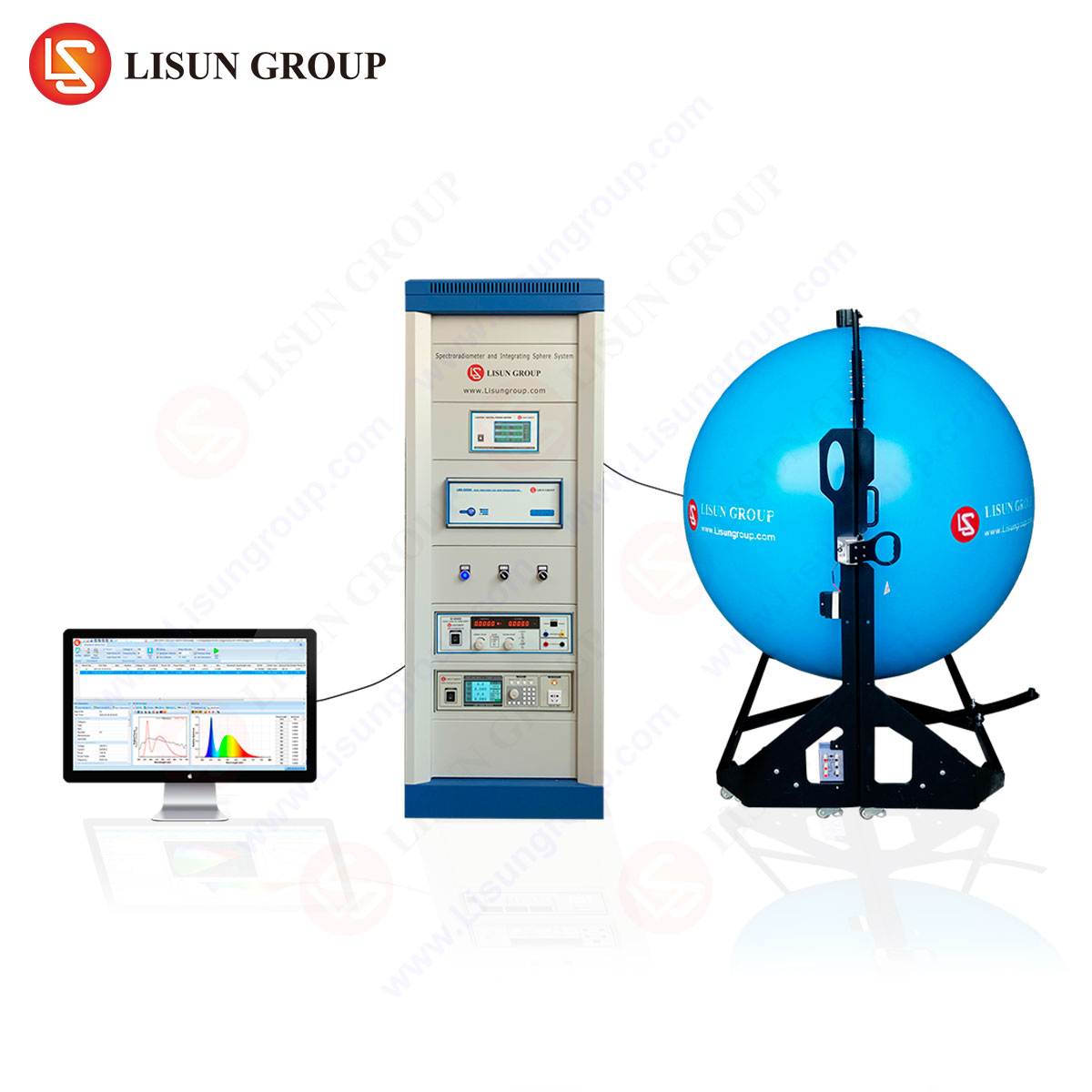
The selection of a photometric measurement apparatus for LED testing hinges upon the specific data requirements of the application. While both the integrating sphere and the Goniophotometer are indispensable instruments in optical metrology, they operate on fundamentally different physical principles and yield distinctly different types of data. The integrating sphere functions as a radiometric or photometric flux integrator. It collects all light emitted from a source by multiple diffuse reflections within a hollow spherical cavity coated with a highly reflective, Lambertian material. The sphere provides a single, aggregated value—total luminous flux (lumens) or radiant flux (watts)—and, with spectral instrumentation, colorimetric data such as correlated color temperature (CCT) and color rendering index (CRI).
In contrast, the goniophotometer is a spatial measurement system. It mechanically rotates the light source or the detector around defined axes (typically C-γ or B-β coordinate systems) to measure luminous intensity (candela) as a function of angle. From this angular intensity distribution, the instrument software integrates to compute total luminous flux. However, the true value of the goniophotometer lies in its ability to provide far-field photometric data, including intensity distribution curves, beam angles, and zonal lumen summaries. For comprehensive LED characterization, especially for luminaires and directional sources, these two methods are complementary rather than interchangeable. The integrating sphere excels in absolute flux determination and color measurement under total flux conditions, while the goniophotometer is essential for understanding how light interacts with its environment—critical for lighting design, roadway illumination, and stage lighting applications.
2. Spatial Resolution and Angular Intensity Mapping: The Goniophotometer’s Core Advantage
A critical distinction arises when testing directional LED sources, such as those used in automotive headlamps, architectural spotlights, or medical endoscopic equipment. An integrating sphere provides no information regarding the spatial distribution of light. It cannot discern whether a luminaire emits a narrow 10° beam or a wide 120° flood. For applications where illumination uniformity, beam shaping, and glare control are paramount, angular data is indispensable.
Der LISUN LSG-6000 Goniophotometer System exemplifies the advanced capabilities required for such measurements. This instrument employs a rotating mirror goniometer design, where the light source remains stationary and a mirror rotates to direct the beam toward a fixed detector. This configuration eliminates errors caused by the movement of heavy or heat-sensitive LED luminaires. The system measures luminous intensity at incremental angles, typically in steps as fine as 0.1° in both horizontal and vertical planes. The resulting Intensity Distribution Curve (IDC) provides the basis for calculating:
- Beam angle (the angle at which intensity falls to 50% of maximum)
- Field angle (10% of maximum intensity)
- Spacing-to-height ratio for uniform illuminance
- Upper hemisphere flux for sky glow assessment
In compliance with international standards such as IES LM-79-08 (Approved Method: Electrical and Photometric Measurements of Solid-State Lighting Products) and CIE S 025/E:2015 (Test Method for LED Lamps, LED Luminaires and LED Modules), the LSG-6000 enables Type C photometry. This standard defines measurement at multiple γ-angles for each C-plane, yielding a dense matrix of intensity data essential for accurate flux integration using the zonal constant or zonal flux method.
Table 1: Comparison of Data Output – Integrating Sphere vs. Goniophotometer
| Parameter | Ulbrichtsche Kugel | Goniophotometer (e.g., LISUN LSG-6000) |
|---|---|---|
| Total Luminous Flux (lm) | Direct measurement | Integrated from intensity distribution |
| Luminous Intensity (cd) | Not provided | Provided at all measured angles |
| Beam Angle | Not provided | Calculated from IDC |
| Colorimetric Data (CCT, CRI) | Provided (with spectrometer) | Requires additional spectral sensor |
| Räumliche Gleichmäßigkeit | Not provided | Mapped across angular grid |
| Standard Compliance (LM-79) | Acceptable for absolute flux | Required for spatial distribution |
3. Total Flux Accuracy and Spectral Measurement: The Integrating Sphere’s Domain
When the objective is to determine absolute total luminous flux with high precision—for example, in LED binning processes for backlight units or in quality control of OLED panels—the integrating sphere offers a more direct and often faster pathway. The sphere’s internal coating (typically barium sulfate or Spectralon) provides a near-Lambertian surface that homogenizes the angular distribution of light. A photodetector or spectroradiometer positioned at a port on the sphere wall measures the average flux density, which is directly proportional to the total emitted flux.
However, the sphere introduces systematic errors that must be accounted for. Self-absorption corrections are necessary when the source geometry differs from the calibration standard. Furthermore, measurements at high power levels (e.g., for high-bay LED luminaires exceeding 10000 lumens) can cause heating of the sphere coating, shifting its reflectance and leading to measurement drift. The LISUN LSG-1890B Goniophotometer addresses these limitations by operating as a far-field goniophotometer with a large measurement distance (18.9 meters for the LSG-1890B variant), ensuring the detector operates in the true far-field zone where the source approximates a point source. This is particularly important for testing large luminaires, such as those used in stadium lighting or photovoltaic simulator arrays, where near-field effects would compromise angular accuracy.
For colorimetric analysis, the integrating sphere paired with a spectroradiometer remains the preferred tool, as it measures the spectral power distribution (SPD) under total flux conditions. However, angular color non-uniformity (ACU)—a known issue in phosphor-converted white LEDs—cannot be detected by a sphere alone. A goniophotometer equipped with a radiance probe or spectral scanning capability can characterize color shifts across the beam, a critical parameter for museum lighting and medical diagnostic lamps.
4. Standard Compliance and Application-Specific Testing Requirements
The choice between a goniophotometer and an integrating sphere is often dictated by the regulatory standards governing the target application. For general lighting products intended for the European market, EN 13032-1 (Measurement of Light Sources and Luminaires) prescribes goniophotometry for photometric data required in building design software. Similarly, IES LM-79-08 mandates goniophotometric measurement for luminaires and integrated LED lamps to report the intensity distribution, while allowing integrating sphere methods only for absolute flux and color of directional sources (provided the sphere is large enough and corrections are applied).
In the Photovoltaikindustrie, Goniophotometer are used to characterize the angular response of solar simulators and concentrator optics. The LSG-6000’s high angular resolution (0.1° step) enables precise measurement of the spatial non-uniformity of irradiance in test planes, which is essential for calibrating reference cells under IEC 60904-9 (Solar Simulator Performance Requirements).
Für automotive lighting, standards such as ECE R112 Und SAE J1383 require detailed photometric data at specific test points—angular coordinates that define the headlamp’s beam pattern. An integrating sphere cannot provide the required intensity values at discrete angles, making a goniophotometer mandatory. The LISUN LSG-6000’s ability to handle luminaires up to 800 mm in diameter and 50 kg in mass, combined with its Class AA photometric accuracy per CIE 121-1996, makes it suitable for testing automotive headlamps and signal lamps.
In Bühnen- und Studiobeleuchtung, color mixing and beam uniformity are critical. The LSG-1890B’s high-speed rotation (up to 6 rpm) and automatic measurement sequence reduce testing time for complex multi-channel LED fixtures, while its software generates detailed polar candela plots and isocandela diagrams required for DMX-driven lighting design.
5. LISUN Goniophotometer Systems: Technical Specifications and Competitive Positioning
The LISUN LSG-6000 and LSG-1890B represent the state of the art in far-field goniophotometry. They are designed to meet the stringent requirements of IES LM-79-08, CIE S 025, Und IS: L656 (Indian Standard) for solid-state lighting products. Key specifications include:
Table 2: LISUN LSG-6000 Goniophotometer System Specifications
| Parameter | Spezifikation |
|---|---|
| Messung Abstand | 6.0 m (LSG-6000) / 18.9 m (LSG-1890B) |
| Winkelbereich | C-Axis: 0° ~ 360° (continuous) / γ-Axis: -180° ~ 180° |
| Winkelauflösung | 0.1° |
| Lichtstrombereich | 0.1 ~ 1,999,000 lm (with neutral density filters) |
| Photometrische Genauigkeit | Class AA per CIE 121 (f1’ ≤ 3% deviation) |
| Maximale Größe der Leuchte | 800 mm diameter, up to 50 kg |
| Light Source Type | Rotating mirror design (source stationary) |
| Spectral Correction | Photopic V(λ) filter with f1’ < 3% |
| Operating Standards | LM-79-08, CIE S 025, EN 13032, IESNA |
The competitive advantage of LISUN systems lies in their high dynamic range photometer Und automatic dark current compensation. Unlike some competitors that require manual calibration before each test, the LSG series integrates a calibration monitor that accounts for ambient temperature fluctuations and detector drift. This feature is particularly beneficial in wissenschaftliche Forschungslabore where long-duration aging tests on OLEDs or laser diodes demand consistent measurements over hours.
Furthermore, the LSG-6000’s software suite includes modules for:
- Zonal flux calculation (per CIE 84:1989)
- UGR (Unified Glare Rating) computation for indoor lighting
- Luminance distribution analysis (optional CCD camera attachment)
- Automated report generation compliant with LM-80 (LED lumen maintenance)
6. Practical Considerations in Measurement Workflow and Uncertainty
Selecting the appropriate test method requires understanding the trade-offs in measurement uncertainty. For total luminous flux, a well-maintained integrating sphere with a calibrated standard lamp can achieve expanded uncertainties (k=2) as low as 1.5% to 2%. A goniophotometer, due to mechanical alignment errors, detector angular response, and distance measurement uncertainties, typically achieves 2% to 4% for flux integration. However, for directional sources, the goniophotometer’s flux integration uncertainty can be lower than a sphere’s if the sphere suffers from significant self-absorption or non-ideal coating.
In urban lighting design, precise knowledge of the intensity distribution (down to 0.5° increments) is necessary for calculating road luminance averages and longitudinal uniformity per EN 13201-2. The integrating sphere cannot substitute here. Conversely, in LED- und OLED-Fertigung, where binning for CCT and flux is performed at high speed, a large integrating sphere (2-meter diameter) with a spectrometer is the standard tool.
It is critical to note that some hybrid systems exist—such as goniophotometers with integrated spectroradiometers—that can simultaneously measure spectral and spatial data. The LISUN LSG-6000 can be optionally equipped with a fiber-optic spectrometer mount on the detector arm, allowing angularly resolved spectral power distribution (ARSPD) measurements. This capability is invaluable for Prüfung von Anzeigegeräten where viewing angle dependence of white point is a key performance metric.
7. Domain-Specific Use Cases and Standard References
- Photovoltaic Industry (IEC 60904-9): The LSG-1890B is used to characterize the angular response of solar cells and to measure the spatial homogeneity of simulated sunlight in concentrator systems.
- Medical Lighting Equipment (IEC 60601-2-41): Goniophotometry verifies that surgical luminaires achieve minimum illuminance levels within a 50 cm diameter field, while limiting glare for surgeons.
- Sensor and Optical Component Production: Measurement of transmissive or reflective diffusers requires angular scattering data, which only goniometric methods provide.
- Scientific Research Laboratories: Studies on circadian lighting (melanopic lux) rely on spectral radiance maps generated by scanning goniometers.
Häufig gestellte Fragen (FAQ)
Q1: Can the LISUN LSG-6000 measure spectral data (CCT, CRI) directly, or does it require an external spectrometer?
The standard LSG-6000 measures photopic luminous intensity. For spectral data acquisition, the system can be paired with an optional external spectrometer (such as the LISUN LPCE-2 spectroradiometer) mounted on the detector carriage. This allows synchronized angular and spectral measurements.
Q2: How does the LSG-6000 ensure measurement accuracy for large, heavy luminaires like stadium lights?
The rotating mirror design keeps the luminaire stationary, eliminating alignment errors from gravity-induced sag or rotation imbalance. The system supports luminaires up to 50 kg and 800 mm diameter. Automatic leveling and a distance calibration tool ensure the photometer’s axis coincides with the luminaire’s photometric center.
Q3: What is the difference between Type C photometry and other measurement types (A or B)?
Type C (horizontal-vertical coordinate system) is the most common for general and automotive lighting. The C-plane rotates around the vertical axis (0–360°), while the γ-angle measures vertical divergence. Type A (polar) is used for lamps with polar symmetry, and Type B (hemispherical) is for fixed luminaires. The LSG-6000 supports all three types via configurable rotation sequences.
Q4: For LED testing in compliance with LM-79-08, is a goniophotometer mandatory?
LM-79-08 accepts both integrating sphere and goniophotometer for total flux measurement. However, for reporting intensity distribution, beam angle, and shaping data, a goniophotometer is required. If your product is intended for architectural or roadway use, the goniophotometer is the only compliant option.
Q5: How long does a full photometric test take on the LSG-6000?
A standard Type C measurement with 1° resolution (360 C-planes × 180 γ-angles = 64,800 points) requires approximately 15–25 minutes depending on rotation speed and detector integration time. For higher resolution (0.5°), the time increases proportionally. The LSG-6000’s software supports batch testing and user-defined angular masks to optimize measurement duration.
 English
  Spanish
  Russian
  Portuguese
  Turkish
  Arabic
  German
  Polish
  Italian
  French
  Korean
  Japanese
  Indonesian