




Electrostatic Discharge Fundamentals and the Necessity of Standardized Testing
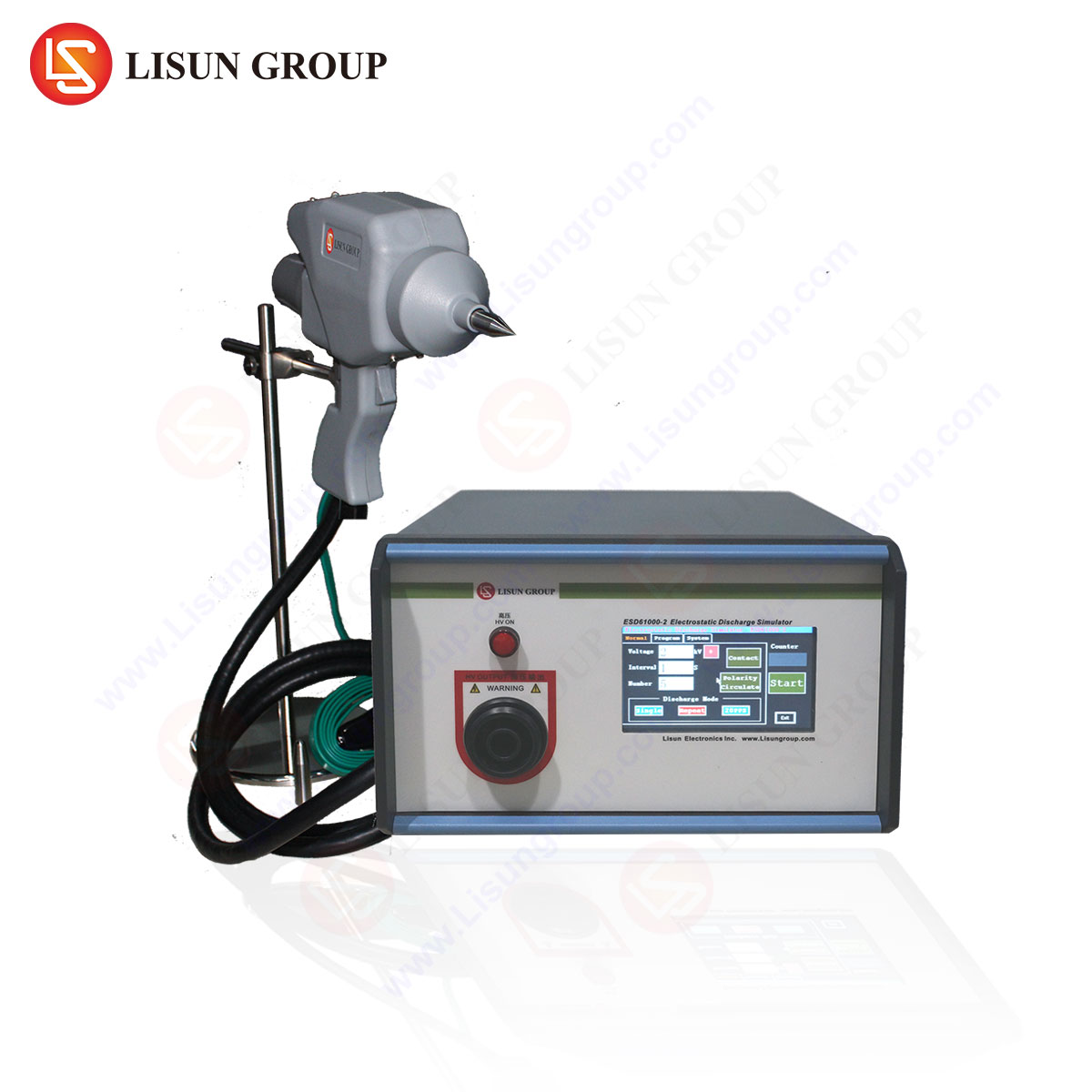
Electrostatic discharge (ESD) represents a critical failure mechanism in modern electronic systems, capable of inducing permanent damage, latent defects, or operational interruptions across a wide spectrum of devices. The phenomenon arises from the rapid transfer of electrostatic charge between objects at different potentials, with discharge currents reaching hundreds of amperes within nanoseconds. In industrial contexts—spanning lighting fixtures, industrial equipment, household appliances, medical devices, intelligent equipment, communication transmission systems, audio-video equipment, low-voltage electrical appliances, power tools, power equipment, information technology equipment, rail transit, spacecraft, the automobile industry, electronic components, and instrumentation—the susceptibility to ESD events necessitates rigorous, reproducible testing methodologies. Standardized ESD testing provides a quantitative framework for evaluating immunity levels, ensuring that products meet minimum performance criteria under defined stress conditions. Without such standards, manufacturers risk field failures, warranty claims, and reputational damage, particularly in sectors where reliability is paramount, such as medical devices and aerospace systems. The evolution of ESD testing standards—driven by organizations including the International Electrotechnical Commission (IEC) and the American National Standards Institute (ANSI)—has culminated in a suite of protocols that address both contact discharge and air discharge modes, with specified voltage levels, waveform parameters, and test point selection criteria. This article delineates the current landscape of ESD testing standards, with a focused examination of the instrumentation required to execute these protocols, specifically the LISUN ESD61000-2 series ESD gun test system, which has become a reference tool for compliance testing across multiple industries.
IEC 61000-4-2 Framework: Defining Discharge Waveforms and Immunity Levels
The IEC 61000-4-2 standard serves as the foundational document for ESD immunity testing in most industrial and commercial applications. This standard specifies a contact discharge current waveform characterized by a rise time of 0.7 to 1.0 nanoseconds and a peak current proportional to the test voltage—for example, 3.75 amperes at 2 kilovolts (kV), scaling to 30 amperes at 8 kV. The waveform’s shape, including the secondary peak at approximately 30 nanoseconds, replicates the discharge profile of a charged human body contacting a metallic surface. Test levels are defined across four severity classes: Level 1 (2 kV contact, 2 kV air), Level 2 (4 kV contact, 4 kV air), Level 3 (6 kV contact, 8 kV air), and Level 4 (8 kV contact, 15 kV air). Additional voltages up to 30 kV air discharge are permissible for specialized environments, such as those encountered in spacecraft or rail transit subsystems. The standard mandates that test points be selected based on accessibility during normal operation—enclosures, connectors, cables, and control panels—and that discharges be applied at a repetition rate of one per second for a minimum of 10 pulses per test point. Performance criteria are categorized into four outcomes: A (normal operation within specified limits), B (temporary degradation requiring operator intervention), C (loss of function requiring repair), and D (irreversible damage). For industries such as medical devices (IEC 60601-1-2) or automotive electronics (ISO 10605), the base IEC 61000-4-2 framework is adapted with additional constraints—e.g., reduced test voltages for implantable devices or extended air discharge ranges for vehicle-mounted systems. The reproducibility of these tests depends critically on the calibration of the ESD generator, which must produce a waveform within ±15% of the specified peak current and ±25% of the rise time, as verified by a 2-gigahertz oscilloscope and a Faraday cage target assembly.
Contact Discharge versus Air Discharge: Application-Specific Testing Protocols
Distinguishing between contact discharge and air discharge methodologies is essential for accurate ESD immunity assessment, as each mode replicates distinct physical discharge mechanisms. Contact discharge involves directly applying the ESD pulse to a conductive surface—such as a metal enclosure, grounding strap, or exposed connector shield—by pressing the discharge tip against the surface before triggering the pulse. This method yields highly reproducible results because the discharge path impedance is dominated by the test setup rather than environmental factors. Air discharge, conversely, involves approaching the discharge tip toward a non-conductive or coated surface until a spark bridges the air gap, with the trigger occurring before physical contact. Air discharge tests are inherently less repeatable due to variations in humidity, atmospheric pressure, and surface contamination, which alter the dielectric breakdown voltage of the air gap. The IEC 61000-4-2 standard recommends contact discharge as the primary method for metallic surfaces, reserving air discharge for insulating surfaces, painted enclosures, or seams where contact is impractical. In the lighting fixtures industry, for example, LED luminaires with polycarbonate diffusers require air discharge testing at the housing surface, while the metallic heat sink demands contact discharge. For household appliances and power tools, both modes are applied to user-accessible areas—handles, switches, and charging ports—with test levels aligned to the device’s intended installation environment (e.g., Level 2 for domestic appliances, Level 4 for industrial power equipment). The LISUN ESD61000-2 series ESD gun test system supports both modes seamlessly, with interchangeable discharge tips that conform to IEC 61000-4-2 dimensions: a 20-millimeter conical tip for contact discharge and a 15-millimeter spherical tip for air discharge. The instrument’s internal high-voltage relay ensures precise timing between trigger activation and discharge initiation, minimizing jitter in air discharge tests—a critical advantage for manufacturers of medical devices and intelligent equipment where consistency across production batches is mandatory.
The LISUN ESD61000-2 Series: Technical Specifications and Operational Principles
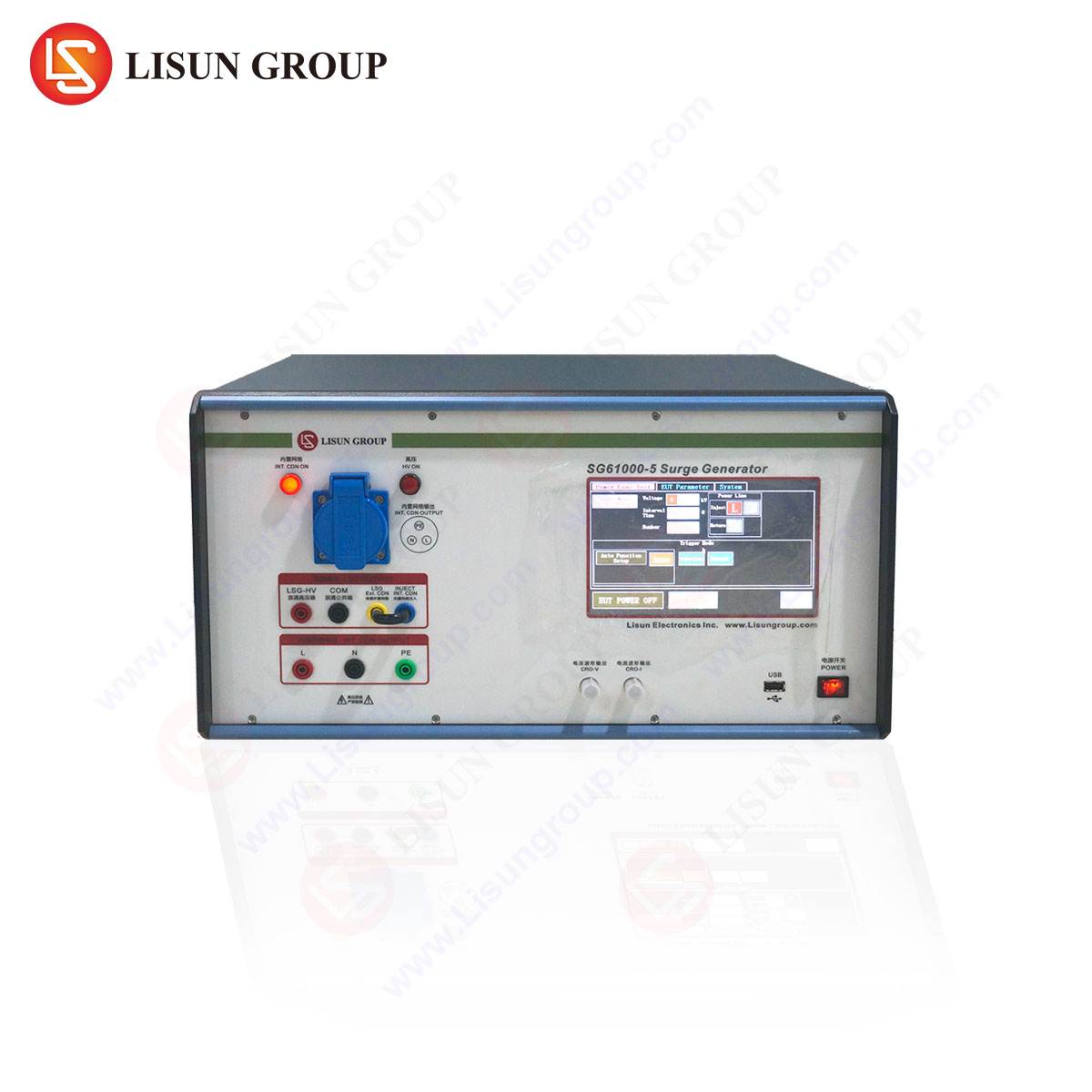
The LISUN ESD61000-2 and its enhanced variant, the ESD61000-2C, represent a class of electrostatic discharge generators engineered to meet the stringent requirements of IEC 61000-4-2, as well as derivatives such as ISO 10605 for automotive electronics and ANSI/ESD STM5.1 for electronic components. The ESD61000-2C model, in particular, incorporates a capacitive discharge network with a 150-picofarad storage capacitor and a 330-ohm discharge resistor, yielding the standard human-body model waveform. Key specifications include an output voltage range of 0.2 to 30 kV (contact) and 0.2 to 30 kV (air), with a resolution of 0.1 kV and an accuracy of ±5%. The pulse repetition rate is adjustable from 1 to 20 Hertz, enabling accelerated testing for high-volume qualification. A built-in voltage monitor and current probe allow real-time waveform verification via an external oscilloscope, with BNC outputs for transient capture. The instrument features a color touchscreen interface that stores up to 20 user-defined test profiles, each configurable for voltage level, polarity (positive or negative), discharge count, and inter-pulse delay. For industrial equipment and communication transmission systems requiring extended testing sequences, the ESD61000-2C supports automated operation through RS-232 and USB interfaces, enabling integration into environmental chambers or robotic test fixtures. The discharge switch—a high-voltage reed relay—achieves a contact lifetime exceeding 10 million operations, reducing maintenance downtime in production test environments. Power input is universal (100–240 VAC, 50/60 Hertz), and the unit complies with European Union CE marking and Restriction of Hazardous Substances (RoHS) directives. A comparative table of the series models is provided below:
| Parameter | ESD61000-2 | ESD61000-2C | ESD-883D (CDM Simulator) |
|---|---|---|---|
| Voltage Range (Contact) | 0.2–20 kV | 0.2–30 kV | 0.1–2 kV (CDM) |
| Voltage Range (Air) | 0.2–20 kV | 0.2–30 kV | N / A |
| Rise Time (10–90%) | <1 ns | <0.7 ns | <0.2 ns |
| Capacitance | 150 pF | 150 pF | 6.8 pF (CDM specific) |
| Discharge Resistor | 330 Ω | 330 Ω | 0 Ω (CDM) |
| Polarität | Positiv/Negativ | Positiv/Negativ | Positiv/Negativ |
| Profile Storage | 10 | 20 | 10 |
| Schnittstelle | RS-232 | RS-232, USB | USB |
The operational principle hinges on charging the internal capacitor to the selected voltage via a high-voltage DC-DC converter, then discharging through the resistor and discharge tip when the trigger is activated. The ESD61000-2C’s rise time of less than 0.7 nanoseconds—exceeding the IEC requirement of 1 nanosecond—ensures that the stress spectrum includes sufficiently high-frequency components to capture the susceptibility of modern high-speed digital circuits used in intelligent equipment and communication transmission devices.
Industry-Specific Compliance Requirements: From Lighting Fixtures to Spacecraft
The application of ESD testing varies significantly across industries, reflecting differences in allowable failure modes, user exposure levels, and regulatory frameworks. For lighting fixtures, particularly those incorporating light-emitting diode (LED) drivers and control interfaces, IEC 61547 specifies immunity test levels derived from IEC 61000-4-2, typically at 4 kV contact and 8 kV air for residential luminaires, escalating to 8 kV contact and 15 kV air for industrial high-bay fixtures. Manufacturers must demonstrate that no permanent degradation of luminous flux or color temperature occurs within 30 seconds of discharge exposure. In the automobile industry, ISO 10605 mandates testing at levels up to 15 kV contact and 25 kV air, with additional requirements for onboard charging systems in electric vehicles—here, the ESD61000-2C’s extended 30 kV air discharge capability proves indispensable for replicating the electrostatic environments encountered during assembly or refueling. Medical devices, governed by IEC 60601-1-2, impose stricter performance criteria: any temporary disturbance (Criterion B) must self-recover without operator intervention, eliminating reset commands or power cycling. For implantable pacemakers or neurostimulators, testing at 2 kV contact and 4 kV air is typical, but the focus shifts to the device’s enclosure and lead wires. Rail transit and spacecraft applications follow European Norm (EN) 50121 and NASA-STD-4005, respectively, often requiring testing at reduced atmospheric pressure to simulate high-altitude or vacuum conditions. The LISUN ESD61000-2C’s air discharge mode is particularly advantageous here, as the instrument maintains waveform fidelity across a pressure range of 500 to 1060 hectopascals (hPa) when coupled with an optional environmental chamber. For electronic components, the ESDA/JEDEC joint standard JESD22-A114 (human body model) and JESD22-C101 (charged device model) require specialized simulators like the LISUN ESD-CDM (ESD-883D), which generates sub-200-picosecond rise times to mimic the rapid discharge of a charged device during handling. This instrument, with a peak current of up to 15 amperes at 2 kV, is essential for qualification of integrated circuits used in information technology equipment and instrumentation.
Competitive Advantages of the LISUN ESD61000-2C in Production and Compliance Environments
The LISUN ESD61000-2C distinguishes itself from alternative ESD gun test systems through several engineering attributes that are directly relevant to industrial manufacturing and certification workflows. First, the instrument’s waveform stability across a wide voltage range—verified by independent calibration laboratories—exceeds the IEC 61000-4-2 requirement of ±15% peak current tolerance, achieving ±5% in production units. This precision reduces the risk of false passes or failures in high-stakes testing scenarios, such as certification of medical devices or rail transit control systems. Second, the ESD61000-2C incorporates a built-in voltage divider and current shunt that provide calibrated outputs (1 V per kV for voltage, 1 V per ampere for current) without the need for external high-voltage probes, simplifying oscilloscope connections and reducing measurement uncertainty. Third, the instrument’s software suite allows users to define test sequences with conditional branching—e.g., if a device-under-test (DUT) fails Criterion A at 6 kV, the sequence automatically escalates to a specified number of additional pulses at 4 kV to evaluate recovery—a feature analogous to the “test-to-fault” protocols used in power equipment and low-voltage electrical appliances. Fourth, the ESD61000-2C’s ergonomic design—a lightweight (<5 kg), handheld gun with a swivel cable management system—facilitates manual testing in confined spaces, such as inside automotive dashboards or spacecraft avionics racks. For automated production lines, the RS-232 and USB interfaces permit remote control via LabVIEW or Python scripts, enabling integration with robotic manipulators that position the discharge tip at predefined coordinates. The extended lifetime of the high-voltage reed relay (10 million cycles) compared to industry averages (3–5 million cycles) translates to lower total cost of ownership for manufacturers of household appliances or power tools who conduct daily sampling tests. Furthermore, LISUN provides recalibration services traceable to national metrology institutes, ensuring ongoing compliance with ISO/IEC 17025 requirements.
Designing a Repeatable ESD Test Procedure: Coupon Selection, DUT Orientation, and Environmental Controls
Achieving statistically significant ESD test results requires meticulous control of extraneous variables, beginning with the selection of test points. For a typical DUT—such as an intelligent equipment panel or a communication transmission module—test points must include all user-accessible surfaces, signal and power connectors, ventilation slots, and seams between housing sections. The IEC 61000-4-2 standard specifies that a minimum of 10 positive and 10 negative pulses be applied at each point, with a 1-second interval between pulses. For audio-video equipment featuring touchscreens or capacitive buttons, additional tests at the display periphery (within 5 mm of the bezel) are recommended to capture edge-induced discharges. The DUT orientation relative to the ground reference plane (GRP) is critical: the GRP—a copper or brass sheet of at least 0.5 mm thickness, placed 0.8 meters above the floor—must extend at least 1.5 meters beyond the DUT in all horizontal directions. The DUT is placed on a 0.1-meter-thick insulating standoff from the GRP, and its power and signal cables are routed along the table edge, with excess length bundled in a non-inductive loop. Environmental conditions—temperature (23 ± 5°C) and relative humidity (30–60%)—must be recorded, as low humidity exacerbates air discharge variability. For spacecraft components, which operate in dry (<10% relative humidity) environments, testing at the lower humidity bound is mandatory. The LISUN ESD61000-2C’s data logging capability—which timestamps each discharge event with voltage, polarity, and peak current—enables traceability for production records or regulatory audits. A standardized test report should include a table listing each test point, the applied voltage and mode, the observed failure mode (if any), and the corresponding performance criterion (A, B, C, or D). An example format is shown below:
| Test Point Identifier | Discharge Mode | Voltage (kV) | Spitzenstrom (A) | Observed Behavior | Criterion |
|---|---|---|---|---|---|
| Enclosure lid (metal) | Contact | +8 | 30.1 | Normal operation | A |
| USB connector shield | Contact | -4 | 15.0 | Temporary display flicker | B |
| Diffuser surface | Air | +15 | N / A | No visible effect | A |
| Power switch | Air | -8 | N / A | System reset (auto-reboot) | B |
Emerging Trends in ESD Testing: Higher Frequencies, Composite Materials, and Transient Integration
The proliferation of Internet-of-Things (IoT) devices in intelligent equipment, along with the adoption of gallium nitride (GaN) and silicon carbide (SiC) power semiconductors in industrial equipment and power tools, has necessitated ESD waveform definitions that extend beyond the traditional human-body model. The IEC 61000-4-2 standard is under revision to include a “Hand-Metal” model for scenarios where a charged person holds a tool—applicable to automotive assembly and rail transit maintenance. Additionally, the increasing use of composite materials (carbon-fiber-reinforced polymers) in spacecraft and automobile bodies presents challenges for air discharge testing: the heterogeneous conductivity of these materials alters discharge path impedance, requiring multiple tests at different orientations. The LISUN ESD61000-2C’s adjustable discharge resistor (options for 150 ohms, 330 ohms, or 2 kilohms, depending on model configuration) allows emulation of various human-body impedances, including the lower impedance associated with sweaty hands (150 ohms) in high-humidity environments. For charged device model (CDM) testing of electronic components—critical for instrumentation and information technology equipment—the LISUN ESD-CDM (ESD-883D) offers a dedicated solution with a bandwidth surpassing 5 gigahertz, capturing the fast transients that induce gate oxide rupture in sub-10-nanometer nodes. As 5G and satellite communication systems push operating frequencies into the millimeter-wave range (>30 GHz), ESD protection structures must be characterized for both high-voltage (kilovolt-level) and fast-transient (sub-nanosecond) threats. Future test methodologies will likely integrate ESD pulse injection with synchronized jitter analysis, using the LISUN ESD61000-2C’s external trigger input to coordinate with bit error rate testers for real-time error counting during discharge—a technique already employed in high-reliability military and aerospace programs.
Häufig gestellte Fragen (FAQ)
Q1: What is the difference between the LISUN ESD61000-2 and ESD61000-2C models, and which is better suited for testing medical devices?
The ESD61000-2C offers an extended voltage range up to 30 kV (versus 20 kV) and a faster rise time (<0.7 ns compared to <1 ns), along with USB interface connectivity and 20-configuration memory. For medical device testing per IEC 60601-1-2, the ESD61000-2C is recommended because its broader voltage envelope (up to 30 kV air) covers worst-case hospital environments, and its superior waveform precision reduces variability in immunity assessments.
Q2: Can the LISUN ESD61000-2C be calibrated in-house, or must it be sent to a laboratory?
While basic functional checks—verifying output voltage with a high-voltage probe—can be performed on-site, full calibration of the peak current, rise time, and pulse shape requires a 2 GHz bandwidth oscilloscope and a calibrated target assembly. LISUN recommends annual recalibration at an ISO/IEC 17025-accredited laboratory to ensure traceability and compliance with IEC 61000-4-2 specifications.
Q3: How does the ESD-CDM (ESD-883D) differ from the ESD61000 series in terms of applications?
The ESD-CDM is designed exclusively for charged device model testing of individual electronic components, simulating the rapid discharge that occurs when a pre-charged device contacts a grounded surface. It generates sub-200 picosecond rise times and uses a 6.8 pF capacitance with zero series resistance—drastically different from the human-body model of the ESD61000 series. The ESD-883D is essential for integrated circuit qualification in the semiconductor industry, whereas the ESD61000 series addresses system-level immunity testing.
Q4: For air discharge testing of painted enclosures in household appliances, does the discharge rate impact the coating integrity?
Yes, multiple air discharges on the same paint location at high repetition rates can cause localized heating and dielectric breakdown, leading to coating delamination or carbon tracking. The IEC 61000-4-2 standard advises a minimum 1-second interval, and the LISUN ESD61000-2C’s adjustable repetition rate (1–20 Hz) allows slower rates (e.g., 0.5 Hz) for coatings sensitive to thermal accumulation. Always inspect the DUT surface between test series.
Q5: What accessories are included with the LISUN ESD61000-2C for testing communication transmission equipment?
The standard package includes a 330-ohm discharge resistor, contact and air discharge tips, a ground cable (2 meters), a battery pack for portable operation, and a calibration certificate. For high-frequency communication equipment—such as 5G base stations—an optional ferrite clamp kit and additional 4-ohm verification target are available to minimize test-induced reflections on signal lines.
 English
  Spanish
  Russian
  Portuguese
  Turkish
  Arabic
  German
  Polish
  Italian
  French
  Korean
  Japanese
  Indonesian