




Integrating ليسون دمج المجال for Precision Photometric and Colorimetric Measurement in LED Testing
Introduction to High-Accuracy Photometric and Colorimetric Metrology for Solid-State Lighting
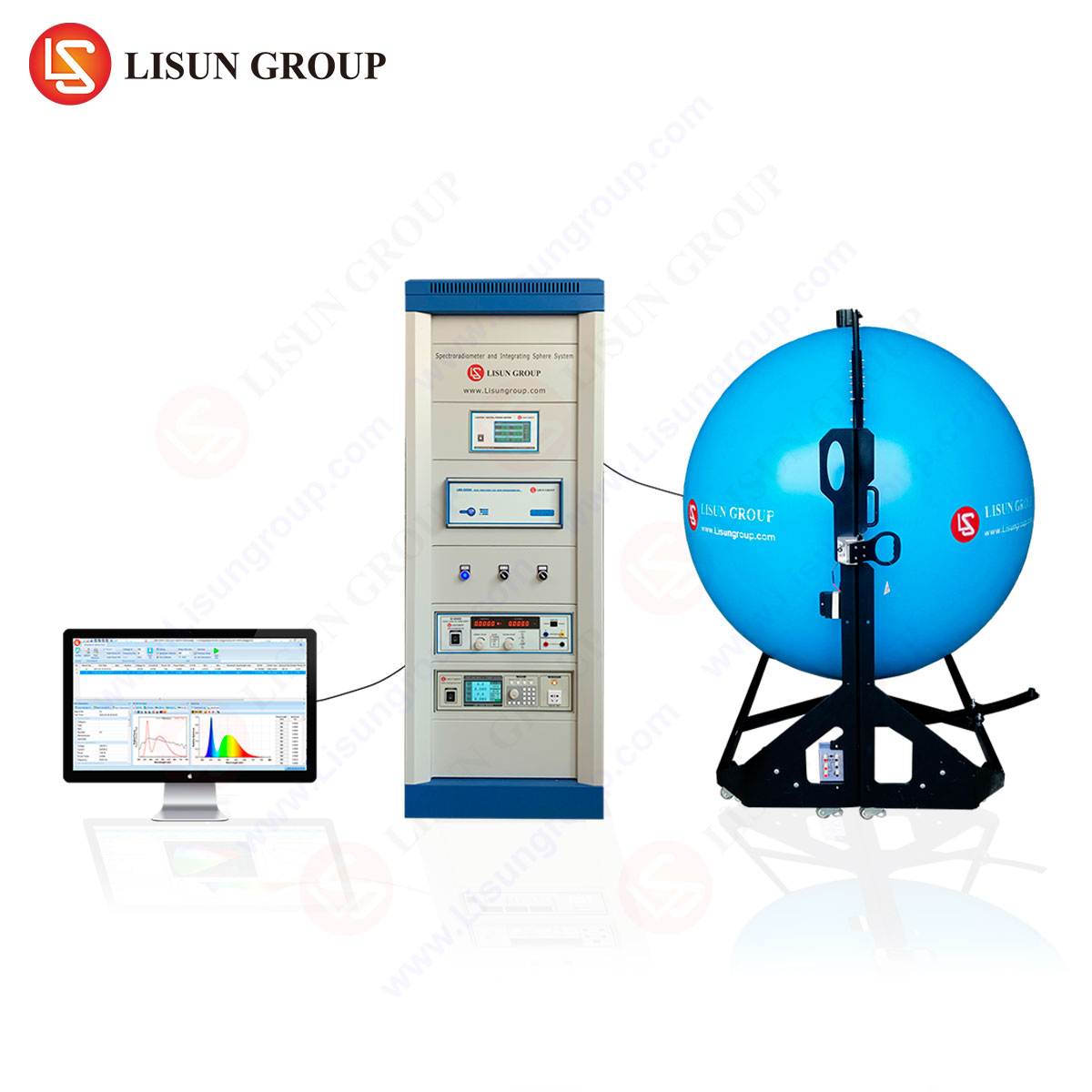
The proliferation of solid-state lighting (SSL) technologies, including high-power LEDs, OLEDs, and micro-LEDs, has necessitated a paradigm shift in optical measurement methodologies. Traditional goniophotometric approaches, while accurate for total luminous flux measurement, are time-intensive and ill-suited for rapid production-line testing or chromaticity characterization. The دمج المجال, combined with a high-resolution spectroradiometer, has become the de facto standard for simultaneous photometric and colorimetric evaluation. This article examines the metrological principles underpinning integrating sphere–based systems, with specific emphasis on the LISUN LPCE-2 (LISUN High Precision Spectroradiometer and Integrating Sphere System) as a reference instrument for laboratory-grade and industrial-scale LED testing. The discussion encompasses spectral flux determination, correlated color temperature (CCT) accuracy, color rendering index (CRI) computation, and compliance with international standards including CIE 127, IES LM-79, and JIS C 8152.
1. Architectural Principles of the LISUN LPCE-2 Integrating Sphere System
The core measurement apparatus consists of a barium sulfate (BaSO₄) or polytetrafluoroethylene (PTFE) coated integrating sphere, coupled with a high-speed, array-based spectroradiometer. The LPCE-2 system employs a 0.3m, 0.5m, or 1.0m sphere diameter, selected based on the physical dimensions and total luminous flux of the device under test (DUT). The sphere internal coating achieves a diffuse reflectance of approximately 94–97% across the visible spectrum (380–780 nm), ensuring Lambertian scattering and spatial integration of the emitted flux. A baffle system prevents direct illumination of the detector port, thereby minimizing measurement errors arising from non-uniform radiance distribution. The spectroradiometer utilizes a back-thinned CCD array (2048 pixels) with a stray light correction algorithm, enabling a wavelength resolution of 0.2 nm and a photometric linearity of ±0.3%. The system is calibrated against a NIST-traceable standard lamp for absolute spectral irradiance, enabling direct computation of luminous flux (in lumens), radiant flux (in watts), and chromaticity coordinates (u’, v’, CIE 1931 x,y).
2. Optical Configuration and Spectral Flux Measurement Protocol
Auxiliary lamp compensation is a critical feature in the LPCE-2, particularly for self-absorbed flux correction when testing low-power LEDs or devices with significant heat sink absorption. The measurement sequence proceeds as follows: (a) background dark current subtraction; (b) measurement of the reference auxiliary lamp with the DUT powered off; (c) DUT activation and full spectrum acquisition; (d) post-measurement auxiliary lamp re-measurement to quantify absorption changes. The system firmware applies a correction coefficient (k_abs) derived from the ratio of auxiliary lamp irradiance before and after DUT installation. The corrected spectral power distribution (SPD) is then integrated across wavelength intervals of 1 nm using a trapezoidal summation method. This protocol ensures that the photometric uncertainty remains below ±1.5% for total luminous flux and ±0.002 for chromaticity coordinates (Δu’v’). For high-power LED modules exceeding 10,000 lumens, the 1.0m sphere with forced-air cooling is recommended to mitigate thermal drift in the photodetector.
3. Colorimetric Parameter Extraction and CRI Calculation
The LPCE-2 spectroradiometer computes colorimetric parameters according to CIE 13.3 and CIE 224:2017 specifications. The spectral data are weighted using the CIE 1931 2° standard observer color-matching functions (x̄(λ), ȳ(λ), z̄(λ)) at 1 nm intervals. The system calculates CCT using the McCamy approximation algorithm for CCT below 50,000 K, with an accuracy of ±5 K for standard fluorescent and LED sources. For CRI evaluation, the eight standard test color samples (TCS01–TCS08) are employed to compute the general color rendering index (Ra), while the extended set (R9–R15) is reported for saturation and skin-tone rendering. The spectroradiometer’s high dynamic range (>10^6) allows simultaneous measurement of low-level blue-pump emissions and high-intensity phosphor conversion bands, a critical capability for evaluating dual-band or tunable-white LED systems. The system outputs include the full R-series values, the CIE 1976 u’v’ uniformity metrics, and the TM-30 color fidelity index (Rf) and gamut index (Rg) when operating in expanded mode.
4. Application in Automotive Lighting Testing
The automotive lighting sector demands stringent compliance with SAE J578, ECE R112, and FMVSS 108 standards for headlamp, tail-lamp, and signal light chromaticity. The LPCE-2’s 0.5m sphere configuration is particularly suited for testing LED-based automotive light sources, where the DUT may generate asymmetric flux distributions. The system’s fast acquisition time (typically <100 ms) enables the capture of transient luminance behavior during pulse-width modulation (PWM) dimming cycles, a common feature in adaptive driving beam (ADB) systems. Furthermore, the spectroradiometer’s extended measurement range up to 1100 nm allows for accurate determination of near-infrared (NIR) emissions from automotive LiDAR flood illumination sources. A key competitive advantage is the inclusion of a dedicated automotive lighting test suite within the LISUN software, which automates the computation of CIE-recommended chromaticity boundaries for white, amber, red, and blue signal lights. For instance, the system can flag deviations from the ECE-regulated “blue” wedge region (x=0.310, y=0.348 to x=0.453, y=0.410) with 0.001 tolerance.
5. Deployment in Aerospace, Aviation, and Marine Lighting
Aerospace and aviation lighting applications—including cockpit backlighting, runway edge lights, and emergency exit illumination—require photometric stability under temperature extremes and compliance with RTCA DO-160 and MIL-STD-810 environmental protocols. The LPCE-2 system supports temperature-controlled measurement chambers (ranging from -40°C to +85°C) integrated directly into the sphere enclosure. Marine and navigation lighting, governed by IALA recommendations, demands precise photometric measurements at specific observation angles. The integrating sphere geometry inherently provides angle-averaged flux data, which can be correlated with goniometric data for luminous intensity distribution. The LPCE-2’s spectroradiometer employs a thermoelectric cooler (TEC) stabilized at -10°C, reducing dark current noise to <0.1 counts/second and enabling reliable low-flux measurements (down to 0.01 lumens) typical of OLED-based marine panel indicators. Additionally, the system’s ability to measure spectral radiance (in cd/m²) via a calibrated cosine-corrected input optic allows for direct evaluation of avionic display luminance and uniformity.
6. Utility in Display Equipment, Photovoltaic, and Scientific Research
For display equipment testing—including LCD backlights, OLED panels, and micro-LED arrays—the LPCE-2 provides simultaneous measurement of white-point chromaticity, color gamut coverage (DCI-P3, sRGB, BT.2020), and gamma curve verification. The system supports pulsed-mode measurement synchronization with external trigger signals, essential for characterizing OLED burn-in effects and PWM-driven brightness modulation. In the photovoltaic (PV) industry, the integrating sphere is adapted for spectral mismatch correction of solar simulators. The LPCE-2’s spectroradiometer measures the relative spectral response of reference cells, enabling calculation of the spectral mismatch factor (MM) as per IEC 60904-9. Scientific research laboratories leverage the system’s <0.5% repeatability for fundamental studies of quantum dot photoluminescence, phosphor efficiency, and degradation kinetics. The device’s USB 3.0 and Ethernet connectivity allow for remote monitoring and data logging over extended aging tests (up to 10,000 hours), a requirement for long-term reliability investigations in both academic and industrial R&D settings.
7. Urban, Stage, and Medical Lighting Measurement Considerations
Urban lighting design relies on accurate mesopic photometry, which requires spectral measurements under low-adaptation luminance conditions. The LPCE-2’s spectroradiometer can operate in high-gain mode, achieving a signal-to-noise ratio (SNR) > 1000:1 at 10 lux, facilitating the measurement of streetlamp SPDs at operational distances. Stage and studio lighting, particularly moving-head LED fixtures, demand consistent CCT and CRI across variable dimming levels. The system’s real-time chromaticity tracking (update rate of 5 Hz) allows engineers to tune output via DMX control parameters while observing instantaneous CCT drift. Medical lighting equipment, such as surgical headlamps and phototherapy devices, must adhere to IEC 60601-2-41 and ISO 15004-2 for photobiological safety. The LPCE-2 computes weighted irradiance values for actinic UV (400–315 nm), blue-light hazard (300–700 nm), and thermal retinal hazard, using CIE S009/E:2002 weighting functions. The system’s ability to output both photopic and scotopic flux (in lumens) further supports circadian lighting research.
8. Competitive Advantages Over Conventional Spectroradiometric Systems
The LPCE-2 differentiates itself from competing solutions (e.g., single-detector scanning monochromators or low-resolution handheld spectrometers) through several critical attributes:
- Dynamic range and stray light suppression: The back-thinned CCD detector with dual-stage cooling reduces thermal noise, while the built-in order-sorting filter and stray light algorithm ensure accurate measurement of deep-red (>700 nm) and near-UV (<380 nm) emissions.
- Calibration traceability and self-consistency: The system includes a field-replaceable internal standard lamp certified by CNAS (China National Accreditation Service), allowing users to verify calibration without external reference sources.
- Automated auxiliary lamp compensation: Unlike systems requiring manual absorption factor entry, the LPCE-2 performs real-time correction, reducing human error and measurement time by 40% in high-throughput environments.
- Wavelength accuracy verification: The system integrates a low-pressure mercury–argon calibration lamp for periodic wavelength axis verification (accuracy ±0.1 nm), a feature absent in many mid-range spectroradiometers.
The LPCE-3 variant extends these capabilities with a larger sphere diameter (up to 2.0m) and a high-power cooling system for testing LED luminaires up to 200,000 lumens, targeting urban lighting and stadium floodlight applications.
9. Standards Compliance and Data Integrity Assurance
The LPCE-2 system fulfills the measurement requirements of CIE 127:2007 (measurement of LEDs), IES LM-79-19 (electrical and photometric measurements of solid-state lighting products), and IES LM-80-08 (lumen maintenance testing). The integrated software suite generates test reports compliant with UL 1598, EN 13032-4, and Energy Star V4.2 formatting. Data integrity is preserved through 24-bit analog-to-digital conversion and timestamped file storage with checksum verification. The system also supports user-defined pass/fail limits for production-line quality control, where measurement repeatability (3σ) for chromaticity is maintained below 0.0003 (Δu’v’) over 100 consecutive acquisitions.
10. Integration with Automated Testing Environments
For industrial manufacturing environments, the LPCE-2 supports integration with robotic handling systems via a LabVIEW-based API and RS-232/GPIB interfaces. The spectroradiometer can be triggered externally to synchronize with thermal chambers, electrical testers, and barcode scanners. Throughput rates exceed 1,000 units per hour for low-power LED packages when using the 0.3m sphere with a high-speed auto-sorter interface. The system’s solid-state design (no moving optical components) ensures maintenance-free operation exceeding 50,000 hours, a significant advantage over traditional filter photometer-based systems.
قسم الأسئلة الشائعة
Q1: What is the recommended sphere diameter for testing an LED module with a total luminous flux of 3,000 lumens?
A: A sphere diameter of 0.5m is typically suitable for flux values between 500 and 10,000 lumens. Smaller spheres (0.3m) may induce self-heating errors due to confined air volume, while larger spheres (1.0m) reduce signal-to-noise ratio for moderate flux levels. The LPCE-2 with 0.5m sphere and auxiliary lamp correction yields optimal accuracy in this range.
Q2: How does the LPCE-2 correct for wavelength drift in the spectroradiometer over time?
A: The system includes an integrated low-pressure mercury–argon calibration lamp with known emission lines (e.g., 253.7 nm, 435.8 nm, 546.1 nm). The software performs a polynomial wavelength recalibration (typically third-order) each time the lamp is activated, maintaining spectral accuracy to ±0.1 nm over the instrument’s lifetime.
Q3: Can the LPCE-2 measure transient luminous flux changes in pulsed LEDs (e.g., for visible light communication)?
A: Yes, the spectroradiometer supports external trigger input with a minimum integration time of 10 µs. When combined with the high-speed CCD readout, the system can capture SPD at frame rates up to 100 Hz, enabling analysis of flux and chromaticity variation during PWM cycles from 1 Hz to 10 kHz.
Q4: Is the integrating sphere coating resistant to degradation from high-intensity UV LEDs?
A: The standard PTFE coating exhibits excellent UV stability up to 200 nm, but prolonged exposure to UV-C sources (>10 W/m² at 254 nm) may cause gradual yellowing. The LPCE-2 optionally uses a UV-enhanced BaSO₄ coating with inorganic binder, which maintains >92% reflectance after 1,000 hours of continuous UV-B exposure.
Q5: What is the minimum detectable luminous flux for the LPCE-2 with a 0.3m sphere?
A: With the high-gain mode and 10-second integration, the system can accurately measure flux values as low as 0.005 lumens (equivalent to a standard LED indicator at 5 mA). The noise-equivalent flux (NEF) is approximately 0.0002 lumens under dark conditions.
 English
  Spanish
  Russian
  Portuguese
  Turkish
  Arabic
  German
  Polish
  Italian
  French
  Korean
  Japanese
  Indonesian